


The recent devastating floods and landslides in Indonesia, particularly in the North Sumatra province, have claimed the lives of over 160 people, with dozens still missing. Rescue efforts are severely hampered by damaged infrastructure and a lack of heavy equipment, painting a grim picture of the scale of the disaster. The unfolding tragedy underscores Indonesia’s vulnerability to extreme weather events and the urgent need for improved disaster preparedness and environmental protection. This article will delve into the details of the الفيضانات في إندونيسيا (Floods in Indonesia), examining the causes, impact, and ongoing relief operations.
أسباب الفيضانات والانهيارات الأرضية (Causes of Floods and Landslides)
The intense rainfall that triggered the disaster began on Tuesday, overwhelming rivers and causing widespread flooding in mountainous areas of North Sumatra. The National Disaster Management Agency (BNPB) reports that over 3,200 homes and buildings have been inundated, forcing approximately 3,000 families to seek refuge in government shelters. A key contributing factor to the severity of the situation was Tropical Cyclone Seniang, which formed in the Malacca Strait and brought exceptionally heavy rainfall to Aceh, North Sumatra, West Sumatra, and Riau.
The prolonged and torrential downpour saturated the already steep and eroded terrain, creating conditions ripe for landslides. The combination of overflowing rivers and collapsing hillsides proved catastrophic, burying villages and cutting off access to vital areas. These harsh weather conditions are increasingly linked to the broader issues of تغير المناخ (climate change) and environmental degradation, as highlighted by Indonesian officials.
دور الأعاصير الاستوائية (The Role of Tropical Cyclones)
According to the Meteorology, Climatology, and Geophysics Agency (BMKG), Seniang intensified rainfall and wind speeds, exacerbating the impact of the monsoon rains. A warning for extreme weather remains in effect as long as the cyclone remains active, suggesting further potentially damaging conditions. BMKG officials emphasized that the sustained heavy rainfall on vulnerable slopes dramatically increased the risk of landslides.
حجم الكارثة وخسائر الأرواح (The Extent of the Disaster and Loss of Life)
As of Friday, the confirmed death toll across the affected regions has risen to 164, with 79 individuals still unaccounted for. The region hardest hit remains North Sumatra, accounting for 116 fatalities. Aceh province has reported 25 deaths, while West Sumatra has seen the retrieval of 23 bodies. The initially reported number of 174 deaths was revised downward due to a counting error in the Aceh region.
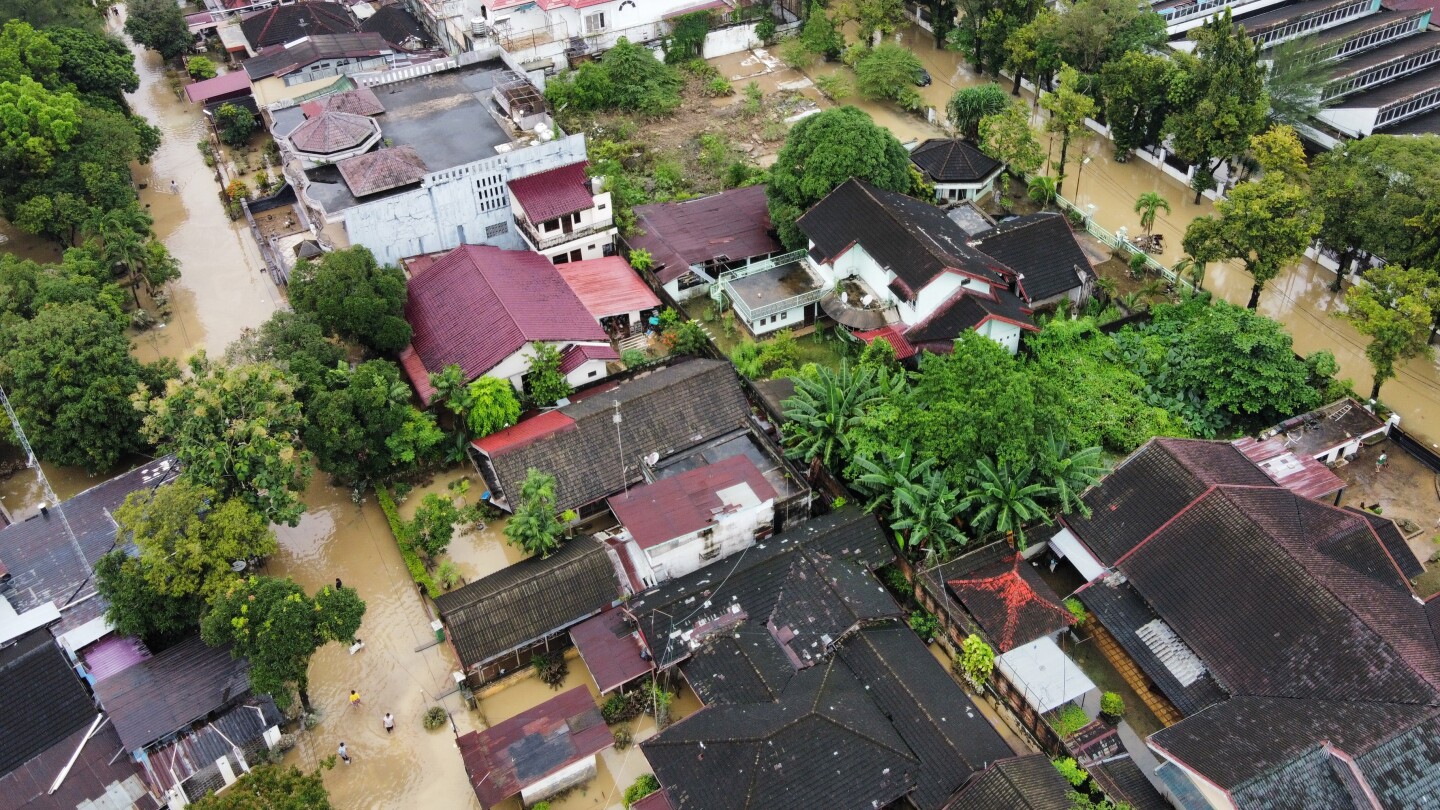
The scenes emerging from the affected areas are heartbreaking. Aerial footage reveals vast stretches of emerald forests and terraced hillsides ripped apart, with rivers of mud cascading into valleys below. In North Sumatra’s capital, Medan, and Deli Serdang, entire neighborhoods are submerged, with only rooftops visible above the brown floodwaters. Roads have been transformed into canals, littered with stranded vehicles and fallen trees.
Rescue teams are desperately trying to reach isolated communities, but damaged roads and bridges pose a significant challenge. Some areas can only be accessed on foot, requiring rescuers to navigate difficult terrain and transport supplies manually. Similar difficulties are being faced in Aceh, where excavation equipment and heavy machinery are struggling to reach villages impacted by mud and rockslides. This regional disaster demonstrates how susceptible Indonesia is to الكوارث الطبيعية (natural disasters).
جهود الإغاثة والاستجابة الحكومية (Relief Efforts and Government Response)
The Indonesian government is mobilizing resources to provide relief and support to those affected by the floods and landslides. President Prabowo Subianto announced the deployment of three aircraft, including a Hercules C-130 and a new Airbus A-400, carrying personnel, food, medicine, blankets, field tents, and generators.
“We are continuing to send aid and support the needs of the victims,” President Prabowo stated. He acknowledged the difficulties in reaching affected areas, noting, “Many roads are cut off and the weather is still unfavorable. Even our helicopters and planes sometimes have difficulty landing.”
The government is also focusing on long-term solutions, specifically highlighting the need to strengthen environmental awareness in schools. President Prabowo emphasized the importance of protecting the environment and forests, and of rigorously preventing illegal logging and deforestation.
التركيز على حماية البيئة (Focus on Environmental Protection)
The disaster serves as a stark reminder of the interconnectedness between environmental health and disaster risk. President Subianto underscored that the situation highlights the growing global challenges related to climate change, global warming, and environmental degradation. He proposed integrating stronger environmental education into the school curriculum, aiming to instill a sense of responsibility in future generations. He asserted, “We must teach the importance of protecting our environment and forests, and seriously prevent illegal logging and destruction.” This underlines the more significant need for التوعية البيئية (environmental awareness).
In conclusion, the recent floods and landslides in Indonesia represent a significant human tragedy and a devastating setback for affected communities. Successfully navigating this crisis necessitates continued and intensified relief efforts, alongside a long-term commitment to disaster preparedness, infrastructure development, and crucial environmental protection measures. The government’s commitment to providing aid and raising environmental consciousness are promising steps, but sustained action will be essential to mitigate the impact of future extreme weather events. The situation demands ongoing monitoring and proactive measures to safeguard the lives and livelihoods of those living in vulnerable regions of Indonesia.