


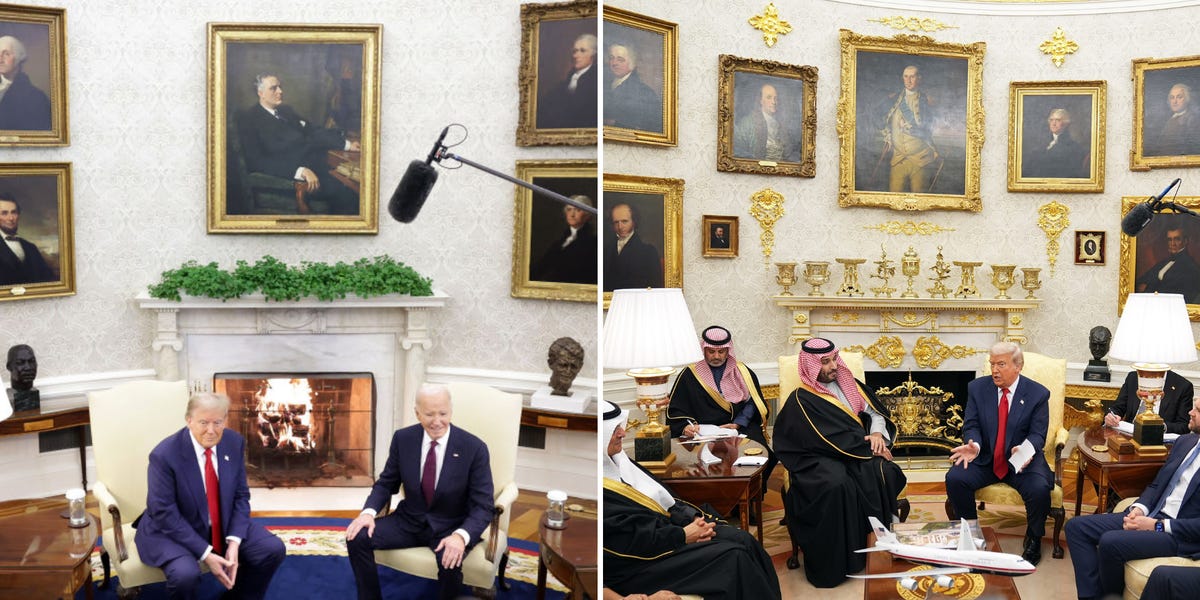
The return of Donald Trump to the White House has heralded not just a shift in political direction, but also a dramatic transformation in its aesthetic. Known for his opulent tastes, Trump has embarked on a series of renovations and redecorations, imbuing the historic building with a distinctly maximalist style. From gold-laden embellishments to significant structural changes, the changes are sparking conversation and revealing a clear statement of personal branding. This article delves into the specific details of Trump’s White House renovations, exploring the alterations made to iconic spaces and their symbolic significance.
A Return to Opulence: The Overall Aesthetic
Trump’s design preferences have always leaned towards grandeur and visible wealth. This is a stark contrast to the more understated elegance favored by his predecessor, Joe Biden. The overall effect of the changes is a move away from minimalist approaches and towards a deliberately showy and luxurious atmosphere. The emphasis on gold, particularly, has become a defining feature of the remodeled spaces, echoing the aesthetic of Trump’s properties like Mar-a-Lago. This isn’t simply about redecorating; it’s about projecting an image of power and success through the very fabric of the nation’s most prominent residence.
The Oval Office: A Golden Transformation
The Oval Office, arguably the most recognizable room in the White House, has undergone a noticeable change. Perhaps the most immediate visual difference is the addition of gold trim to the ceiling’s crown molding. This embellishment complements the existing gold curtains, amplifying the room’s regal appearance. However, the alterations go beyond simple additions. Biden’s darker blue rug, originally designed for Bill Clinton, was replaced with a lighter rug previously used during the Ronald Reagan administration. The choice of rug signifies a return to a preferred aesthetic and a subtle nod to past presidencies admired by Trump.
Details in the Detailing: Furniture and Portraits
Furthermore, Trump has populated the Oval Office with numerous new portraits, displayed in ornate, decorative frames, effectively creating a gallery wall. He replaced the portrait of Franklin D. Roosevelt, prominently featured during the Biden years, with one of George Washington. This substitution is arguably symbolic, shifting emphasis towards historical figures Trump especially respects. Even smaller details, like branded coasters bearing his name, underscore his personal touch and commitment to self-promotion. The presidential seal on the ceiling also received a gilded makeover, making it far more prominent than before.
Beyond the Oval Office: New Spaces and Structural Changes
The renovations aren’t limited to the Oval Office. Trump is undertaking a more expansive re-imagining of the White House grounds and infrastructure. The West Wing Colonnade, previously left unadorned, now features what has been dubbed a “Presidential Walk of Fame,” though a controversial one due to its depiction of Biden using an autopen. The Palm Room, connecting the Residence to the Colonnade, was refinished with a new chandelier and a striking white marble floor.
However, the most ambitious project is the demolition of the East Wing, making way for the construction of a massive 90,000-square-foot state ballroom. Estimated to cost around $200 million, this project, funded by private “patriot donors,” will significantly increase the White House’s capacity for large events. This expansion represents a clear intention to host grand-scale gatherings, showcasing American prestige on a global stage.
The Rose Garden: From Green Lawn to ‘Rose Garden Club’
The White House Rose Garden has also experienced a dramatic overhaul. Trump opted to pave over the traditional grass lawn, transforming it into an outdoor terrace, rebranded as “The Rose Garden Club”. He justified this change by citing the impracticality of the grass, stating it remained wet after rain and was unsuitable for attendees wearing high heels. While seemingly a practical consideration, some critics view this as another indication of prioritizing aesthetics over natural beauty and traditional landscaping. This decision is part of a broader effort in White House redecoration.
Cabinet Room Changes: A Presidential Gallery
Like the Oval Office, the Cabinet Room has also seen the introduction of gold accents and additional artwork. Gold decals were added to the walls, and matching curtains were installed, mirroring the opulence found in other areas of the redesigned White House. Trump has also adorned the room with portraits of past Presidents, including Washington, Adams, Jackson, Polk, Lincoln, Roosevelt, and Eisenhower, further emphasizing his reverence for presidential history and constructing a desired narrative around leadership. This emphasis on presentation, reflects broader White House interior design principles now applied.
A Statement of Style and Power
These extensive Trump’s White House renovations are more than just superficial changes. They represent a deliberate effort to reshape the image of the presidency, projecting an aura of wealth, power, and, importantly, personal branding. The consistent application of gold, the addition of portraits, and the creation of new spaces are all carefully considered elements designed to leave a lasting impression on visitors and viewers alike. It will be fascinating to observe how future administrations respond to and perhaps even modify these changes, continuing the ongoing evolution of the White House as a symbol of American history and leadership.
Whether these modifications are seen as enhancing or detracting from the White House’s historic character, they undoubtedly offer a unique window into the personality and priorities of the current president. The impact of these changes will likely be debated for years to come, solidifying their place as a defining aspect of this presidency.