


The skies above carry more than just commercial airliners; they also transport the world’s leaders in unparalleled style and security. From the iconic “Air Force One” to lesser-known but equally impressive presidential jets, these aircraft are symbols of national power and logistical marvels. This article delves into the fascinating world of presidential planes, exploring the aircraft used by various countries and the unique features that define them. We’ll examine the technology, comfort, and security measures that ensure safe and efficient travel for heads of state.
The United States: Air Force One and Beyond
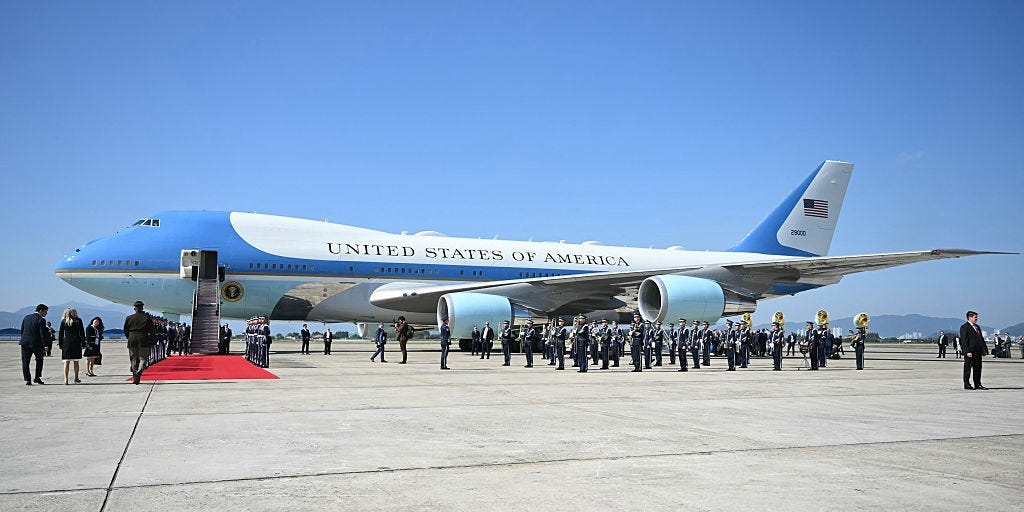
Perhaps the most recognizable presidential plane globally, Air Force One – specifically the Boeing VC-25A – is a heavily modified Boeing 747-200. Entering service in 1990, this aircraft is more than just transportation; it’s a flying White House. It boasts 4,000 square feet of floor space, can accommodate over 70 passengers, and is equipped with advanced communication systems allowing the President to govern from anywhere in the world.
A Fleet of Two and the Future VC-25B
The US actually maintains two nearly identical VC-25As, designated by their tail numbers 28000 and 29000. When the President is onboard, either aircraft assumes the call sign “Air Force One.” However, these planes are nearing the end of their service life. The next generation, the VC-25B, based on the Boeing 747-8 Intercontinental, has faced significant delays and cost overruns, with an expected delivery date now around 2028.
Beyond the VC-25A, the President also utilizes the smaller Boeing 757-200-based C-32 for shorter trips to airports unable to accommodate the larger aircraft. This provides flexibility and efficiency in travel arrangements.
European Leaders: Luxury and Functionality
Across the Atlantic, European leaders also travel in style, though their approaches differ. The United Kingdom’s Prime Minister now utilizes a Royal Air Force Airbus A330 MRTT, known as Vespina. Previously, commercial jets were chartered for state visits. This dedicated aircraft, repainted in 2020 with a Union Jack tail, offers 58 business-class seats and can also function as a refueling tanker when not on official duties.
Germany recently retired its aging Airbus A340-300s, replacing them with an Airbus A350-900 XWB. France relies on a converted Airbus A330-200, designated COTAM 001 when carrying the President, alongside other Airbus A310 and A340 variants. These executive jets prioritize both comfort and the ability to conduct official business while in flight.
Asia and Beyond: Diverse Presidential Aircraft
The world of presidential planes extends far beyond Europe and North America. China’s President flies on a Boeing 747-8 Intercontinental, while Japan’s Prime Minister utilizes a Boeing 777-300ER. South Korea operates a converted Boeing 747-8I, known as “Code One” when the President is onboard.
Russia’s presidential fleet is particularly noteworthy, featuring five heavily modified Ilyushin IL-96-300PU airliners, nicknamed “The Flying Kremlin.” These aircraft are capable of carrying a large number of passengers and are equipped with advanced communication and defense systems. India’s Prime Minister travels on a customized Boeing 777-300ER, designated “India One,” capable of long-range flights without refueling.
Emerging Trends and Future Considerations
Several countries are investing in new presidential planes or upgrading existing fleets. Poland has recently added Embraer E-Jets, Gulfstream G550s, and Boeing 737 BBJ2s to its inventory. Brazil’s President, Luiz Inacio Lula da Silva, recently switched to a more utilitarian Airbus A330-200 after experiencing issues with a previous corporate jet.
Security remains a paramount concern, with all presidential planes equipped with advanced defensive systems and secure communication capabilities. Additionally, sustainability is becoming an increasingly important factor, with some nations exploring options for more fuel-efficient aircraft or sustainable aviation fuels.
Conclusion: Symbols of Power and Progress
The presidential planes of the world are more than just modes of transportation; they are powerful symbols of national prestige and technological advancement. From the iconic Air Force One to the diverse fleets of other nations, these aircraft represent a significant investment in security, comfort, and the ability to conduct state affairs on a global scale. As technology evolves and geopolitical landscapes shift, we can expect to see continued innovation and adaptation in the world of presidential air travel. The ongoing upgrades and new acquisitions demonstrate the enduring importance of these flying symbols of leadership and national power.