


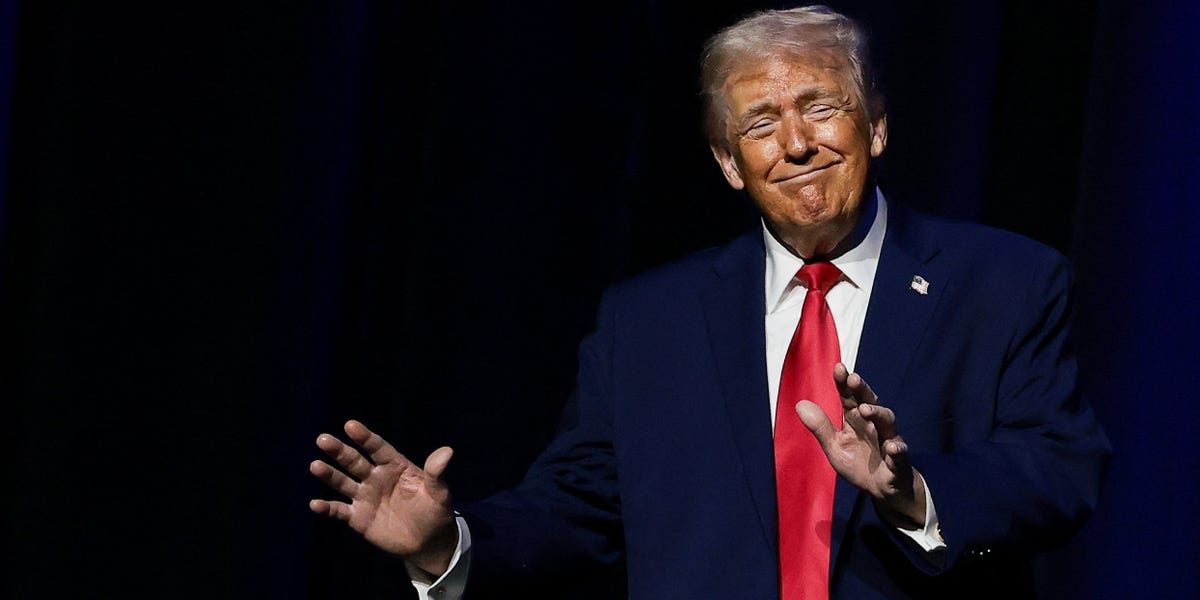
The promise of a $2,000 stimulus check has been a recurring topic of discussion, particularly following former President Donald Trump’s suggestions based on tariff revenues. Recent reports, however, indicate that this potential payout may not materialize, as Trump himself offered ambiguous statements during a recent interview. This article delves into the evolving situation surrounding the proposed $2,000 check, examining the former president’s comments, the feasibility of funding such a program with tariff income, and alternative plans for those funds.
Trump’s Shifting Stance on the $2,000 Check
During an interview with The New York Times, Trump’s recollection of his own proposal appeared hazy. When questioned by reporter Katie Rogers about the timeline for the $2,000 checks funded by tariff revenues, he responded, “I did do that? When did I do that?” He then pivoted to mention a previous commitment of $1,776 for the military.
Further pressed by another journalist, Tyler Pager, Trump acknowledged the “substantial” tariff money coming in and suggested the checks “sometime… toward the end of the year” were possible. This contrasts with his earlier, more definitive statements on Truth Social in November, where he proposed a $2,000 payout to low and middle-income Americans, citing the government’s “so much money” from tariffs. He even boldly declared, “People that are against Tariffs are FOOLS!” and linked the payout to tariff revenue.
This inconsistency raises serious doubts about the likelihood of the $2,000 check becoming a reality. The shifting narrative highlights the complexities of translating campaign promises into concrete policy.
The Reality of Tariff Revenue and Funding Options
While Trump emphasizes the significant income generated by tariffs, the actual amount available for direct distribution to citizens is far from certain. Treasury Secretary Scott Bessent estimated in a recent Supreme Court filing that the federal government has collected approximately $1 trillion in tariffs. However, this revenue is already earmarked for various purposes.
The former president has since indicated that a substantial portion of the tariff revenue will be directed towards reducing the national debt and bolstering national defense. As of January, the national debt stands at around $38.40 trillion, having increased by $2.17 trillion in 2025 alone. Even a $1 trillion influx from tariffs would only cover less than 50% of that recent increase.
Furthermore, Trump has proposed increasing the defense budget to $1.5 trillion for fiscal year 2027, a move estimated to add another $5.8 trillion to the national debt over the next decade. This suggests that the available tariff revenue will be stretched thin, making a widespread stimulus payment of $2,000 per person increasingly improbable. The debate over government spending and debt reduction adds another layer of complexity to the situation.
Beyond the $2,000 Check: Other Proposed Payouts
The $2,000 check isn’t the only financial benefit Trump has floated as a possibility during a potential second term. He has also suggested a $5,000 payment in the cryptocurrency DOGE, a $10,000 bonus for air traffic controllers who maintained perfect attendance during a government shutdown, and a $1,000 contribution to “Trump Accounts” for citizen children. Additionally, he proposed a $1,776 “warrior dividend” for active military personnel.
These diverse proposals, while appealing to specific demographics, further complicate the picture. The sheer number of potential payouts raises questions about the overall financial strategy and the prioritization of resources. The feasibility of these plans, like the $2,000 check, remains uncertain.
The Power of the Purse: Congress’s Role
A crucial point to consider is that the power to authorize and distribute funds ultimately resides with Congress, not the presidency. While the president can propose initiatives, it is Congress that holds the “power of the purse” and must approve any appropriations.
Therefore, even if Trump were to prioritize a $2,000 check, its implementation would depend on securing the necessary legislative support. This political hurdle adds another significant challenge to the realization of this proposed economic stimulus. The current political climate and potential for partisan gridlock could further impede progress.
Conclusion: A Check on Expectations
The prospect of a $2,000 stimulus check funded by tariff revenues appears increasingly uncertain. Trump’s inconsistent statements, coupled with the realities of government debt and competing budgetary priorities, suggest that this promise may not be fulfilled. While the idea of a direct payment to Americans is attractive, the logistical and political challenges are substantial.
It’s important for citizens to remain informed about the evolving situation and to understand the role of Congress in determining the fate of any potential financial relief. Staying updated on economic policy and engaging with elected officials are crucial steps in ensuring that your voice is heard. For further information on government stimulus programs and economic news, consider exploring resources from the Treasury Department and reputable financial news outlets.