


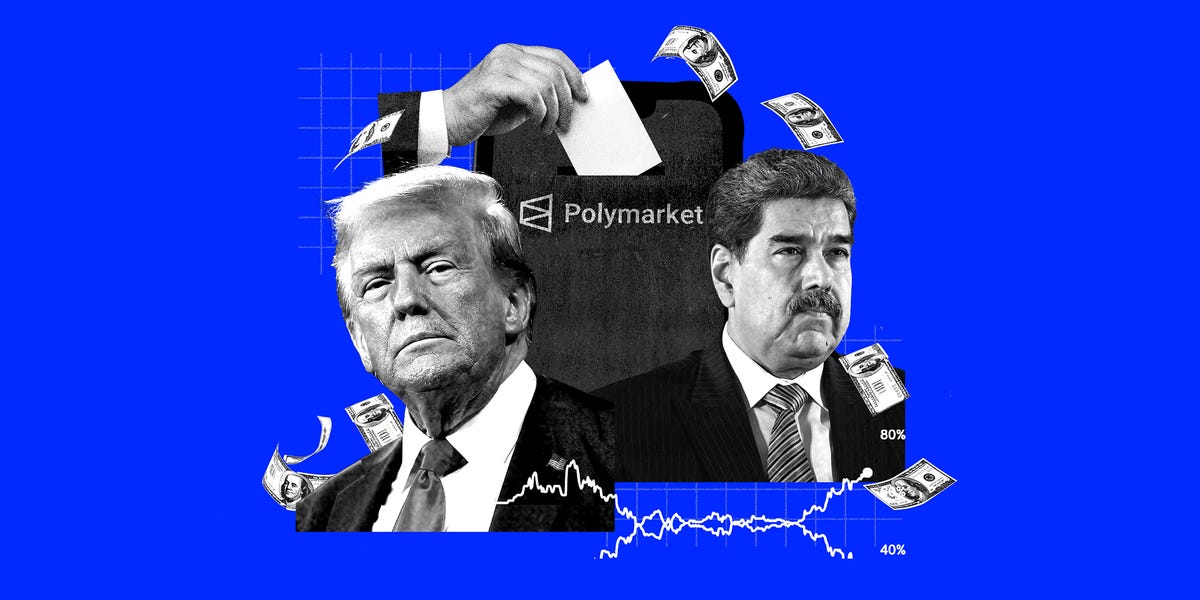
The world of financial markets is constantly evolving, and with it, new avenues for potential profit – and scrutiny – emerge. Recently, a series of events surrounding prediction markets and substantial gains made by a bettor anticipating a shift in Venezuelan leadership have brought the issue of insider trading into sharp focus. The case begs the question: are these markets robustly protected against the exploitation of non-public information, and if not, should they be? The very nature of these markets – designed to leverage foresight – presents a unique challenge to traditional regulatory frameworks.
What Happened in Venezuela? A Case Study in Prediction Market Activity
Just ahead of a period of heightened political tension in Venezuela in early January, a new account on Polymarket, a popular prediction platform, placed a $30,000 bet on Nicolás Maduro leaving office. This wasn’t a small gamble; it was remarkably prescient timing, given subsequent events. The bet yielded over $400,000 in returns, an astonishing payout that immediately raised concerns. Was this simply a lucky guess, or did the bettor possess knowledge unavailable to the general public, potentially originating from sources within the US government or related organizations?
This incident isn’t isolated. In December, another Polymarket user reportedly made $1 million by correctly predicting 22 out of 23 of Google’s most searched terms of the year. While different in nature, it highlights a pattern: significant profits being generated by individuals demonstrating an unusual level of accurate prediction. This naturally leads to suspicions about utilizing private information for gain.
The Legal Gray Area of Prediction Markets & Insider Trading
Currently, the legality of prediction markets themselves in the US is somewhat ambiguous. However, the Commodity Futures Trading Commission (CFTC) – the governing body for these markets – has generally allowed them to operate, particularly after a period of relative permissiveness under the Trump administration. Where things get truly complex, though, is the application of market manipulation rules, specifically those related to insider trading.
Many maintain that such activity must be illegal. Yet, the regulatory landscape isn’t as straightforward as it seems. The main rule addressing insider trading that could apply is just 15 years old and is often interpreted in the context of traditional financial instruments. Some platforms, like Kalshi, proactively prohibit insider trading. Others, like Polymarket, take a more relaxed approach. Manifold Markets even encourages leveraging unique insights, though it primarily operates with non-real money to mitigate legal risks.
The Difficulty of Enforcement and Varying Interpretations
According to Timothy Massad, a research fellow at Harvard’s Kennedy School of Government and former CFTC chair, a fundamental obstacle exists. “There’s no general statutory standard for prediction markets. There’s no general ban that says you can’t trade on the basis of insider information. And what would insider information even be?” he asks. This underlines the difficulty of applying legal definitions honed for stock trading to the nuances of predicting geopolitical events like a change in government.
Aitan Goelman, a partner at Zuckerman Spaeder and former head of the CFTC’s enforcement division, echoes this sentiment. He explains that proving a violation requires demonstrating a “fiduciary duty” to keep the information confidential. “If you have a fiduciary duty not to trade on something or not to reveal something, or if you’re a tippee and you know that the tipper had a fiduciary duty not to, then it is a violation.” But how does that apply to someone overhearing a conversation or piecing together clues from public sources?
The CFTC’s historical enforcement record in this area is minimal. Cases brought have generally been settled out of court, leaving a lack of legal precedent to clarify how the rules apply specifically to prediction markets. This lack of clarity is further compounding the issue.
Is Insider Information Actually a Feature?
Interestingly, some argue that a degree of “insider knowledge” isn’t necessarily detrimental to the function of these markets. The idea behind prediction markets is, after all, to aggregate information and arrive at more accurate forecasts. If individuals with unique insights—those “on the inside”—participate and share their knowledge through trading, it could, in theory, improve the market’s accuracy.
Shayne Coplan, CEO of Polymarket, has even suggested that the financial incentive for sharing information is a “cool” aspect of the platform. However, this argument is quickly tempered by concerns about fairness and the potential for manipulation. If only a select few consistently have an advantage, others may lose faith in the integrity of the market.
The Future of Regulation and Maintaining Market Integrity
The current situation is causing unease. Some believe these markets are essentially a form of speculation, and tighter regulation is needed. Others fear that excessive rules could stifle innovation and the positive aspects of information aggregation.
Regulators face a difficult balancing act. Simply stating insider trading is prohibited isn’t enough; they need to define what constitutes “inside information” in the context of prediction markets and develop effective enforcement mechanisms. As Yesha Yadav, a professor at Vanderbilt University’s law school, points out, the very nature of some questions—predicting the specific words a mayor will use in a speech, for instance—means that only a limited number of people can realistically answer correctly.
Ultimately, the future of prediction markets may hinge on addressing these concerns about fairness and transparency. The question isn’t merely whether insider trading is technically permissible, but whether it’s legally and ethically acceptable, and if the current framework can ensure a level playing field. Without clear guidance and active oversight, these nascent markets risk being undermined by distrust and accusations of being “gamed.”