


The announcement by former US President Donald Trump regarding the formation of a “Board of Peace” for Gaza and a potential “comprehensive demilitarisation agreement” with Hamas has sparked significant attention and debate. This initiative, supported by key regional players like Egypt, Turkey, and Qatar, aims to establish a technocratic Palestinian government to oversee Gaza’s transition, following a ceasefire agreement that began in October. The situation in Gaza remains incredibly fragile, and this proposed board represents a new, albeit controversial, approach to achieving lasting peace.
تفاصيل مبادرة “مجلس السلام” لغزة
Details of the new committee were initially revealed by Middle East Eye (MEE), indicating a 15-member Palestinian team led by Ali Shaath, a former deputy minister for planning. While Trump initially withheld specific names, he confidently proclaimed on his Truth Social platform that the board comprises “the greatest and most prestigious” individuals ever assembled for such a purpose. He further clarified his role as chairman, backing a newly appointed Palestinian Technocratic Government, the National Committee for the Administration of Gaza, with support from the Board’s High Representative.
This emphasis on a technocratic government is a key element of the plan. The intention is to create a governing body focused on practical administration and rebuilding, rather than political maneuvering. Trump’s repeated use of the word “peaceful” underscores the desired outcome, stating that the leaders involved are “unwaveringly committed to a PEACEFUL future!”
المرحلة الثانية من اتفاق وقف إطلاق النار و دور الوساطة المصرية والتركية والقطرية
The move comes as US envoy Steve Witkoff announced the commencement of the second phase of the ceasefire agreement, framed as part of Trump’s broader 20-point plan to end the conflict. This second phase specifically focuses on establishing the transitional technocratic Palestinian administration. However, the path to this phase has been fraught with challenges, primarily due to continued Israeli attacks within the besieged territory.
The scale of the destruction is staggering. According to the Palestinian health ministry, Israeli operations have resulted in over 71,400 Palestinian deaths and at least 171,000 injuries. Nearly 450 Palestinians have been killed since October. Despite the horrific toll, Egypt has reported that a majority of Palestinian factions have agreed to support the technocratic committee, paving the way for the implementation of the second phase. The roles of Egypt, Turkey, and Qatar as mediators are crucial to the success of this initiative, and Spain has welcomed the development as a “positive step” towards Palestinian unity and alleviating the humanitarian crisis. The Spanish Foreign Ministry highlighted the potential for the committee to “contribute to stability” and facilitate increased aid access to Gaza.
مهام “مجلس السلام” و هيكل الإدارة الانتقالية
Overseeing the committee will be Nickolay Mladenov, a Bulgarian former UN Middle East peace coordinator, serving as the High Representative of the Trump-led “Board of Peace.” The committee’s structure outlines specific responsibilities for its members.
Here’s a breakdown of key roles:
- Omar Shamali: Communications
- Abdul Karim Ashour: Agriculture
- Aed Yaghi: Health
- Aed Abu Ramadan: Industry and Economy
- Jabr al-Daour: Education
- Bashir Al-Rayes: Finance
- Ali Barhoum: Water and Municipalities
- Hanaa Tarzi: Relief and Solidarity
- Adnan Salem Abu Warda: Judiciary
A senior Hamas source has indicated the group has no objections to the proposed names, suggesting a willingness to cooperate with the transitional administration. This is a significant development, as Hamas’s support is vital for the committee’s effectiveness.
حجم الدمار في غزة و التحديات المستقبلية
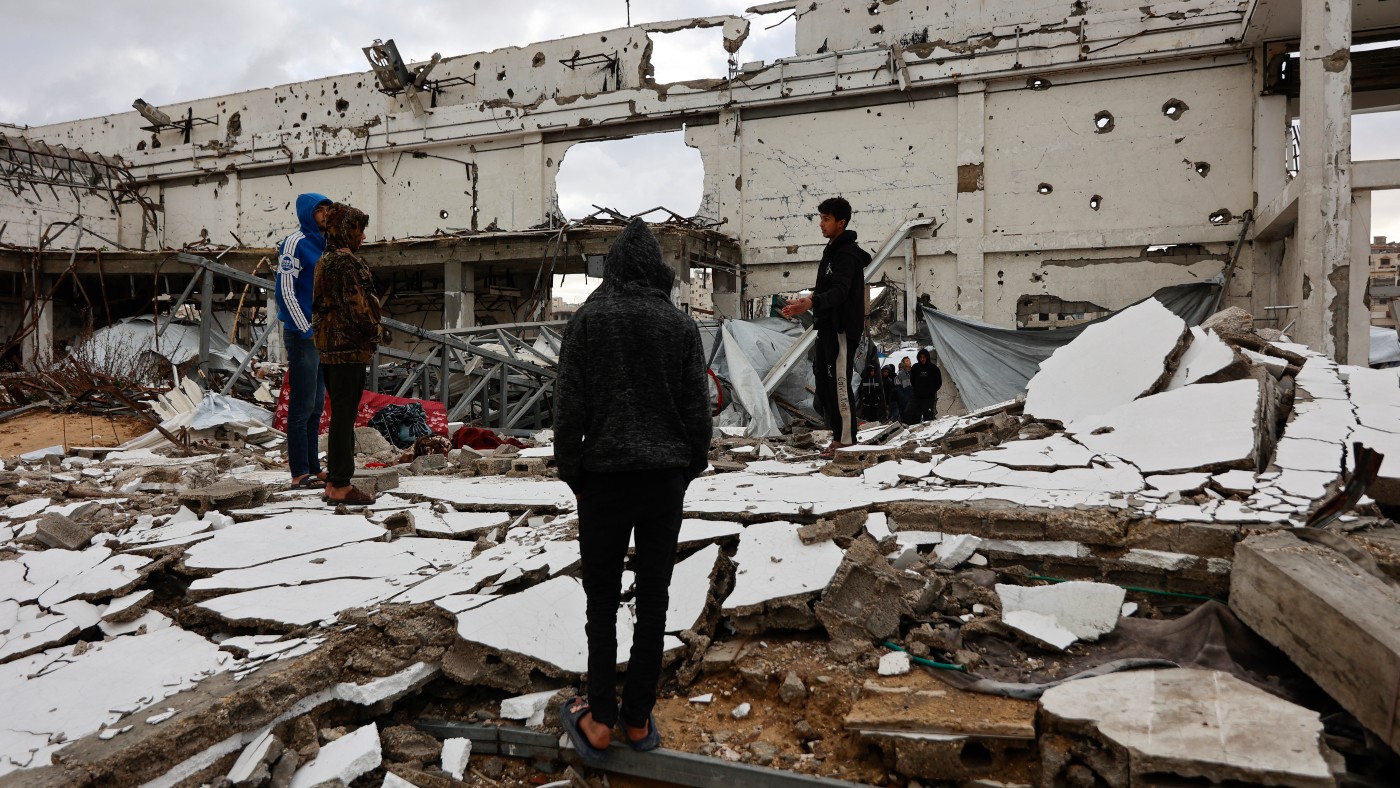
The challenges facing the technocratic government are immense. Jorge Moreira da Silva, a UN under-secretary-general, revealed the sheer scale of the destruction, stating that Gaza is now burdened with over 66 million tons of rubble – equivalent to the capacity of nearly 3,000 container ships. He estimates it will take over seven years to clear this debris.
The humanitarian situation remains dire. Da Silva described the population as “exhausted, traumatised, and overwhelmed,” emphasizing that harsh winter conditions and heavy rains are exacerbating their suffering. The impact on children is particularly devastating, with over 39,000 estimated to have lost one or both parents since the start of the aggression, including 17,000 fully orphaned children, according to the Palestinian Central Bureau of Statistics. Rebuilding Gaza, both physically and socially, will require substantial international support and a sustained commitment to peace. The success of this Gaza peace initiative hinges on addressing these immediate needs while simultaneously working towards a long-term solution. The political transition in Gaza is a complex undertaking, and the role of the technocratic government will be critical in navigating the challenges ahead.
الخلاصة: نظرة مستقبلية نحو غزة
The formation of the “Board of Peace” and the proposed technocratic government represent a new chapter in the ongoing efforts to resolve the conflict in Gaza. While the initiative faces significant hurdles, including the extensive destruction and the deeply entrenched political divisions, the support of key regional and international actors offers a glimmer of hope. The focus on practical administration and rebuilding, coupled with a commitment to a peaceful future, could potentially lay the groundwork for a more stable and prosperous Gaza. However, sustained engagement, substantial aid, and a genuine commitment to addressing the root causes of the conflict are essential for achieving lasting peace. Further updates on the committee’s composition and its implementation plan are eagerly awaited by the international community.