


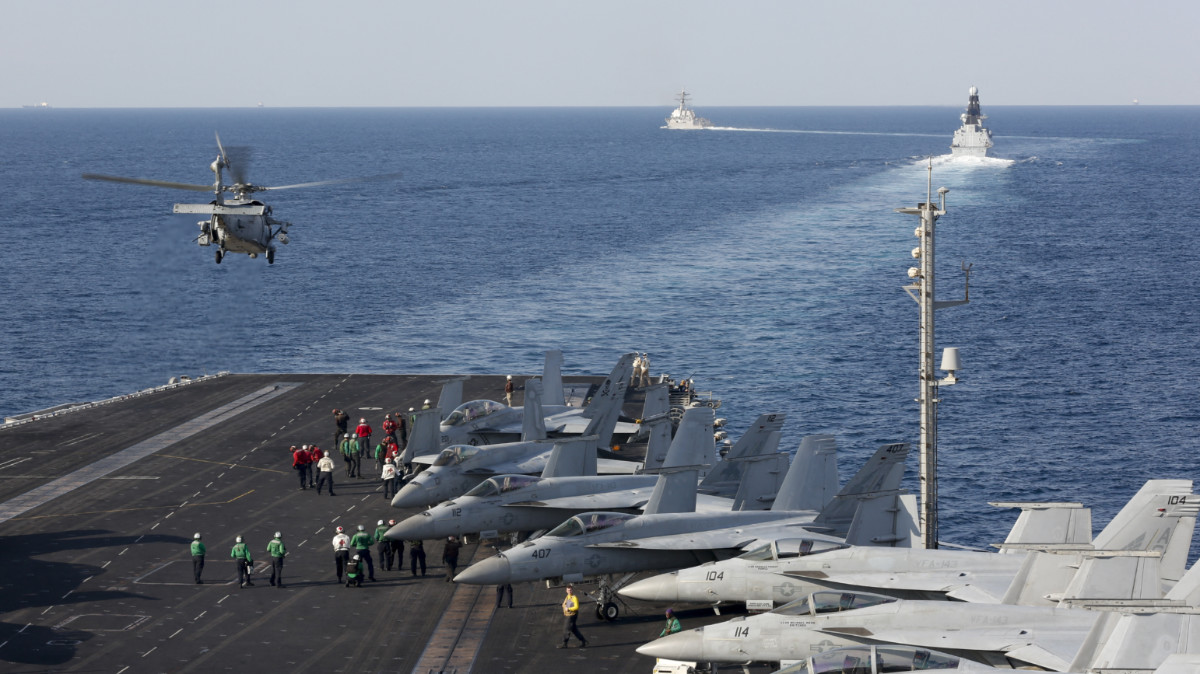
The administration of former US President Donald Trump appears to be adopting a ‘wait and see’ approach regarding potential military action against Iran, believing time is on their side as protests continue within the Islamic Republic. Sources within the US government, both current and former, familiar with ongoing discussions about Iran, have revealed to Middle East Eye that the president is carefully calibrating an escalation ladder, seemingly content to let the situation unfold. This strategy hinges on the belief that the current unrest, sparked by economic hardship, is not a fleeting phenomenon and could ultimately lead to regime change.
The Shifting Sands of US Policy Towards Iran
For months, the Trump administration has maintained a hawkish stance towards Iran, culminating in a limited strike in June. However, the current mood within Washington, according to insiders, is less about immediate military intervention and more about observing the internal dynamics within Iran. The protests, which began in January fueled by a collapsing economy, have unexpectedly spread to traditionally loyal areas, including rural communities and the merchant class. This broadening of dissent is seen as a significant weakness for the Iranian government.
The brutal crackdown on protestors, with estimates from Reuters suggesting over 2,600 deaths, is a key factor influencing the US approach. Rather than rushing to military action, the administration seems to be calculating how best to leverage the ongoing unrest. “This deescalation appears temporary, very much awaiting developments in Iran,” explains Randa Slim, head of the Stimson Center’s Middle East programme. “I think Trump is betting this regime can’t sustain itself long-term.”
A Pattern of Calculated Unpredictability
This measured approach, however, doesn’t negate Trump’s well-documented penchant for unpredictability. A former US official described this as a deliberate “weave” – a pattern of escalating and de-escalating tensions to keep adversaries off balance. This tactic was reportedly employed with Venezuela, where threats of intervention were followed by a more subtle operation to influence the political landscape.
The official emphasized, “What’s the rush?” suggesting the administration sees value in allowing the situation to evolve naturally. A former senior US defence official echoed this sentiment, stating, “If we allow this to play out naturally, we will be able to see who is remaining and what the public wants.” They highlighted the presence of clandestine operations within Iran, supported by various international actors, and expressed concern that immediate military action could disrupt these efforts.
Strategic Timing and Potential Targets
The timing of any potential strike is also being carefully considered. Upcoming events in Iran – including commemorations for martyrs, the holy month of Ramadan, the anniversary of the 1979 revolution, and the Nowruz New Year celebrations – historically represent periods of heightened tension. The 1979 revolution itself was propelled by anniversaries marking the deaths of protestors.
Military analysts suggest that potential targets within Iran would likely include bases belonging to the Islamic Revolutionary Guard Corps (IRGC) and facilities used by the Basij militia. The goal, according to sources, would be to support the protests and facilitate a shift in power, rather than a full-scale invasion. This echoes the approach taken in Venezuela, where Trump opted to work with remnants of the Maduro government to exert influence.
Regional Concerns and Alliances
The US isn’t operating in a vacuum. The reactions of its regional allies, particularly Gulf Arab states like Saudi Arabia and Qatar, are playing a crucial role in shaping the administration’s strategy. These countries have expressed concerns about escalating tensions and the potential for Iranian retaliation.
Indeed, a ban on the use of Gulf states’ airspace and territory for attacks on Iran has been in place since April 2025, as previously reported by Middle East Eye. While Trump previously disregarded similar pleas in June, the region’s heightened awareness following that incident is proving influential. A former Egyptian official noted, “The pressure this time from Saudi Arabia is especially intense.” They added that the Gulf states now take the threat of US military action far more seriously than they did over the summer. Iran’s response to any attack is a major consideration.
Security Guarantees and Diplomatic Maneuvering
The US maintains a significant military presence in the region, with bases in Turkey, the UAE, Qatar, and Saudi Arabia. Tehran has reportedly warned its Arab partners that these bases would be targeted if the US attacks Iran. This has understandably raised anxieties among these nations, prompting the US to offer security assurances.
While these assurances are often non-binding and deliberately vague to maintain flexibility, they represent a commitment to protecting regional allies. Turkey, as a NATO member, benefits from a stronger security pledge. David Schenker, from the Washington Institute for Near East Policy, believes these pledges are a key factor in Trump’s calculations. “Everything that has been done is positioning the US to do this (strikes). He is signalling that this is coming,” Schenker stated.
The “Help is on the Way” Signal and Future Outlook
Trump’s recent statements, including his tweet urging protestors to “take back” government institutions and his claim that “help is on the way,” have further fueled speculation about potential intervention. He later tempered these remarks, claiming the killing of protestors had stopped and stating, “We saved a lot of lives.”
The administration’s strategy appears to be a combination of pressure, signaling, and patient observation. They are leveraging the threat of force to deter the Iranian regime while simultaneously seeking to placate regional allies and assess the long-term viability of the current government. The situation remains fluid, and the possibility of military action against Iran cannot be ruled out, but for now, the Trump administration seems to be betting on the power of internal dissent and the strategic advantage of time. The ongoing protests in Iran are central to this calculation, and the administration is closely monitoring their evolution. The potential for escalation in the Middle East remains a significant concern.