


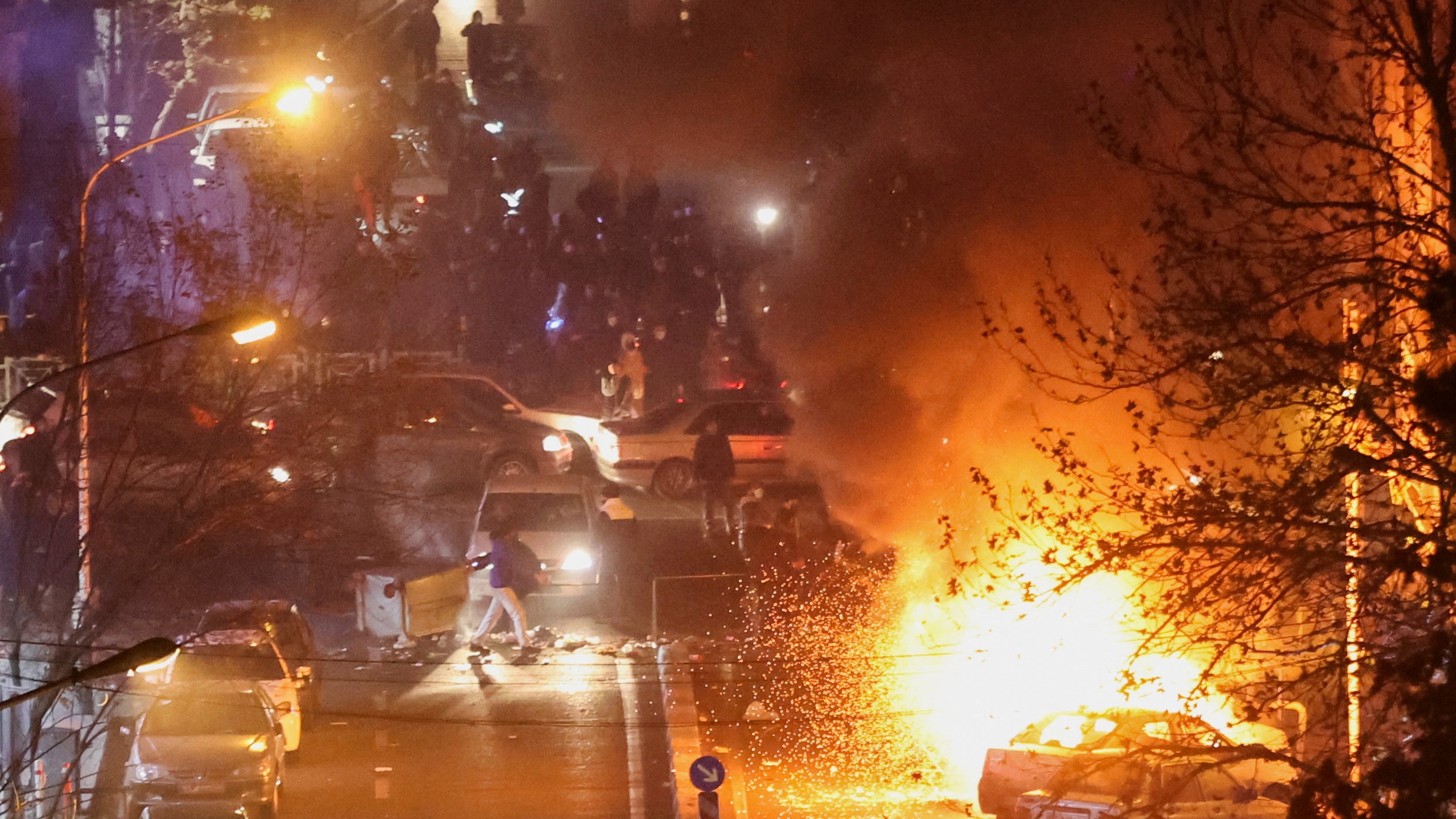
The recent wave of protests sweeping across Iran, now entering its third week, are deeply rooted in the country’s severe economic challenges and widespread dissatisfaction with the government. However, according to a panel of experts convened by the Quincy Institute for Responsible Statecraft, the demands emanating from the Iranian streets are not for external intervention, despite a history of perceived aggression from both Israel and the United States, including recent experiences like the situation in Venezuela. Instead, the primary desire is for a change in circumstances facilitated by the lifting of crippling US sanctions and a new path towards economic stability.
فهم دوافع الاحتجاجات في إيران (Understanding the Motivations Behind Iran’s Protests)
The current unrest began following the death of Mahsa Amini while in the custody of the morality police, sparking outrage over women’s rights and government control. But the underlying fuel for these demonstrations is far more extensive. Mohammad Ali Shabani, editor of Amwaj magazine, explained that the overwhelming majority of Iranians would welcome any agreement that eased the economic pressure and reduced the risk of a wider conflict. He also noted a growing, albeit quiet, acceptance that the current Islamic Republic may not be a permanent fixture, a sentiment altered by two decades of struggling under sanctions.
“I think the vast majority of Iranians would welcome a deal that lifts the shadow of war and invites the removal of sanctions,” Shabani stated, adding that the sanctions are paradoxically prolonging the regime’s survival by intensifying its reliance on hardliners. This observation highlights the complex dynamics at play. The middle class, a key potential driver for internal political reform, has been significantly eroded by the economic hardship caused, in part, by these very sanctions.
المطالب الشعبية ورفض التدخل الأجنبي (Popular Demands and Rejection of Foreign Intervention)
A central theme emerging from the expert discussion is the vital distinction between popular Iranian sentiment and perceptions often held in the West. Ellie Geranmayeh, senior policy fellow at the European Council on Foreign Relations, emphasized the importance of acknowledging the existence and agency of Iranian civil society. This society isn’t clamoring for military strikes or violent overthrow, but rather for fundamental change from within.
“Too often in the West, we are forgetting that [Iranian civil society] exists, and that those people have not been necessarily calling for foreign intervention through military strikes,” Geranmayeh pointed out. “There is a political arm to it. There is a civil society, a human rights part to it. And so those are some of the people we should also be focusing on.” She further highlighted the government’s consistent pattern of offering concessions – often on social issues – following major periods of unrest, such as increased subsidies after the 2019 protests and a loosening of hijab restrictions in response to the 2022 movement. This suggests a capacity for adaptation, however limited, within the existing system.
حدود التغيير وإمكانية التدخل الخارجي (Limits of Change and the Possibility of External Intervention)
However, this capacity for reform appears to be reaching its limits. Geranmayeh suggested the current leadership, specifically the Supreme Leader, may have encountered a “ceiling” in its ability to respond to demands for change. Adding to the complexity, the recent escalation has included reports of attacks on symbols of the state like mosques and banks, potentially alienating segments of the population. While hundreds of protestors have been killed, the government also announced the deaths of over 100 security personnel, signaling a level of confrontation previously unseen.
The question of external leadership and influence also surfaced. Vali Nasr, professor at Johns Hopkins, dismissed notions of a unified opposition with a clear agenda, stating that the protests are a “genuine eruption of popular anger” lacking centralized leadership and organization. He discounted the significance of exiled figures like Reza Pahlavi, son of the former Shah, asserting that Pahlavi did not initiate or direct the current movement. The calls for the Shah’s return, according to Shabani, are less about restoring the monarchy and more about defiance towards the current Supreme Leader, Ayatollah Ali Khamenei.
تصعيد التوترات الإقليمية والدولية (Escalating Regional and International Tensions)
The situation is further complicated by regional and international dynamics. Former President Trump has openly discussed military options, particularly in the wake of alleged “successful” strikes against Iran’s nuclear facilities. Israel, meanwhile, has consistently expressed its desire for regime change in Iran. This raises the spectre of a potentially disastrous escalation.
Geranmayeh warned of the danger of Trump authorizing a strike to demonstrate strength, potentially triggering a corresponding response from Israel and escalating US involvement. However, she also noted that Trump’s ultimate goal might be an economically viable Iran integrated within the Arab world – a goal diverging from Israel’s stated objective of complete collapse.
Nasr believes Iran now perceives a heightened risk of intervention, stating, “This time, the United States thought Iran is weak and its back is to the wall, and President Trump feels comfortable to threaten intervention.” He argues that Iran no longer possesses the regional power or a compelling nuclear negotiation to dissuade the US from aggressive action. This perception, he suggests, may lead the Iranian security forces to a harsher crackdown to “finish this off quickly”.
ردود فعل النظام وتأثير العنف (Regime Responses and the Impact of Violence)
Ayatollah Khamenei responded to Trump’s threats with a strong condemnation, invoking historical parallels of overthrown tyrants. Crucially, the Iranian government has imposed a near-total internet blackout, attempting to stifle communication and control the narrative.
Shabani cautioned against simplistic interpretations of the unrest as a solely “foreign plot,” but simultaneously acknowledged the significant external factors. He observed that whenever faced with external threats, the Iranian regime tends to revert to its most conservative elements, consolidating power within hardliner factions. The violent dimension of the protests – including the reported torching of mosques and banks and the deaths of security forces – introduces a new level of complexity and risk, potentially turning segments of the population against each other due to fear of instability, having witnessed the devastating consequences in neighboring countries like Syria, Iraq and Afghanistan.
The current Iran protests aren’t seeking foreign intervention, but the international community can play a significant role in de-escalation. The focus needs to be on lifting US sanctions and creating space for genuine internal reform. Analyzing the situation requires looking beyond external actors and deeply understanding the economic pressure and internal dynamics driving this widespread unrest. Ignoring these nuances risks miscalculation and further instability in the region.