


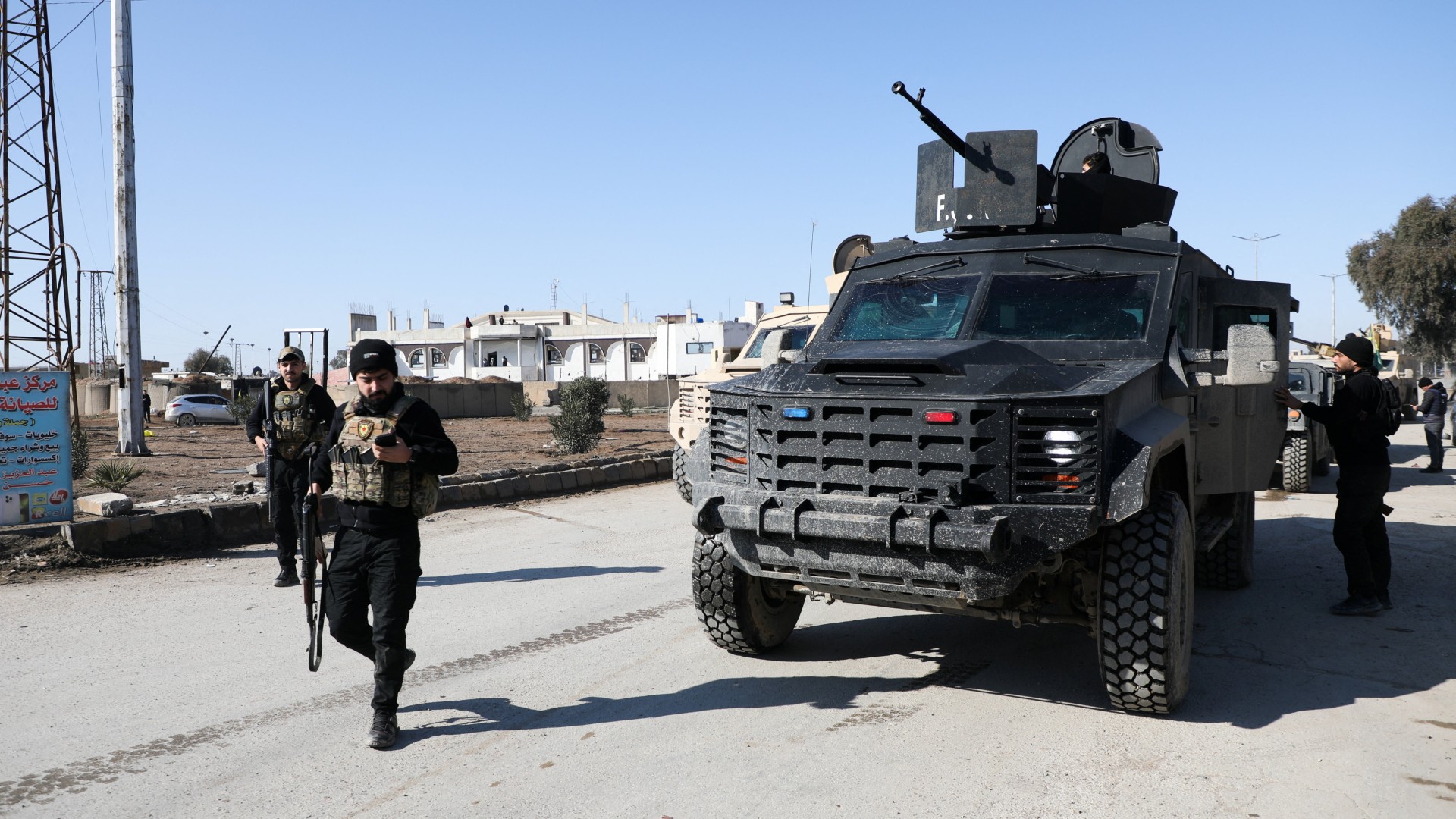
The recent and rapid dismantling of the Kurdish-led Syrian Democratic Forces (SDF) following the offensive launched by President Ahmed al-Sharaa’s forces represents a significant shift in US foreign policy and a notable easing of tensions with Turkey. Experts suggest this move, facilitated by the United States, effectively removes a long-standing point of friction in the relationship between Washington and its NATO ally, Ankara. The collapse of Kurdish autonomy in northeastern Syria, once backed by the US, has unfolded dramatically in the past month, reshaping the geopolitical landscape of the region.
The Unravelling of Rojava and US-Turkey Relations
For years, the rise of Rojava – the Kurdish-controlled region in northeastern Syria – had been a major source of contention between the US and Turkey. Ankara views the SDF, predominantly comprised of the Kurdish People’s Protection Units (YPG), as a terrorist organization and an extension of the Kurdistan Workers’ Party (PKK), which has waged a decades-long insurgency against the Turkish state. This perception created a significant obstacle to closer US-Turkey cooperation, despite their shared membership in NATO.
“The rise of Rojava really poisoned Turkey’s relationship with the US,” explains Gonul Tol, director of the Turkey programme at the Middle East Institute. “Now, Rojava is unravelling with Washington’s blessing. This not only removes a major irritant in US-Turkey relations, it helps Erdogan’s efforts to consolidate power.”
The US initially partnered with the SDF in 2015 to combat the Islamic State (IS), a pragmatic alliance that prioritized the defeat of the terrorist group. However, this partnership consistently angered Turkey, which feared the strengthening of Kurdish groups along its border. The situation became increasingly untenable as the territorial threat from IS diminished, leaving the US with a dwindling rationale for maintaining its support for the SDF’s semi-autonomous status.
Sharaa’s Offensive and the Shift in US Policy
The turning point came with President Ahmed al-Sharaa’s military offensive, beginning in early January in Kurdish-majority areas of Aleppo. His forces swiftly advanced eastward, gaining control of vast territories, including the oil-rich Deir Ezzor province and Raqqa – a city pivotal in the SDF’s fight against IS. This rapid territorial gain fundamentally altered the power dynamics in Syria, bringing areas under Damascus’s control for the first time in over a decade.
Sharaa’s ascent to power in December 2024, coinciding with Donald Trump’s return to the White House, proved crucial. Trump, long skeptical of prolonged US involvement in Syria, signaled a willingness to accommodate Turkey’s security concerns. He had previously attempted to withdraw US troops from Syria during his first term, facing resistance from within his own administration.
Addressing Turkey’s Security Concerns
The Trump administration, particularly through the appointment of Tom Barrack as envoy to Syria and ambassador to Turkey, adopted a more conciliatory approach towards Ankara. Barrack, known for his close ties to Erdogan and his interest in Ottoman history, actively sought to align US and Turkish interests in the region. This meant a reassessment of the US commitment to the SDF.
Robert Ford, the last US ambassador to Syria, highlighted this shift, stating that the Trump administration “understands the Turks have a vital national security interest in Syria” and “respects that in a way others in Washington haven’t.” This understanding translated into a willingness to allow the Syrian government, backed by Russia and Iran, to reassert its authority over areas previously controlled by the SDF. The focus shifted from supporting Kurdish autonomy to prioritizing stability and addressing Turkey’s security concerns.
The Future of the SDF and Regional Ramifications
On Tuesday, Barrack officially declared that the US security partnership with the SDF had “largely expired,” effectively endorsing a ceasefire agreement that dismantles the foundations of Kurdish self-governance. The agreement stipulates that SDF fighters will be integrated into the Syrian army as individuals, rather than maintaining distinct Kurdish divisions. While the deal includes provisions to prevent Syrian forces from entering Kurdish majority towns like Qamishli and Hasaka, it explicitly rejects any form of semi-autonomy or a “federal system” for Syria.
Omer Ozkizilcik, a non-resident fellow at the Atlantic Council, believes this represents a near-complete resolution of the “major point of contention” between the US and Turkey. “All stars appear aligned,” he stated. “This will have ramifications across the Middle East and potentially beyond. The US and Turkey are aligned.” This alignment could prove critical in securing Turkish cooperation on issues such as the ongoing conflict in Gaza and the war in Ukraine.
However, the situation is not without its complexities. US Senator Lindsey Graham, a staunch Trump ally, publicly criticized Sharaa’s offensive and threatened to push for the reinstatement of sanctions. This internal dissent within the US highlights the lingering concerns about the fate of the Kurds and the potential for instability in Syria. The US has also been navigating delicate relations with Israel, which has its own strategic interests in Syria and has historically supported various groups, including Kurdish factions. The Syrian conflict remains a volatile situation.
Israel’s Role and the Broader Geopolitical Picture
Israel has been closely monitoring the developments in Syria, particularly the re-emergence of a strong central government in Damascus. Israel has exploited the power vacuum created by the Syrian civil war to occupy a UN buffer zone in southern Syria and conduct airstrikes against Iranian-backed forces operating within the country.
“A question for Turkey had always been, ‘if there is a Damascus offensive against the Kurds, will Israel do what it did in Suwayda?’” Tol noted, referencing Israel’s support for the Druze minority in Syria. Ultimately, Israel remained on the sidelines, a fact that reportedly relieved Ankara. Sources indicate that Barrack even confronted SDF leadership for seeking Israeli intervention, emphasizing the US desire for a resolution aligned with Turkish interests. The regional stability is a key factor in the US decision.
In conclusion, the US decision to effectively abandon the SDF and allow Sharaa’s forces to consolidate control over northeastern Syria marks a significant turning point in US foreign policy. Driven by a desire to address Turkey’s security concerns and potentially secure its cooperation on other critical issues, the Trump administration has prioritized its relationship with Ankara over its commitment to Kurdish autonomy. The long-term consequences of this shift remain to be seen, but it undoubtedly reshapes the geopolitical landscape of Syria and the broader Middle East. Further analysis of the evolving situation and its impact on regional actors is crucial for understanding the future of the Syrian Democratic Forces and the stability of the region.