


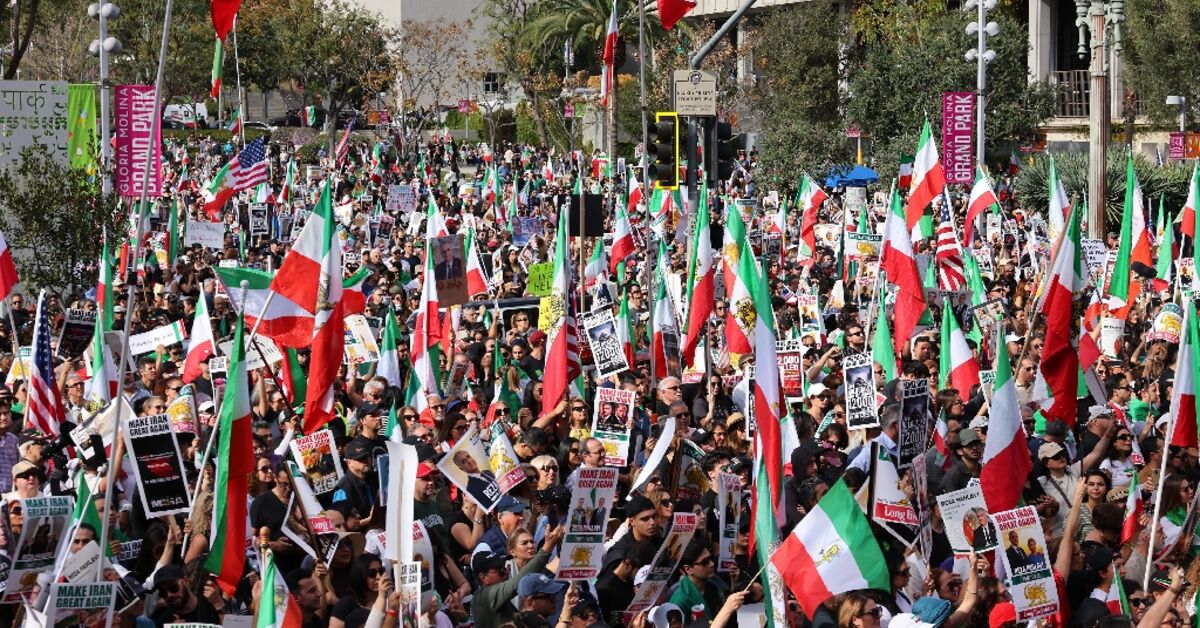
The recent wave of protests in Iran, sparked by economic hardship and escalating into a widespread challenge to the ruling government, has resonated deeply with the Iranian diaspora around the world. This unrest has triggered large-scale demonstrations in the United States, with thousands taking to the streets to condemn the violent crackdown on protesters in Iran and express solidarity with those fighting for change within the Islamic Republic. The demonstrations highlight the strong emotional connection and political activism of Iranians living abroad, and raise questions about potential external involvement.
масштабные протесты в США против насилия в Иране
Over the weekend, cities across the US witnessed significant displays of support for the Iranian people. Los Angeles, home to the largest Iranian community globally, saw several thousand participants march, while New York City hosted several hundred. These weren’t simply gatherings; they were passionate outpourings of grief, anger, and hope. Demonstrators carried poignant signs, some drawing parallels between the current situation and historical atrocities, labeling the government’s actions as a “New Holocaust” or “genocide in the making,” and decrying the “terror” inflicted upon the Iranian population.
Voices from the Diaspora: Personal Stories of Loss and Anger
The protests were fueled by deeply personal stories. Perry Faraz, a 62-year-old payroll manager who emigrated from Iran in 2006, shared her heartbreak after learning her young cousin was killed during the unrest. “My heart is heavy and my soul is crushed, I’m at a loss for words to describe how angry I am,” she stated, emphasizing the devastating human cost of the government’s response. Her story is just one example of the pain felt by many within the diaspora, who have family and friends directly impacted by the events unfolding in Iran. These personal connections amplify the urgency and emotional weight of the demonstrations.
The Roots of the Iranian Protests and Government Response
The initial spark for the protests was widespread economic discontent, including rising prices and unemployment. However, the movement quickly broadened to encompass broader demands for political and social freedoms. This escalation presented a significant challenge to the Iranian leadership, which responded with a forceful crackdown. Rights groups have condemned the government’s actions, describing them as a “massacre” carried out under a near-total communications blackout that began on January 8th.
According to Norway-based Iran Human Rights, they have verified the deaths of 3,428 protesters in Iran at the hands of security forces, relying on information from sources within the Iranian health and medical system, eyewitness accounts, and independent reporting. The organization warns that the actual number of fatalities is likely much higher, as access to information remains severely restricted. Independent verification of these numbers remains difficult, and Iranian officials have not released a comprehensive death toll.
Calls for International Intervention and Divergent Views
The demonstrations in the US weren’t solely about expressing solidarity. Many protesters voiced strong calls for international intervention, specifically urging US President Donald Trump to take a more assertive stance against the Iranian government. Ali Parvaneh, a 65-year-old lawyer protesting in Los Angeles, expressed his outrage, stating, “This mass murdering of the population is terribly upsetting.” He, like many others, carried a sign reading “Make Iran Great Again” and advocated for targeting the Islamic Revolutionary Guard Corps (IRGC).
Some attendees even went further, calling for the assassination of Iran’s Supreme Leader, Ali Khamenei. Trump’s response has been mixed, initially threatening intervention if protesters in Iran were killed, but later expressing satisfaction with assurances that executions would not occur. This inconsistency has led to frustration among some protesters who desire stronger US support.
The Role of the Monarchy and Internal Divisions
A notable element within the demonstrations was the visible support for Reza Pahlavi, the son of the former Shah of Iran. Many believe that a return to the monarchy would offer a more stable and prosperous future for Iran. “Had the monarchy stayed in place, it would be much different and Iran would be in a much better situation,” said Parvaneh, echoing a sentiment prevalent among certain segments of the diaspora.
However, this view isn’t universally shared. Some Iranians, particularly those with memories of the Shah’s repressive regime, are wary of a return to the past. A recent incident in Los Angeles, where a man drove a truck into a demonstration carrying a sign reading “No Shah. No Regime. USA: Don’t Repeat 1953. No Mullah,” highlights this internal division and the historical sensitivities surrounding US involvement in Iranian politics. The sign referenced the 1953 US- and UK-backed coup that overthrew Iran’s democratically elected government and reinstated the Shah.
Concerns about External Manipulation and the Path Forward
Roozbeh Farahanipour, a restaurant owner in Los Angeles’s “Tehrangeles” neighborhood, emphasized the importance of allowing Iranians to determine their own future. “They don’t need a puppet implanted by the West,” he stated, reflecting a concern that external actors might exploit the situation for their own gain.
This sentiment was echoed by poet Karim Farsis, who criticized US sanctions – including those imposed by the Trump administration – and the withdrawal from the nuclear deal as contributing factors to the suffering of the Iranian people. She also pointed to the near-total ban on Iranians entering the US as a barrier to providing refuge for those fleeing persecution. “Trump is saying to Iranians: ‘Keep protesting, take over your institutions.’ But if they find themselves in danger, they can’t even find refuge in the United States,” she observed. The situation is complex, and the future of Iran remains uncertain. The demonstrations in the US, while driven by genuine concern and solidarity, also underscore the need for a nuanced understanding of the internal dynamics and historical context of the protests in Iran.