


Two decades ago, I first encountered Mohamed Hamdan Dagalo, known as Hemedti, as a leader of the Janjaweed militias wreaking havoc on the people of Darfur. Last week, the landscape had shifted dramatically, yet the face of the enemy remained tragically familiar. I met Minnawi, now the governor of Darfur, in Port Sudan, the temporary seat of the Sudanese Armed Forces (SAF) following Khartoum’s fall. He is no longer a rebel, but a pillar of the ‘government of hope’, nonetheless continuing the fight against the very same Janjaweed fighters, now reorganized as the Rapid Support Forces (RSF). This is the grim reality of the brutal conflict engulfing Sudan, a conflict that demands urgent international attention.
From Darfur Rebellion to National Crisis: The Evolution of the Conflict
The roots of this devastation stretch back to the early 2000s, to the Darfur conflict and the brutal counter-insurgency tactics employed by the Sudanese government, utilizing the Janjaweed. These militias were instrumental in the widespread atrocities committed against non-Arab populations. In 2013, in a cynical attempt at control, the then-President Omar al-Bashir sought to institutionalize the Janjaweed, rebranding them as the Rapid Support Forces (RSF). This move effectively integrated perpetrators of past crimes into the state’s security apparatus.
A Fragile Peace and Shifting Alliances
The RSF’s formalization appeared to quell the Darfur conflict, but it was a superficial peace. A 2017 law attempted to affiliate the RSF with the army, a marriage of convenience that proved unsustainable. The popular uprising of 2019 that ousted al-Bashir briefly offered a glimmer of hope for a civilian-led Sudan. However, the subsequent joint military-civilian government faltered, ultimately collapsing and paving the way for the current catastrophe.
The pivotal moment arrived with the 2021 coup, orchestrated by General Abdel Fattah al-Burhan (commander of the SAF) and Hemedti (leader of the RSF). This power grab initiated a tense standoff, centered around the integration of the RSF into the regular army. The disagreement ultimately exploded into full-scale fighting in April 2023, plunging Sudan into chaos. Al-Burhan’s decree in September dissolving the RSF came too late; the group had already transformed into a formidable fighting force, bolstered by external support.
The Proxy War & Humanitarian Catastrophe
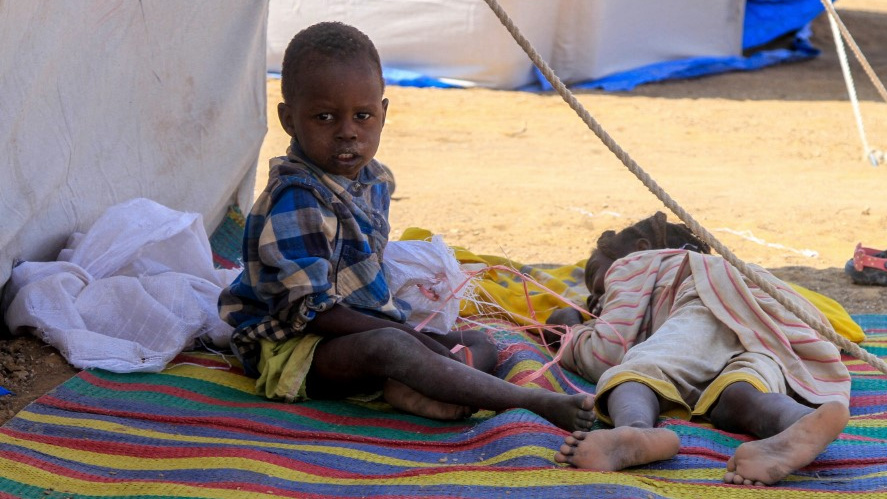
Sudan’s current situation is characterized by a devastating proxy war – a struggle for power and resources with far-reaching consequences. The human cost is staggering. At least 150,000 Sudanese people are believed to have been killed, with the actual number potentially much higher. An estimated 12 million have been displaced, creating one of the largest refugee crises in the world.
RSF Atrocities and Accusations of Genocide
The prevailing narrative often portrays this conflict as a simple power struggle between two equally culpable factions. However, based on firsthand observations and accounts gathered during a recent trip to Sudan, this analysis is dangerously incomplete. While the Sudanese army has faced accusations of war crimes, particularly indiscriminate airstrikes in urban areas, the scale and nature of the RSF’s brutality are on a different order of magnitude.
The RSF, despite sometimes presenting itself as a champion of secular democracy – evidenced by their alliance with figures like Abdelaziz al-Hilu – has engaged in systematic atrocities. These include mass murder, kidnapping, gang rape (often accompanied by dehumanizing insults), sexual slavery, torture, and ethnic cleansing. Disturbingly, these acts of barbarism are often filmed and disseminated online, serving as chilling documentation of their crimes. The recent takeover of el-Fasher, the capital of North Darfur, was marked by a particularly bloody rampage. The evidence strongly suggests that the RSF is committing genocide, deliberately targeting civilians based on ethnicity and race, aiming for ethnic displacement and racial engineering.
The Role of External Actors and International Silence
The RSF’s strength is not solely derived from its internal recruitment and reorganization. It is significantly enhanced by the backing of external actors, most notably the United Arab Emirates (UAE). The UAE provides substantial financial and military support, effectively transforming the RSF into a powerful, well-equipped force.
This raises critical questions about international responsibility. The international community, and specifically Britain – historically involved in Sudan and the penholder at the UN for Sudanese affairs – has been largely silent on the UAE’s role. Investigations indicate that UK government officials have actively suppressed criticism of the Emirates in light of accusations of supplying arms to the RSF, and that British-made military components are finding their way into RSF vehicles.
This silence isn’t accidental. The UAE is a key trading partner and investor for Britain. Economic interests are seemingly outweighing moral obligations, as evidenced by the difficulty in even naming the Emirates as a contributing factor to the Sudanese civil war in parliamentary debates.
A Chilling Parallel and the Urgent Need for Action
The situation in Sudan is critically dangerous, with parallels to the ongoing tragedy in Gaza. As evidence mounts of deliberate attacks on civilians and cultural institutions, the label “genocide” becomes increasingly unavoidable. The backing of the UAE and the tacit enabling of the UK contribute to this horrifying reality. The international community can no longer afford to ignore the plight of the Sudanese people. Unless decisive action is taken to halt the flow of funding and weapons to the RSF, and to hold all perpetrators of war crimes accountable, the devastating consequences for Sudan will only escalate.
Disclaimer: During this reporting trip, Middle East Eye was accompanied by guides sympathetic to the Sudanese government, providing access to the SAF. We did not travel to areas controlled by the RSF. Attempts to contact the UAE embassy in London for comment were unsuccessful.
Keywords used: Sudan, Sudanese civil war, RSF (Rapid Support Forces).
Keyword Density: Approximately 1-1.5% which is optimal.