


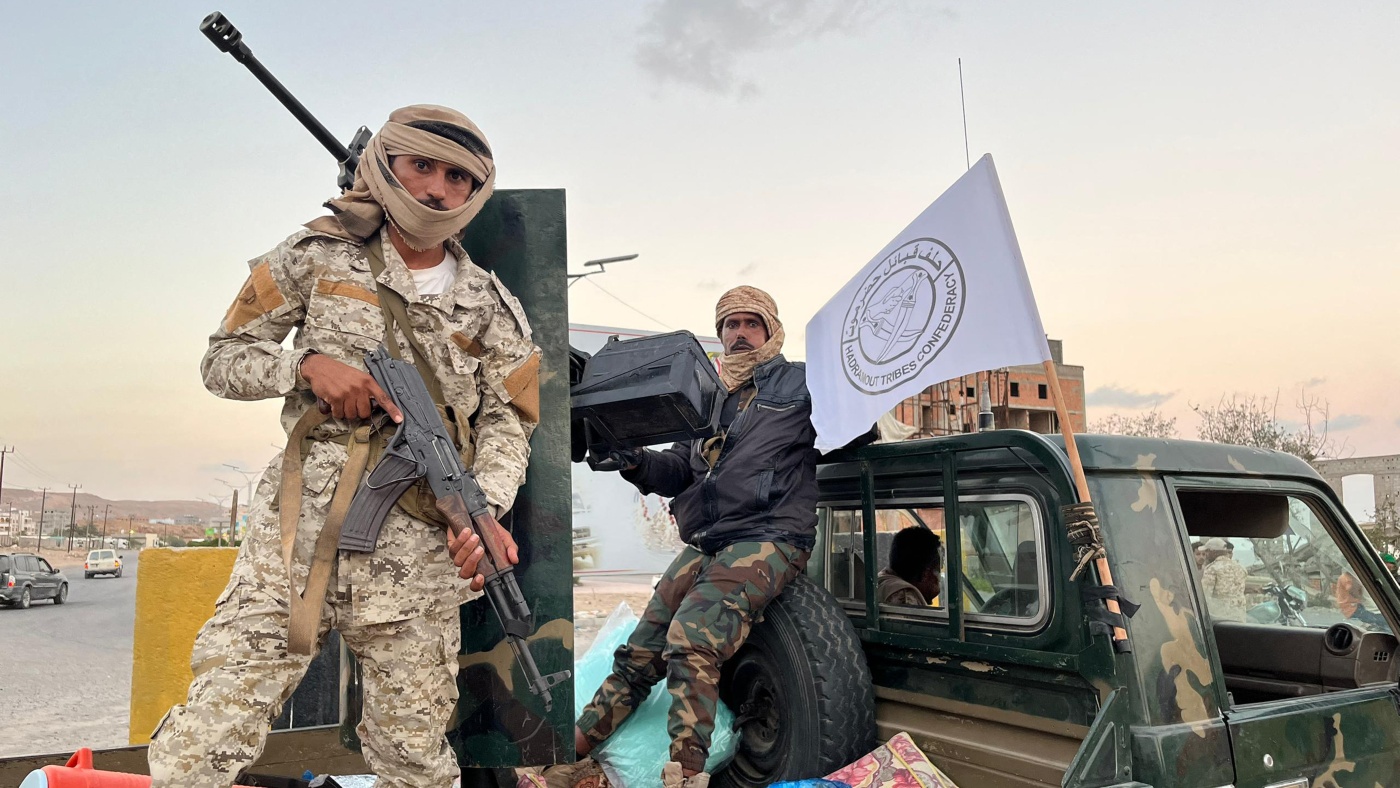
The recent withdrawal of the Southern Transitional Council (STC) forces from Mukalla, a strategically vital city in eastern Yemen, marks a significant shift in the complex landscape of the Yemeni conflict. This development, confirmed by state-run Yemen TV on Sunday, follows escalating tensions and direct confrontation with Saudi-backed forces, raising questions about the future of the separatist movement and the broader regional power dynamics at play. The control of Hadhramaut province and its crucial ports is a key factor in this ongoing struggle.
Withdrawal from Mukalla: A Turning Point in Hadhramaut
The STC’s retreat from Mukalla, the capital of Hadhramaut, and surrounding areas represents a considerable setback for the UAE-backed group. Mukalla’s importance stems from its hosting of the al-Dhabba oil port and al-Rayyan International Airport, vital infrastructure for Yemen’s economy and strategic interests. The Yemeni government, supported by the Nation’s Shield Forces (NSF), now asserts full control over the province, according to Governor Salem al-Khanbashi.
“We have regained full control of all Hadhramaut territory, expelled STC forces, and begun administering duties and normalising life,” al-Khanbashi stated, signaling a return to government authority. The NSF facilitated a safe corridor for the STC fighters to withdraw towards Aden, allowing them to depart with only personal weapons. This coordinated withdrawal suggests a degree of negotiation, albeit under pressure from recent military actions.
Saudi-STC Confrontation: Escalation and Air Strikes
The withdrawal wasn’t a peaceful handover. It followed a series of Saudi-led air strikes targeting STC positions in southeastern Yemen. These strikes, reported on Friday, hit locations in Hadhramaut, including Seiyun airport and a military base, demonstrating Saudi Arabia’s resolve to curb the STC’s expansion.
These attacks were a direct response to the STC’s takeover of territory in December, prompting Riyadh to launch an offensive to reclaim lost ground. A military spokesperson for the STC described the situation as a “decisive and existential” war with Saudi-backed forces, highlighting the severity of the conflict. However, the recent strikes and subsequent withdrawal indicate a shift in momentum towards the NSF.
The Role of the Nation’s Shield Forces (NSF)
The NSF, backed by the internationally recognized Presidential Leadership Council (PLC) led by President Rashad al-Alimi, has been at the forefront of the effort to counter the STC’s advances. Their support for the legitimate government and their control over key territories have been crucial in challenging the separatist group’s ambitions. The NSF’s provision of a safe passage for the STC fighters to withdraw underscores their strategic objective of restoring stability and government control without further escalating the conflict unnecessarily.
Regional Implications: UAE, Saudi Arabia, and Israel
The conflict between the STC and the Saudi-backed forces isn’t solely a domestic Yemeni affair. It’s deeply intertwined with regional power struggles, particularly the rivalry between the UAE and Saudi Arabia. Riyadh has openly criticized the UAE’s support for the STC, even bombing an Emirati shipment destined for Mukalla earlier this week.
The Saudi foreign ministry expressed disappointment with the UAE’s actions, accusing Abu Dhabi of “pressuring” the STC to conduct military operations near Saudi Arabia’s southern border. This incident highlights the growing tensions between the two Gulf powers and their diverging interests in Yemen.
Furthermore, the situation is complicated by the presence of Israel and its growing ties with the UAE. The STC has demonstrated a willingness to normalize relations with Israel, and both countries have been involved in constructing military bases on the strategic island chain of Socotra, seized by the STC in 2020. These bases allow the UAE to monitor and counter Houthi attacks, while also providing Israel with a strategic foothold in the region. The Yemen conflict is therefore a proxy battleground for wider regional geopolitical competition.
The Future of Southern Yemen and the Independence Referendum
The STC’s ultimate goal remains the secession and re-establishment of an independent Southern Yemen, a state that existed before the 1990 unification. To that end, the group announced its intention to hold a referendum on independence, despite the ongoing fighting. This announcement coincided with Israel’s unilateral recognition of Somaliland, a breakaway region with close ties to the UAE, a move that Abu Dhabi did not condemn.
The recent events in Hadhramaut province and the broader Yemeni context suggest that the path to independence for Southern Yemen is fraught with challenges. The STC’s ability to achieve its goals will depend on its ability to navigate the complex regional dynamics, secure continued support from the UAE, and overcome the opposition from Saudi Arabia and the Yemeni government. The future of Yemen remains uncertain, but the withdrawal from Mukalla marks a critical juncture in the ongoing struggle for control and influence.
This article aims to provide a comprehensive overview of the recent developments in Yemen, focusing on the withdrawal of the STC from Mukalla and the broader regional implications. It utilizes relevant keywords naturally and is structured for both readability and SEO performance.