


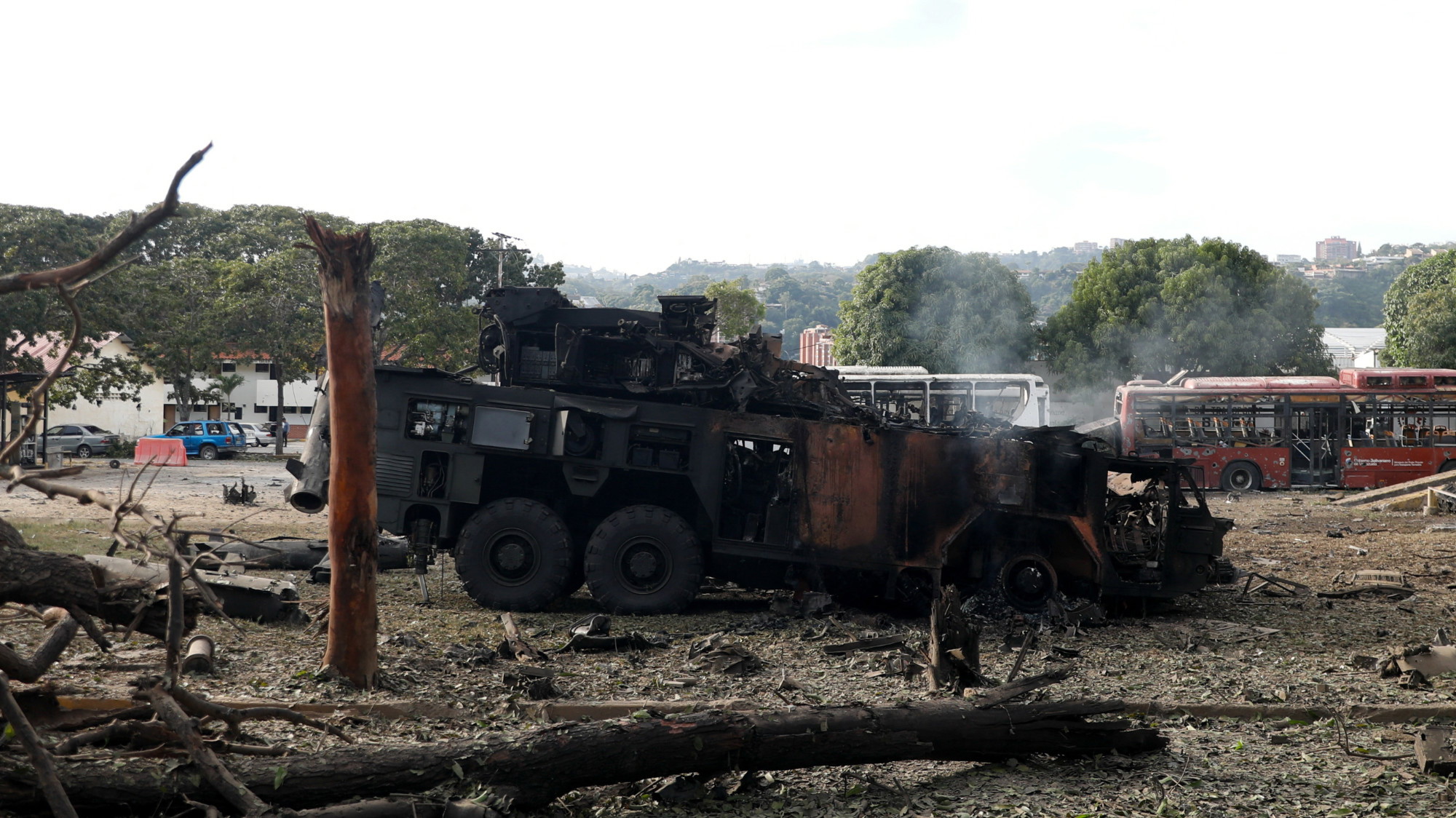
The recent announcement by former US President Donald Trump regarding the alleged “capture” of Venezuelan President Nicolás Maduro has sent shockwaves across the international community. Trump claimed American forces successfully carried out large-scale strikes within Venezuela, resulting in Maduro and his wife, Cilia Flores, being flown out of the country. This dramatic development, however, is shrouded in uncertainty and has sparked widespread condemnation and calls for verification. The situation surrounding US intervention in Venezuela remains highly volatile and demands careful analysis.
Trump Announces Maduro’s “Capture” – A Controversial Claim
On Saturday, Trump announced the operation via his Truth Social platform, detailing what he described as a successful mission to “capture” Maduro. He asserted that both Maduro and his wife had been removed from Venezuela. However, these claims were immediately met with skepticism and demands for proof. Venezuelan Vice President Delcy Rodriguez, next in line for presidential succession, stated the whereabouts of Maduro and Flores were unknown and directly requested Trump provide evidence of their well-being.
The Venezuelan government swiftly issued a statement vehemently rejecting and condemning the alleged “extremely serious military aggression” by the US. They characterized the action as an attempt to seize Venezuela’s strategic resources, particularly its oil and mineral wealth, and undermine the nation’s political independence.
Allegations of Military Aggression and Venezuelan Response
The Venezuelan government’s statement further accused the US of attempting a “colonial war” to overthrow the legitimate government and install a “regime change” in collaboration with a “fascist oligarchy.” They vowed to resist such attempts. Reports surfaced of explosions in Caracas, the capital, and in the states of La Guaira, Aragua, and Miranda, coinciding with Trump’s announcement. Venezuelan officials reported casualties, though a precise death toll remains unconfirmed. US authorities, however, stated there were no American casualties.
According to reports from CBS News, the operation to “capture” Maduro was executed by the elite US Delta Force unit. Trump himself reportedly described the mission as “brilliant” in a subsequent phone call with The New York Times. Sources within the Venezuelan opposition, as reported by Sky News, suggested Maduro’s departure was “negotiated” with the US. This adds another layer of complexity to the unfolding events.
International Reactions to the Crisis
The international response to the alleged US military action in Venezuela has been largely divided. Russia, a staunch ally of Venezuela, strongly condemned the strikes, labeling them an “act of armed aggression” and expressing deep concern over Maduro’s removal. Iran, another key ally, criticized the US for violating Venezuela’s sovereignty and territorial integrity.
Colombian President Gustavo Petro, who has previously faced threats from Trump, rejected the aggression against Venezuela and called for immediate action from the United Nations and the Organization of American States.
The European Union’s response was more nuanced. Top diplomat Kaja Kallas acknowledged Maduro’s lack of legitimacy but emphasized the importance of respecting international law and the UN Charter, calling for restraint. Germany and Spain also expressed concern and called for de-escalation.
Escalation of Tensions: A History of Conflict
Saturday’s events were not isolated. They followed months of escalating military tensions, threats against Venezuela, and US actions targeting vessels allegedly linked to drug trafficking. In August, the US initiated its largest naval buildup in the southern Caribbean in decades, ostensibly to combat drug flows. This was followed by air strikes in international waters near Venezuela’s coast, targeting boats suspected of narcotics trafficking. These strikes, according to human rights groups, have resulted in over 110 deaths and are believed to violate both US and international law.
The situation further deteriorated in early December with the US seizure of a Venezuelan-linked oil tanker. Maduro has long been accused by the Trump administration of leading the “Cartel de los Soles,” designated a foreign terrorist organization by Washington. He was indicted in 2020 on corruption and other charges, and a $50 million reward was offered for information leading to his arrest. Maduro consistently denies these allegations, claiming the “war on drugs” is a pretext for regime change and the seizure of Venezuela’s oil reserves. The ongoing political instability in Venezuela is a key factor in this crisis.
Future Implications and Calls for De-escalation
Following the strikes, Venezuelan Defence Minister Vladimir Padrino announced the nationwide deployment of military forces, vowing to resist any foreign troop presence and describing the US attacks as “the worst aggression” against the country. US Senator Mike Lee, speaking on X, reported that Secretary of State Marco Rubio anticipates no further action in Venezuela and that Maduro will face criminal charges in the United States.
The situation remains incredibly fragile. The international community must prioritize de-escalation and diplomatic solutions to prevent further violence and instability. A thorough and independent investigation into the alleged US actions is crucial, as is verification of Maduro’s whereabouts and well-being. The future of Venezuela, and the broader stability of Latin America, hangs in the balance.