


The ceasefire has stopped most of the bombs, but not the cancer eating away at Najat Sayed al-Hessi’s body. The 61-year-old Palestinian woman embodies a silent tragedy unfolding in Gaza: a health crisis deepening even as the guns fall silent. While the world focuses on the cessation of hostilities, the fundamental needs of vulnerable populations, particularly those battling life-threatening illnesses like cancer in Gaza, are being tragically overlooked.
The Unfolding Health Crisis Beyond the Ceasefire
For 27 months, Najat has been waiting for her monthly cancer medications, a lifeline cruelly withheld. “Nothing has changed for cancer patients in Gaza since the ceasefire,” she told Middle East Eye, her voice heavy with despair. Her story isn’t unique; it’s a microcosm of a wider systemic failure impacting thousands. She was scheduled to travel to Ramallah for treatment on October 7th, the very day the war erupted, and has been stranded in a makeshift tent in Deir al-Balah ever since, watching her health deteriorate.
Medical Referrals and Restricted Access to Treatment
The outbreak of war brought a complete halt to medical referrals outside Gaza, a critical pathway for patients needing specialized care unavailable within the besieged enclave. Hospitals within Gaza, already stretched thin, are now unable to provide even basic cancer treatment. Around 3,500 cancer patients hold referrals for treatment abroad, but Israeli authorities have consistently denied them passage. Najat received a referral six months ago, rendered useless by closed borders. A recent visit to her local clinic for back pain – a consequence of a slipped disc and osteoporosis – yielded nothing, not even vitamins.
“I asked them to give me anything, at least some vitamins, but they said they had nothing for my case,” she recalled, highlighting the pervasive shortages plaguing the healthcare system. The Palestinian health ministry reports that Israeli restrictions have created critical shortages: 56% of essential drugs, 68% of medical consumables, and 67% of laboratory supplies are currently unavailable as of November. This lack of resources extends to vital screening services, leaving patients unaware of the extent of their illness.
“I am Dying Slowly”: The Personal Toll of Neglect
“The last time I saw a doctor, he told me the cancer may have reached my lungs,” Najat confessed, her voice trembling. “I am dying slowly.” Her words are a stark indictment of the situation. Dr. Muhammad Abunada, medical director of the Gaza Cancer Centre, confirms a 70% shortage in cancer medications and painkillers, directly attributed to Israeli restrictions on medical supply deliveries.
“The remaining 30 percent are largely ineffective, because if a cancer patient needs three types of drugs, usually only one or two are available, while the others are missing,” Dr. Abunada explained. “This makes the drugs they do have largely useless, because they need to be combined with the other medications.” He reports a doubling, even tripling, of death rates among cancer patients since the start of the conflict – a grim statistic reflecting the lack of available treatment. Before the war, one cancer patient died daily; now, that number has risen to two or three.
Beyond Cancer: A Widespread Crisis of Mortality
The rise in mortality isn’t limited to cancer patients in Gaza. The crisis extends to the entire population. UNICEF data reveals a 75% increase in newborn deaths during the last three months of the war, with an average of 47 newborn deaths recorded each month – almost double the 2022 average of 27. Despite the ceasefire, these underlying factors persist.
Abu Rafiq Ubeid, a father of three, expresses the pervasive fear: “We are still living under the same threats and circumstances, only with less noise.” His home was bombed, and even after the ceasefire, he cannot return to assess the damage.
The “Yellow Line” and Continued Restrictions
The imposition of Israel’s “Yellow Line” – a unilaterally enforced no-go zone – further restricts access to vital areas, covering approximately 60% of the Gaza Strip. This line blocks Palestinians from accessing their homes, farmland, and essential services. Families like Ubeid’s are displaced, living in schools and enduring precarious conditions.
Winter’s Assault and the Cycle of Dependence
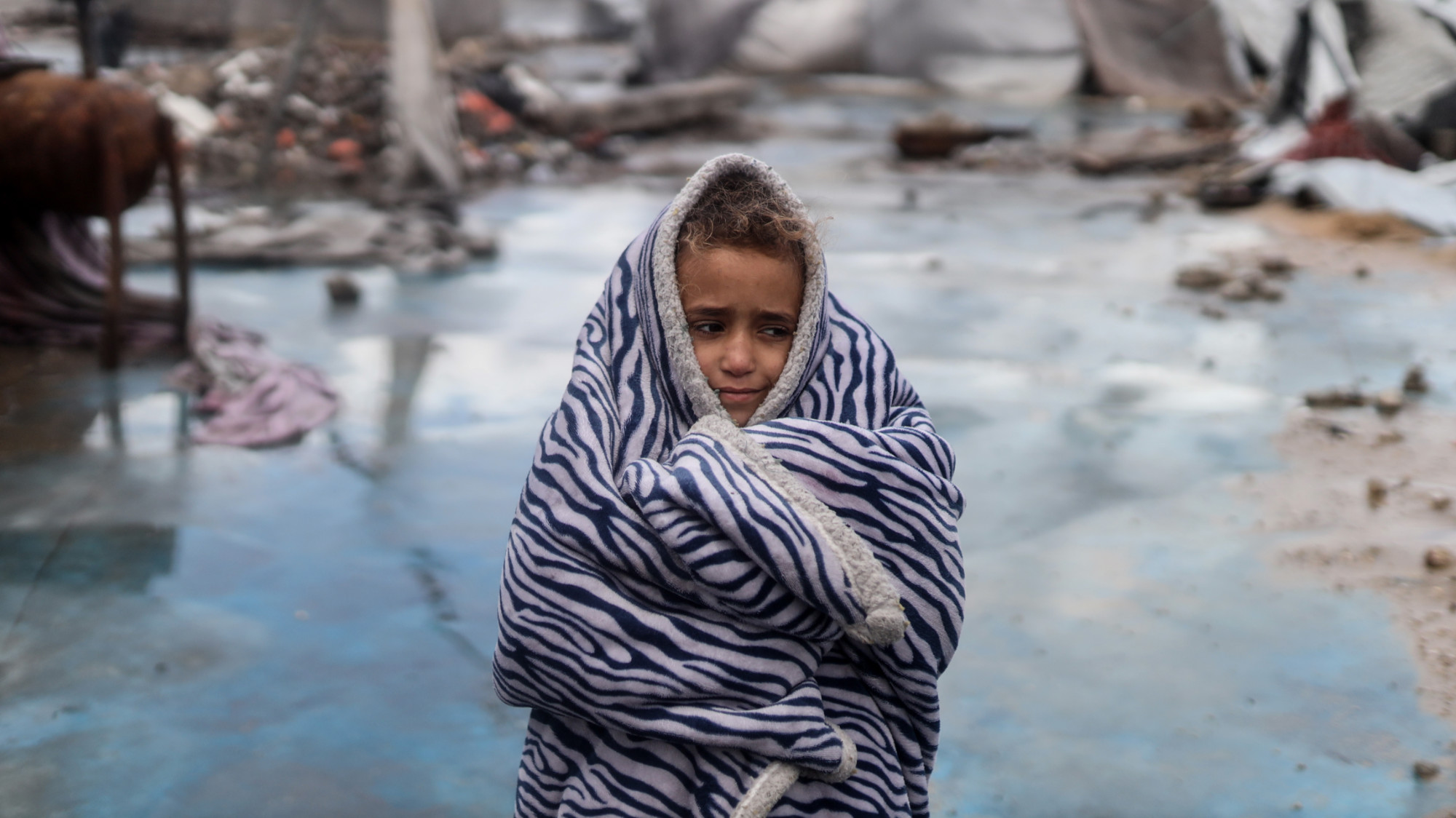
With 1.5 million Palestinians displaced and reconstruction stalled, the winter months bring another layer of suffering. Rajaa Jendiya, a widow and mother of three, describes this winter as the harshest yet, exacerbated by prolonged displacement and starvation. Rainstorms have destroyed thousands of tents, and structurally weakened buildings have collapsed, resulting in at least 31 winter-related deaths, including 19 children. “When you are displaced and have children, winter is not just a season,” she says. “It is another assault you have to survive.”
Maintaining Dependence: A Deliberate Strategy?
Beyond restricting aid, Israel has imposed new conditions on international organizations, hindering their ability to operate effectively. Residents express concern that these restrictions are part of a deliberate strategy to prevent Gaza from recovering and achieving self-sufficiency. The destruction of agricultural land and the crippling of the fishing sector have left the population almost entirely reliant on external aid.
Zakaria Bakr, head of the Fishermen’s Union Committees in Gaza, argues that Israel “does not want Gaza to heal or rely on its own resources for survival.” He points to the routine targeting and detention of fishermen as evidence of this intent. Gaza once met its own needs and even exported fish; now, it relies on imports due to restricted access to the sea.
The situation facing Najat Sayed al-Hessi, and countless others battling health challenges in Gaza, underscores a critical reality: the ceasefire, while welcome, has not translated into meaningful relief for those most in need. Addressing the ongoing health crisis, ensuring access to essential medications, and lifting restrictions on movement and aid are paramount to preventing further suffering and building a sustainable future for the people of Gaza.