


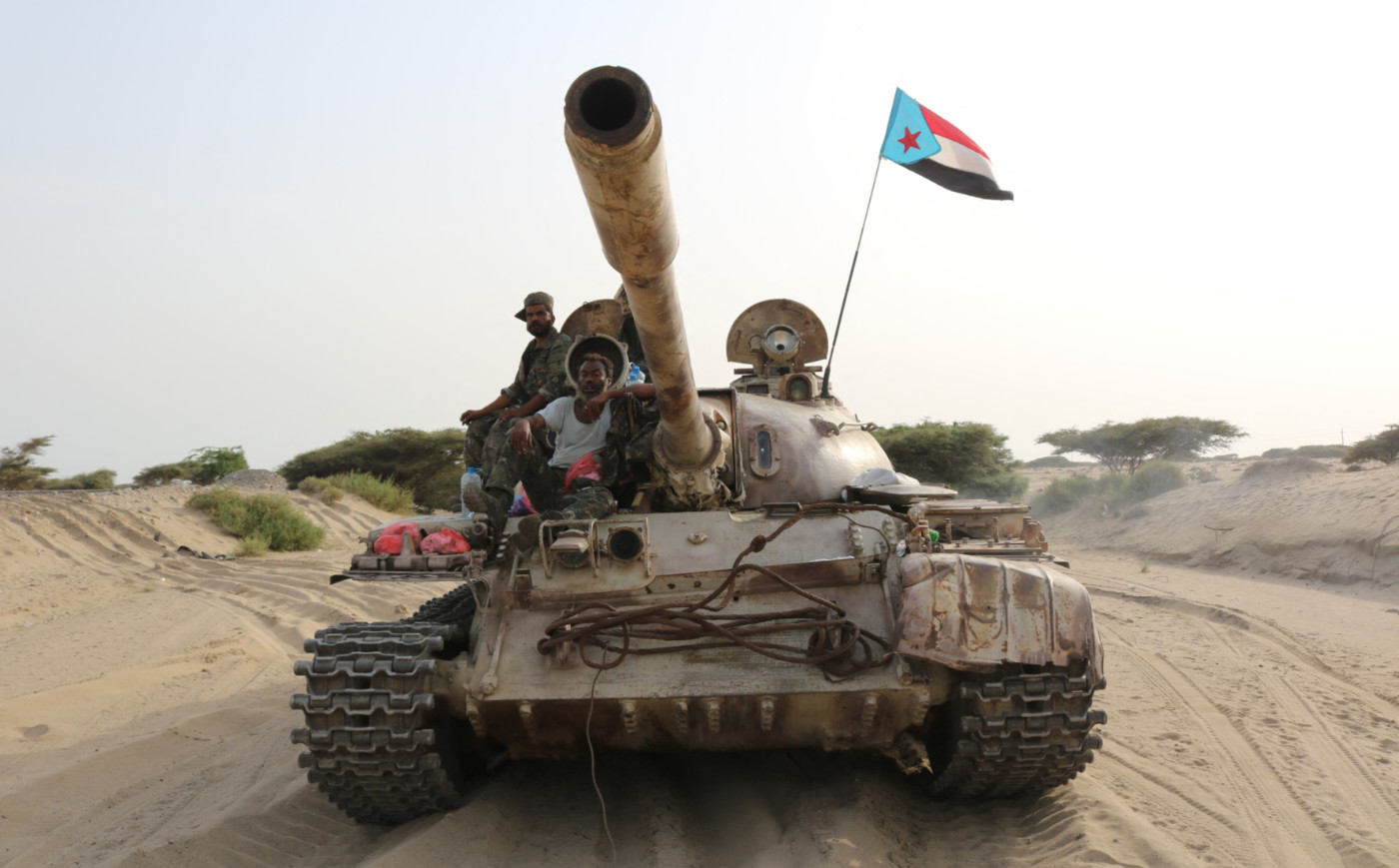
The situation in Yemen continues to deteriorate, with a recent escalation in the south threatening to further fragment the already war-torn nation. After a decade of devastating civil war, the conflict has taken a new turn with the Southern Transitional Council (STC) seizing control of key areas, including the city of Seiyun in Hadhramaut province. This move underscores the complex web of alliances and ambitions vying for power in Yemen, and raises serious questions about the country’s future stability. Understanding the Yemen conflict requires delving into its historical roots, current dynamics, and the roles of external actors.
A History of Division: North and South Yemen
For centuries, Yemen has been characterized by a broad, though often informal, division between the north and the south. This separation solidified during the colonial era. From the mid-19th century until 1963, Britain controlled a territory encompassing what is now South Yemen, including the strategically vital port of Aden. Following armed rebellion, Yemen gained independence in 1967, establishing the People’s Republic of South Yemen with Aden as its capital.
In stark contrast, the north of Yemen achieved independence from the Ottoman Empire in 1918, experiencing a period of monarchy and subsequent civil war in the 1960s before declaring the Republic of Yemen in 1970. The 1970s saw a tense relationship between the two neighbors, punctuated by occasional clashes. This historical context is crucial to understanding the current drive for southern secession.
The Unification and its Aftermath
By the late 1980s, the People’s Democratic Republic of Yemen (PDRY), formerly South Yemen, was weakened by the collapse of its primary benefactor, the Soviet Union. This paved the way for unification in May 1990, creating the Republic of Yemen. However, the underlying tensions remained. A southern secessionist attempt in 1994 was ultimately suppressed, but the desire for autonomy persisted.
Further complicating matters, the Zaydi Shia Houthis began a rebellion in the northwest of Yemen in 2004. This internal strife created a fertile ground for external interference, ultimately leading to the full-scale civil war that erupted in 2014. The Houthis seized control of the capital, Sanaa, forcing the internationally recognized government of Abd Rabbuh Mansour Hadi to flee to Saudi Arabia.
The Rise of the Southern Transitional Council
The Southern Transitional Council (STC) emerged in April 2017 from the broader Southern Movement (al-Hirak), advocating for a separate state in “South Arabia.” Financially supported by the United Arab Emirates (UAE), the STC quickly gained influence, particularly after the dismissal of Aidaroos al-Zubaidi as governor of Aden by President Hadi.
In August 2019, the STC seized control of Aden, the temporary seat of Hadi’s government, leading to Saudi-mediated peace talks. The STC eventually joined the government in April 2022, with Zubaidi appointed as vice-president, though their ultimate goal remains independence for the south. They view themselves as representing the interests of the south within a fragile coalition.
Recent Developments in Hadhramaut: A Power Grab?
Hadhramaut, a large and sparsely populated governorate rich in oil reserves, was officially under government control until recently. However, tribal groups wielded significant influence, sometimes cooperating with both the government and the STC against Al-Qaeda in the Arabian Peninsula (AQAP). In January 2025, the Hadhramaut Tribal Alliance (HTA) seized control of several oil fields, causing power outages and protests.
This created an opportunity for the STC. On December 3rd, the STC announced that its Hadrami Elite Forces (HEF) had taken control of Seiyun in an operation dubbed “The Promising Future.” Since then, the HEF have expanded their control across the governorate, capturing oil infrastructure from the HTA and raising the flag of South Yemen. The HTA’s withdrawal was reportedly overseen by Saudi mediators. The STC justifies its actions as a fight against terrorism and a move to secure vital resources, but it is widely seen as a power grab. This recent escalation highlights the ongoing political instability in Yemen.
The Role of External Actors: UAE and Saudi Arabia
Saudi Arabia’s involvement in Yemen stems from concerns about the Houthi’s alleged ties to Iran and the potential for a hostile force on its southern border. In March 2015, Saudi Arabia led a coalition of nine states in a military intervention against the Houthis, imposing an air, land, and sea blockade that has exacerbated the humanitarian crisis.
The UAE, also part of the Saudi-led coalition, has pursued its own strategic objectives in Yemen, focusing on security, political influence, and commerce. Its support for the STC has allowed it to establish a foothold in the south, build military bases, and secure access to vital shipping lanes. The UAE’s interests are increasingly diverging from those of Saudi Arabia, creating further complications in the conflict. The UAE’s presence is a key factor in the ongoing Yemen crisis.
What Does the Future Hold?
The STC’s offensive appears focused on consolidating power in the south, rather than launching a new attack on Houthi-held territory. Analysts believe the risks of confronting the Houthis directly are too high. Instead, the STC is likely to strengthen its control over the south, establish its own institutions, and use the threat of further action to gain leverage with Saudi Arabia, the UAE, and the West.
The situation remains fluid and unpredictable. While neither Saudi Arabia nor the UAE appear eager for a full-scale confrontation, they will likely continue to support their respective allies. The future of Yemen hinges on finding a sustainable political solution that addresses the legitimate grievances of all parties, including the south, and mitigates the devastating humanitarian consequences of the ongoing conflict. The path forward requires a commitment to dialogue, compromise, and a genuine desire for peace.