


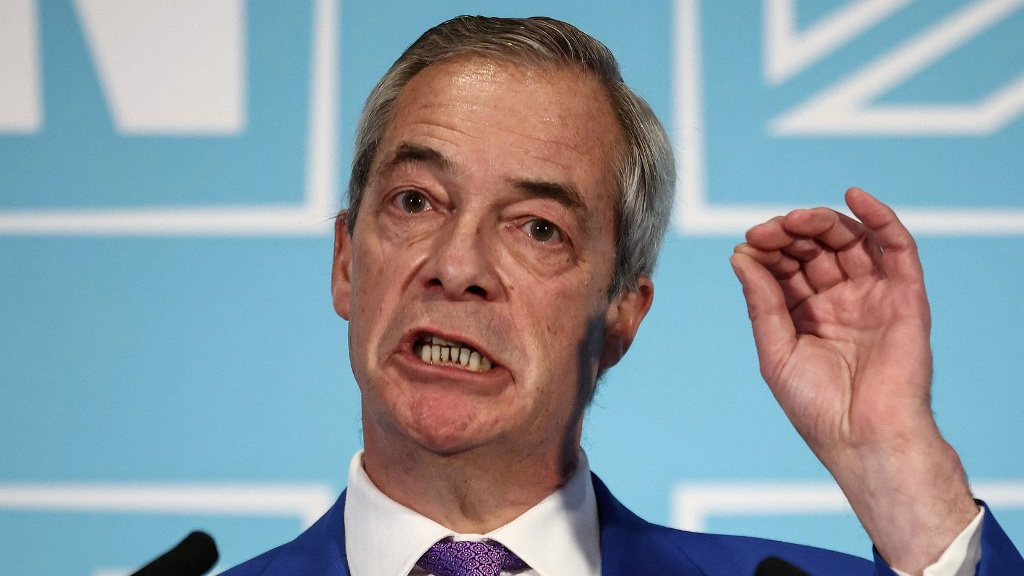
The latest revelations surrounding British politician Nigel Farage and his ties to the United Arab Emirates (UAE) have sparked controversy, raising questions about foreign influence in domestic politics and the UK’s approach to the Muslim Brotherhood. Reports indicate the UAE funded a trip for Farage to Abu Dhabi in December, covering expenses like accommodation and access to the Formula 1 race, totaling approximately £1,000 as per the register of MPs’ interests. This funding coincides with a growing anti-Muslim Brotherhood stance taken by Farage’s Reform UK party and increasingly visible efforts by the UAE to shape the narrative surrounding the organization in Europe.
The Abu Dhabi Trip and Shared Opposition
Farage’s visit to Abu Dhabi wasn’t a casual one. The Financial Times reported that the Emirati leadership specifically sought a meeting with him, driven by a “shared opposition to the Muslim Brotherhood.” During the two-day trip, Farage engaged in discussions with high-ranking Emirati officials, a detail confirmed by the register of MPs’ interests. This comes after Farage announced at the Reform UK annual conference in September that his party would ban the Muslim Brotherhood should they achieve electoral success, classifying it as a terrorist organization.
The motives behind the UAE’s outreach are becoming clearer. Experts suggest this is part of a wider campaign to influence European policy and public opinion regarding the Brotherhood. Dr. Andreas Krieg, an associate professor at King’s College London, characterized the situation as “sad that Farage has become a useful idiot for the UAE’s political subversion campaign in Europe,” highlighting Abu Dhabi’s attempt to portray itself as a desirable destination for Europe’s far-right.
UAE’s Growing Campaign Against the Muslim Brotherhood in the UK
The funding of Farage’s trip is just the latest instance of the UAE actively attempting to shape perceptions of the Muslim Brotherhood within the UK. In January 2025, the UAE designated eight British organizations as terrorist groups, alleging links to the Brotherhood – accusations that haven’t resulted in any legal breaches within the UK. This move prompted Richard Tice, a Reform MP, to call on the current Labour government to “act on” the designated organizations, despite the UAE’s own limited tolerance for political dissent.
Further demonstrating the extent of the UAE’s efforts, investigations in 2023 revealed the country had paid a Geneva-based intelligence firm, Alp Services, to discredit Islamic Relief Worldwide (IRW), Britain’s largest Muslim charity. The objective was to falsely link IRW officials to the Muslim Brotherhood and extremist activities, aiming to damage the charity’s reputation. This paints a picture of a deliberate strategy to undermine organizations perceived as sympathetic to or affiliated with the Brotherhood.
A Shift in UK Policy and Previous Lobbying Efforts
The UK’s internal attitude toward the Muslim Brotherhood has evolved in recent years, and the UAE appears to have played a role in influencing this shift. A 2017 parliamentary inquiry, conducted by the Foreign Affairs Committee, actually concluded that political Islamists served as a “firewall” against violent extremism and should be engaged with, regardless of their political stance.
However, it has been revealed that this inquiry itself was reportedly triggered by lobbying from UAE officials. This suggests that the UAE has been consistently working behind the scenes to pressure the UK government into adopting a more hostile position towards the Brotherhood. Furthermore, this contradicts the UAE’s stated aims as it affects Muslim organizations based in the UK.
Concerns Over Farage’s Rhetoric and Party Affiliations
Adding to the controversy is the growing scrutiny of individuals associated with Farage and Reform UK. James Orr, Farage’s senior advisor appointed in October, faced widespread accusations of racism in 2023 after stating, “Import the Arab World, become the Arab World” in relation to pro-Palestine demonstrations in London.
Additionally, Reform UK has been accused of “embracing racism” for appointing Matthew Goodwin, formerly of the discredited “anti-Muslim” think tank Legacy, as head of its new student organization. Goodwin’s views on the assimilation of immigrant communities have been criticized for being exclusionary, and the party has remained steadfastly supportive of his appointment. Alan Mendoza, the Executive Director of the Henry Jackson Society – a neoconservative think tank described by some as “racist” – was also appointed as the party’s chief advisor on global affairs.
These appointments, coupled with Farage’s own statements, such as his claim in May of last year that “a growing number of young people in this country do not subscribe to British values [and] in fact loathe much of what we stand for” – and his subsequent confirmation that he was referring, at least in part, to Muslims – have fuelled accusations of Islamophobia. Chris Doyle, director of the Council for the Advancement of Arab-British Understanding, emphasizes that Farage’s record reveals an “entrenched aversion to Muslims generally.”
The Broader Context: The Muslim Brotherhood and Regional Politics
Understanding the UAE’s strong opposition to the Muslim Brotherhood requires a look at the regional power dynamics. Founded in Cairo in 1928, the Muslim Brotherhood is a large and well-known Islamist political organization. While the group maintains it advocates for peaceful political participation, it’s perceived as a significant threat by many authoritarian governments in the Middle East and North Africa.
This is because, in the rare instances of free and fair elections in the region, affiliated parties have often achieved considerable success, either winning outright or forming the leading opposition force. Consequently, the Brotherhood has been banned in countries like Egypt, Saudi Arabia, Bahrain, and, of course, the UAE, where any form of political opposition is severely suppressed. The current situation demonstrates a complex interplay of foreign policy, domestic politics, and a growing trend of Islamophobia fuelled by specific regional interests.
This situation demands greater transparency regarding foreign funding of political figures and a critical assessment of the narratives being pushed by external actors aiming to influence UK policy. It also highlights the crucial importance of defending civic space and ensuring a robust, inclusive political dialogue that doesn’t succumb to divisive rhetoric.
Further research is encouraged into the ways the UAE influences British politics, and what can be done to ensure a fair and representative democratic process. Share your thoughts on this developing story in the comments below.