


The recent announcement of Israel’s official recognition of Somaliland has ignited celebrations in the self-declared republic while simultaneously drawing strong condemnation from Somalia, raising concerns about regional stability. This historic move, a first for Somaliland since its 1991 declaration of independence, marks a significant shift in the geopolitical landscape of the Horn of Africa and has sparked a complex debate about sovereignty, security, and international relations. The implications of this recognition extend beyond the immediate parties involved, impacting regional powers and international organizations.
Jubilant Celebrations in Somaliland Following Israel’s Recognition
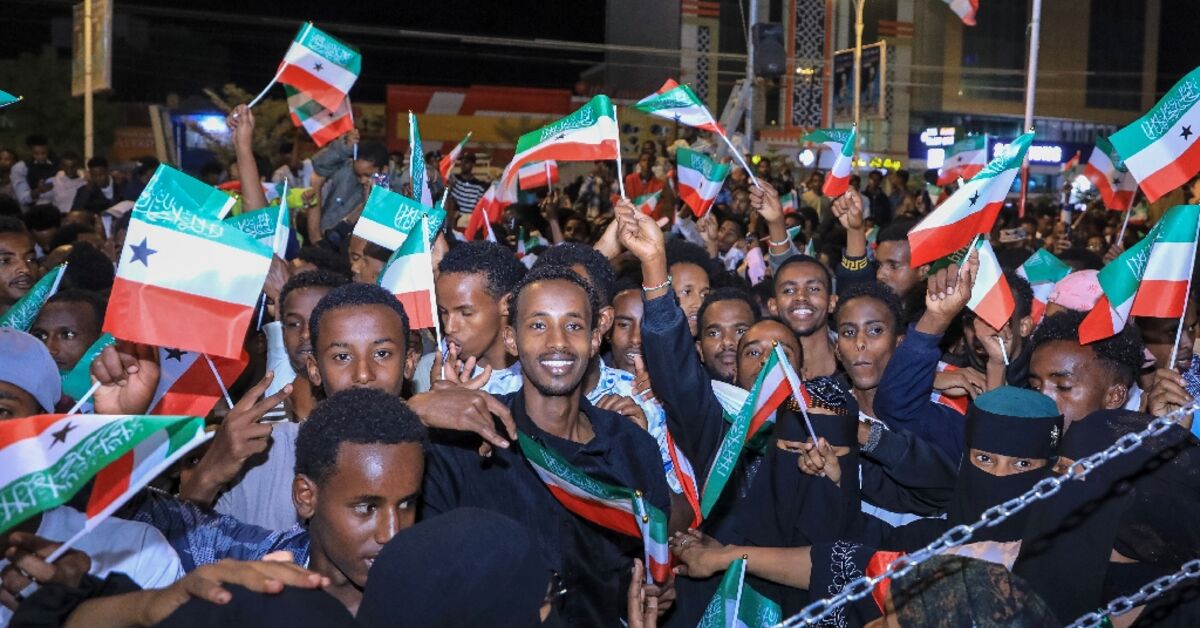
Thousands of Somaliland citizens took to the streets on Sunday, expressing their elation over Israel’s decision. The capital city, Hargeisa, was the epicenter of the festivities, with crowds gathering in a stadium adorned in the green, white, and red of the Somaliland flag. Chants of “Victory for Somaliland!” echoed through the city as the flags of both nations were raised side-by-side in a televised ceremony.
The Somaliland Foreign Ministry confirmed the widespread celebrations, stating that citizens across the republic were “proudly gathering to commemorate the historic decision.” Eyewitness accounts paint a picture of genuine joy and hope. “I have not slept since the day the recognition was announced because of excitement,” shared Shamis Mohamed, a Hargeisa resident. Another resident, Abdirahman Keyse, expressed overwhelming gratitude, stating, “My feelings cannot be estimated today… Thanks to God for this victory.” Celebrations also extended to other cities, including Burao and Gebiley, demonstrating the broad support for international recognition within Somaliland.
A Long-Awaited Step Towards International Legitimacy
For decades, Somaliland has tirelessly pursued international recognition, operating as a de facto independent state with its own government, currency, passport, and army. Despite maintaining relative stability in contrast to Somalia, it has remained largely diplomatically isolated. This recognition from Israel is therefore seen as a crucial breakthrough, a validation of Somaliland’s self-governance and a potential catalyst for further diplomatic engagement. The pursuit of statehood has been a defining characteristic of Somaliland’s political trajectory, and this event represents a significant milestone.
Somalia Condemns the Recognition as a Threat to Regional Stability
The response from Somalia has been sharply critical. President Hassan Sheikh Mohamud denounced Israel’s decision as a “blunt aggression” against Somalia’s sovereignty, independence, and territorial integrity. He further characterized the move as an attempt to divide the country and a “threat to the security and stability of the world and the region.”
President Mohamud also voiced opposition to any potential relocation of Palestinians to Somaliland, stating that Somalia would not accept the forced displacement of Palestinians from their homeland. This concern stems from recent reports suggesting Somaliland might be considered as a host for Palestinians expelled by Israel, a claim neither government has officially addressed. The Somali government views this as a direct challenge to its authority and a destabilizing factor in an already volatile region. The issue of territorial integrity is paramount in Somalia’s response.
Geopolitical Implications and Regional Reactions
Analysts suggest Israel’s recognition of Somaliland is strategically motivated. A closer relationship with Somaliland could provide Israel with enhanced access to the Red Sea, potentially enabling it to respond more effectively to threats from Houthi rebels in Yemen. Israel has repeatedly targeted Houthi positions in Yemen following the outbreak of the Gaza war in October 2023, in response to attacks on Israeli shipping.
However, the move has drawn widespread criticism from various international actors. The African Union, Egypt, Turkey, the Gulf Cooperation Council, and the Organisation of Islamic Cooperation have all voiced their disapproval. The European Union has emphasized the importance of respecting Somalia’s sovereignty. This diverse range of reactions highlights the sensitivity of the issue and the potential for further diplomatic friction. The situation also raises questions about the role of external powers in the Horn of Africa and the potential for geopolitical competition.
Somaliland’s Vision for the Future with Israel
Despite the regional backlash, Somaliland officials are optimistic about the potential benefits of the relationship with Israel. Minister of the Presidency Khadar Hussein Abdi sought to alleviate concerns, asserting that the recognition “will not create violence, will not bring conflict and will never harm anyone.”
He outlined plans for collaboration in key areas such as economic development, agricultural production, and water management. Somaliland hopes that this partnership will contribute to its overall progress and further solidify its position as a stable and self-reliant entity. The focus on economic cooperation suggests a pragmatic approach aimed at improving the lives of Somaliland citizens.
In conclusion, Israel’s recognition of Somaliland is a landmark event with far-reaching consequences. While it has been met with jubilation within Somaliland and represents a significant step towards international legitimacy, it has also triggered strong condemnation from Somalia and raised concerns about regional stability. The coming months will be crucial in determining how this new dynamic unfolds and whether it can contribute to a more peaceful and prosperous future for the Horn of Africa. Further dialogue and diplomatic efforts are needed to address the concerns of all parties involved and prevent escalation of tensions. The situation warrants close monitoring as it evolves and impacts the broader regional landscape.