


In a scathing critique published in the New York Times, Ben Rhodes, a former advisor to President Barack Obama, has delivered a damning assessment of the US Democratic Party’s handling of the Gaza tragedy and the broader Israeli-Palestinian conflict over the past decade. His analysis, long overdue according to many observers, points to a systematic failure of strategy and a damaging adherence to outdated talking points, ultimately harming both US interests and the party’s moral standing.
The “Hug Bibi” Strategy: A Failed Assumption
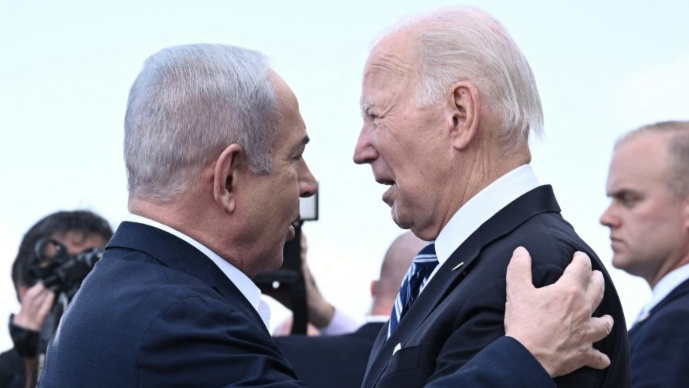
Rhodes characterizes the Biden administration’s post-October 7th policy towards Israel as the “hug Bibi” strategy – a reference to Israeli Prime Minister Benjamin Netanyahu. The underlying assumption, he argues, was that showering Netanyahu with unconditional support would grant the US leverage to influence his actions. This proved to be a catastrophic miscalculation. Netanyahu, a seasoned political operator, skillfully exploited the situation, extracting billions in military aid and diplomatic cover from the US without offering any meaningful concessions in return. This resulted in a complete absence of the anticipated US leverage in Gaza.
Over the past fifteen months, Israel received substantial US weaponry, which, according to reports, was used indiscriminately against Palestinian civilians. The US consistently shielded Israel from UN Security Council resolutions calling for a ceasefire, and jointly attacked the International Criminal Court for investigating potential war crimes committed by Netanyahu and his government. This unwavering support stands in stark contrast to Washington’s response to the Russia-Ukraine conflict, highlighting a troubling double standard in US foreign policy.
Damaging the Democratic Brand
This policy has inflicted significant damage on both the Biden administration and the Democratic Party as a whole. Accusations of hypocrisy have become commonplace, with critics pointing to the party’s constant advocacy for a “rules-based world order” while simultaneously remaining silent as Israel openly flouted international law. This perceived inconsistency has eroded the party’s credibility and cost them votes, particularly among younger demographics. The Israeli-Palestinian conflict has become a significant point of contention within the Democratic base.
The Persistence of Dubious Talking Points
Even as the civilian death toll in Gaza soared, the Democratic narrative remained stubbornly fixated on well-worn talking points propagated by groups like AIPAC. These included portraying Israel as the “only democracy in the Middle East” and emphasizing its right to self-defense, while simultaneously demanding “reforms” from the Palestinian Authority to become a “credible partner for peace.”
Rhodes argues these talking points are increasingly unconvincing. He rightly points out that Israel’s democratic credentials do not excuse, but rather exacerbate, its actions in Gaza. A genuine democracy, he contends, would not engage in such criminal behavior. The core issue isn’t Israel’s right to defend itself, but the disproportionate use of force, evidenced by the staggering number of civilian casualties. Furthermore, an occupying power, as Israel is considered under international law in Gaza, cannot legitimately invoke self-defense against threats emanating from the territory it occupies.
Principles Over Political Expediency
Rhodes echoes a crucial sentiment: “Sometimes, to win, you must show that there are principles for which you are prepared to lose.” This highlights the need for the US to prioritize moral considerations and international law over short-term political gains. He underscores that Israel’s withdrawal from Gaza in 2005 did not end its occupation, as it continues to control the territory’s borders and airspace.
Regarding the call for Palestinian Authority “reform,” Rhodes clarifies that genuine reform can only occur when the PA ceases its collaboration with Israel and actively resists the occupation of the West Bank. He dismisses the notion that “reform” should equate to increased cooperation with Israel’s security operations.
A Shifting Tide?
Rhodes accurately identifies the worn-out talking points as a “smoke screen” – a formula designed for Washington consumption rather than a reflection of the reality on the ground. He also notes the complicity of European leaders who, by failing to sanction Israel or condemn its actions, have compromised their own values. He points to the Democrats’ initial enthusiasm for the 2020 Abraham Accords, which sidelined Palestinian rights in favor of normalizing relations with certain Arab states.
The situation hasn’t changed significantly since October 7th, 2023. The trauma of the attacks prompted the US to once again defer to Israeli logic, despite previous, unsuccessful attempts to urge restraint. Democrats who expressed doubts about the direction of Israel and the peace process found themselves “trapped in a no man’s land,” clinging to detached talking points.
Cognitive Dissonance and a Changing Electorate
The core of the problem, Rhodes argues, lies not with Democratic voters, but with the party leadership, which appears increasingly afflicted by cognitive dissonance. Polls reveal a dramatic decline in Democratic support for Israel – from 73% in 2014 to just a third today – and a staggering 77% now believe Israel is committing genocide in Gaza.
Rhodes proposes a clear path forward: refusing military assistance to a government that has committed war crimes, supporting the International Criminal Court, opposing Israeli annexation of the West Bank or ethnic cleansing of Gaza, investing in alternative Palestinian leadership, and upholding democratic principles in both Israel and the US.
While these words would have carried even greater weight had they been spoken by President Obama himself, a shift is beginning to materialize. Representative Rashida Tlaib’s resolution recognizing the Gaza genocide garnered co-sponsorship from 21 House Democrats, representing 10% of the caucus. Representative Ro Khanna has publicly acknowledged the possibility of genocide and called for an end to military sales and recognition of a Palestinian state.
The Waning Power of AIPAC
Perhaps most significantly, the intimidating power of AIPAC appears to be waning. The lobby is increasingly viewed as a toxic brand by some Democrats, with several refusing its donations. Whether this increased awareness and the growing gap between voters and party leadership will translate into electoral changes remains to be seen.
As Rhodes aptly concludes, “Sometimes, to win, you must show that there are principles for which you are prepared to lose.” This principle, if embraced by the Democratic Party, could pave the way for a more just and equitable approach to the Gaza conflict and the broader Israeli-Palestinian issue.