


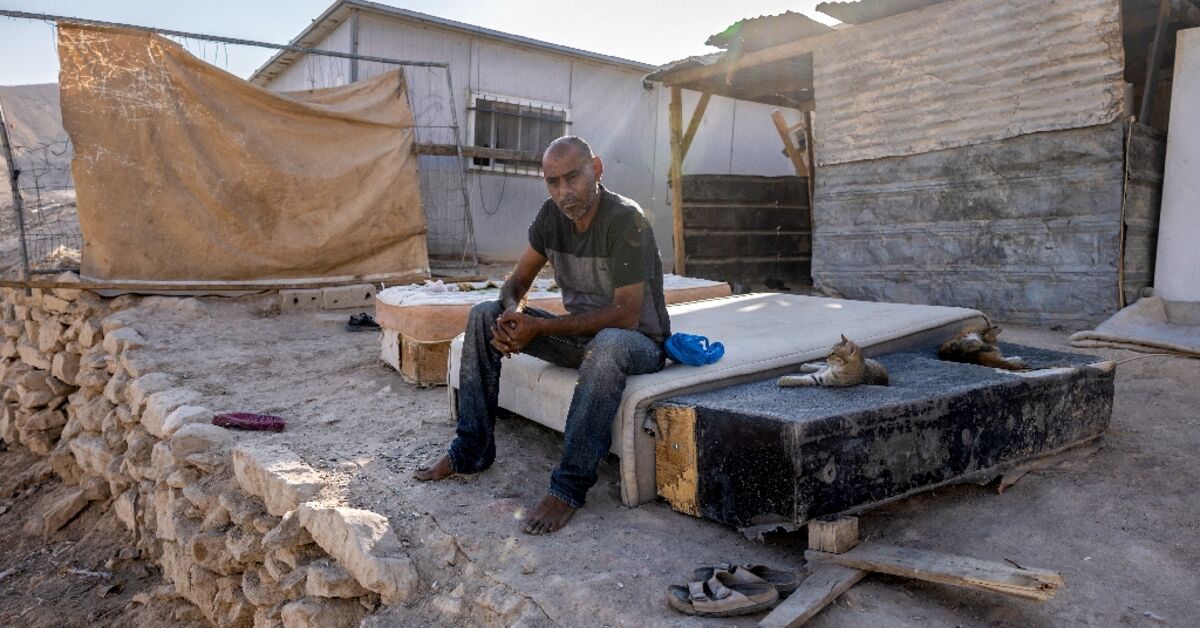
The relentless escalation of violence in the occupied West Bank is forcing Palestinian communities from their ancestral lands, a trend tragically exemplified by the story of Ahmed Kaabneh and his family. Driven from their home by escalating settler violence, Kaabneh’s experience highlights a growing crisis of displacement and intimidation impacting Bedouin communities across the region. This article delves into the realities faced by Palestinians like Kaabneh, the increasing frequency of attacks, and the lack of accountability for perpetrators.
The Forced Displacement of Bedouin Communities
For generations, Ahmed Kaabneh’s family has lived on land in the central West Bank. Their life, rooted in the traditions of Bedouin life – agriculture and animal husbandry – was brutally disrupted by the constant harassment from Israeli settlers. This isn’t an isolated incident; the UN Office for the Coordination of Humanitarian Affairs (OCHA) reported that over 3,200 Palestinians from numerous Bedouin and herding communities were forced to flee their homes due to settler attacks and movement restrictions since October 2023, when the current escalation began following the Hamas attack on Israel.
Kaabneh’s story is particularly poignant. His brothers were compelled to leave, unable to withstand the persistent pressure. He himself clung to hope, determined to remain. However, the construction of a settler outpost just 100 meters above his home, accompanied by direct intimidation of his children, proved the final straw. “It is very difficult… because you leave an area where you lived for 45 years,” he shared with AFP, “But what can you do? They are the strong ones and we are the weak, and we have no power.” The sense of helplessness and dispossession is palpable.
A Surge in Violence and Outpost Construction
The situation in the West Bank has drastically deteriorated since October 7th. The United Nations characterized October 2023 as the worst month for settler violence recorded since 2006. These acts range from stone-throwing and property damage to physical assaults and the destruction of livelihoods. The lack of intervention from Israeli authorities is a critical component of the problem. Almost no perpetrators have been held accountable, fostering a climate of impunity.
This violence is inextricably linked to a dramatic increase in the number of settler outposts. While all Israeli settlements are considered illegal under international law, outposts are also prohibited under Israeli law. Despite this, they continue to proliferate, often with the tacit approval, or even active support, of the Israeli government. Recent reports from settlement watchdogs, like Peace Now and Kerem Navot, indicate that settlers have seized approximately 14% of the West Bank in recent years, utilizing these outposts as a means of land grab.
The Role of Government Support
NGOs and activists have consistently accused the Israeli government and military of actively backing the expansion of settlements and outposts. Some members of the current right-wing Israeli government are themselves settlers, and several far-right ministers have openly advocated for the annexation of the West Bank. This ties the violence directly to political aims, making the displacement of Palestinians a deliberate strategy.
Living Under Surveillance and Constant Threat
Kaabneh and his family are now living with his brothers’ families in a makeshift home near Jericho, but the sense of security remains elusive. While attempting to rebuild their lives, they live under the shadow of constant surveillance. Before they were forced to move, AFP journalists witnessed settlers regularly driving to nearby hills to observe the Bedouin community. Now, even in their “safe” location, they report settlers watching them from above.
The tactics employed by the settlers are designed to make life unbearable. Kaabneh recounts how settlers “would shout all night, throw stones, and walk through the middle of the houses,” denying them peace and freedom of movement. This systematic harassment aims to drive Palestinians off the land, creating a fait accompli for further settlement expansion. The current situation creates an atmosphere of fear and instability, stripping away basic human rights.
The Future of the West Bank and its Communities
Activists such as Sahar Kan-Tor of Standing Together are working to document the injustices and provide support to displaced communities. They emphasize the vulnerability of abandoned properties to looting and the urgent need for protection. Kan-Tor describes the environment as “a land without laws,” highlighting the lack of enforcement and the prevailing chaos.
The motivation behind the escalating violence is complex. Some believe settlers are deliberately targeting strategically important areas of the West Bank to hinder the possibility of a future, contiguous Palestinian state. Whatever the cause, the consequences are devastating for communities like Kaabneh’s, who are being stripped of their homes, livelihoods, and heritage.
Ahmed Kaabneh’s lament, “Even this area, which should be considered safe, is not truly safe… They pursue us everywhere,” is a stark reminder of the pervasive threat faced by Palestinians in the West Bank. Without a swift and meaningful intervention from the international community, and a commitment from the Israeli authorities to hold perpetrators accountable, this cycle of displacement and violence will undoubtedly continue, jeopardizing the future of the region and the rights of its people. The situation calls for increased awareness, advocacy, and action to protect vulnerable communities and ensure a just and lasting peace.