


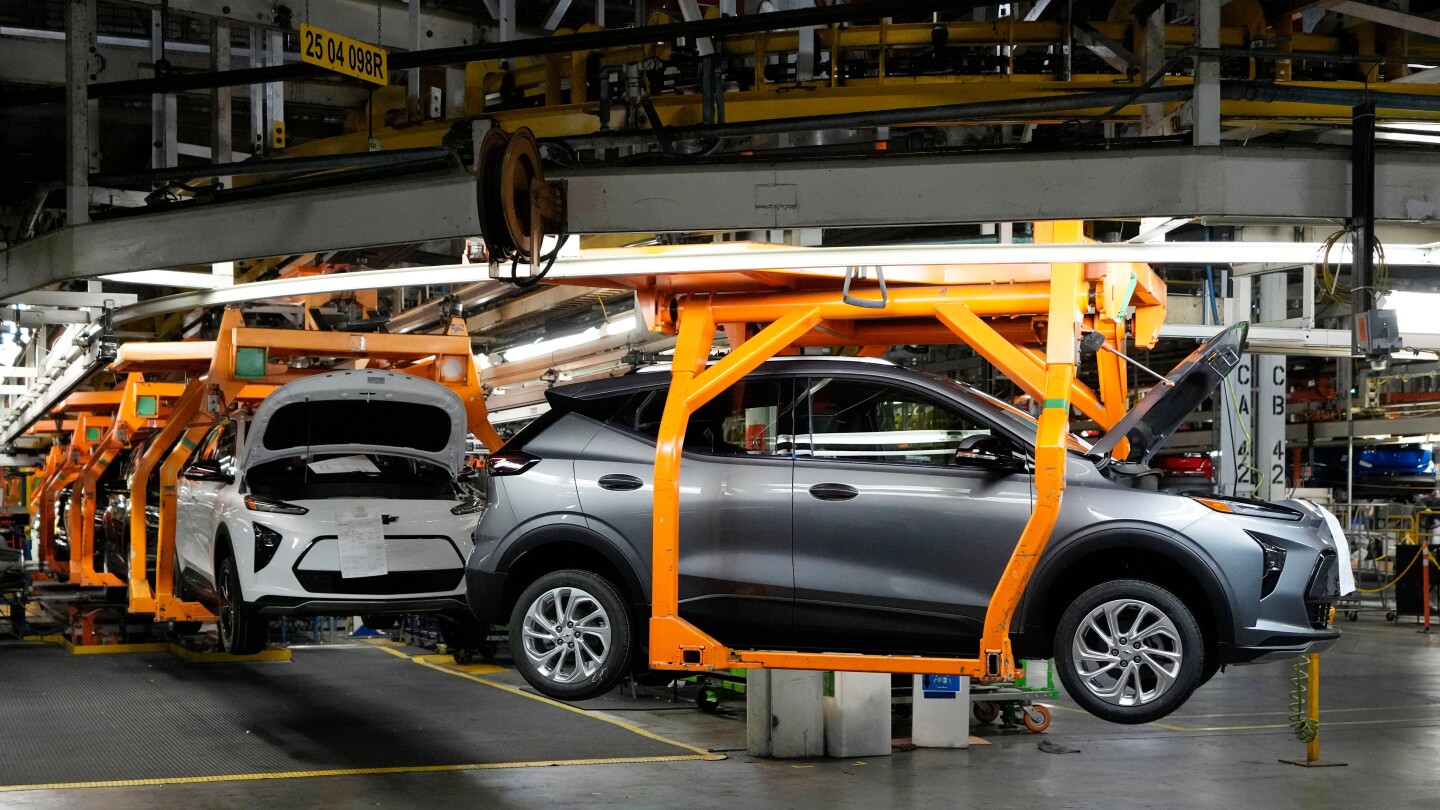
The future of Michigan’s automotive industry hangs in the balance, a pivotal moment underscored by a recent report highlighting the urgent need for strategic adaptation. With a global automotive sector valued at $348 billion this year, the stakes are incredibly high for the state, which has long been considered the heartland of American car manufacturing. The report, issued by MichAuto, a leading automotive advocacy group, serves as a stark “call to action” as Michigan prepares to host the North American International Auto Show in Detroit, a showcase event now more critical than ever.
Michigan’s Automotive Industry at a Crossroads
Glen Stevens, CEO of MichAuto, emphasized the gravity of the situation, stating that Michigan is facing a “critical time in the industry’s history.” He warned that the state is at an inflection point unlike any seen before, requiring significant changes to protect its iconic industry and overall economic well-being. The automotive industry currently accounts for approximately 20% of all jobs in Michigan, with a total payroll of $83 billion, making its stability paramount. This vulnerability isn’t simply about preserving tradition; it’s about safeguarding livelihoods and a substantial contribution to the state’s Gross Domestic Product.
The Rising Tide of Change: EVs, Tariffs, and Competition
The challenging landscape stems from a confluence of factors. 2023 and 2024 witnessed dramatic shifts in trade policies, the implementation of new fuel economy standards, and, crucially, a reassessment of electric vehicle (EV) strategies by major automakers. Companies like Ford are recalibrating their EV plans, acknowledging that a $19 billion loss is anticipated in the transition of capabilities from EV production to traditional gasoline vehicle manufacturing, alongside incorporating new energy storage systems.
However, the challenges don’t stop there. A “battery belt” is rapidly forming in the Southern United States, actively attracting automotive companies and suppliers – including those with existing roots in Michigan. The report from MichAuto also points to the rapid advancement of the Chinese automotive industry, which is aggressively pursuing dominance in the global EV market. These forces collectively demonstrate that relying solely on Michigan’s historical dominance in the automotive sector is no longer a viable strategy for sustained economic success.
Reimagining Michigan: Innovation, Workforce, and Business Climate
To navigate these turbulent waters, MichAuto proposes a comprehensive roadmap focused on bolstering Michigan’s innovative ecosystem. Stevens insists that increasing investment in research and development (R&D) is fundamental, especially given that Michigan already leads the nation in privately funded automotive R&D. The revitalization of innovation centers like Michigan Central, a project fueled by Ford and the state, is seen as a crucial component, along with broader support for burgeoning industries like life sciences.
Furthermore, MichAuto’s vision includes several key initiatives:
- Workforce Development: Prioritizing the training and upskilling of the workforce. This includes reinstating full funding for programs like “Going Pro,” designed to provide ongoing professional development, and increasing the pipeline of skilled workers to replace those retiring.
- Improved Business Climate: Enhancing the state’s appeal to businesses through strategic tax and regulatory reforms, making Michigan more competitive on a national and international scale.
- Sustainable Economic Growth: Implementing incentives that encourage long-term, sustainable economic development, focusing on investments that will yield lasting benefits. The recent suspension of funding for the $2 billion Strategic Outreach and Attraction Reserve (SOAR) fund has raised concerns about the state’s commitment to these goals.
- Supporting the Transition: Providing aid to both companies and workers as they adapt to new technologies and manufacturing processes, ensuring the automobile industry remains a significant employer in Michigan.
A Broader Economic Perspective: Beyond Automotive
The urgency articulated by MichAuto aligns with growing concerns about Michigan’s overall economic performance. Recent reports indicate a decline in the state’s prosperity, highlighting the need for substantial improvements to the education system. A study by Michigan business leaders identified critical areas for attention, including:
- Income Growth: Michigan ranks 50th in family income growth over the past 25 years.
- High-Skill Job Growth: While showing some growth, professional and high-wage job creation has lagged behind the national average of 35% over the last two decades.
- Educational Attainment: Michigan’s fourth-grade reading scores have fallen from 16th to 44th place over the past 30 years.
- Chronic Absenteeism: The state struggles with some of the highest rates of chronic school absenteeism in the country.
These indicators reinforce the need for a holistic approach to economic revitalization, acknowledging that the health of the automotive industry is inextricably linked to the state’s broader economic performance. The report stresses that the next administration, to be elected in 2026, must focus on making changes “within our control” to alter the state’s trajectory.
The Road Ahead: Adapting to a Dynamic Future
Economists at the University of Michigan predict that the state may miss out on anticipated national job growth in 2026 due to an aging workforce and sluggish population growth. However, the impact of recently implemented tariffs is expected to be mildly positive for the automotive sector, though estimations remain uncertain given the volatile nature of trade policy. Despite these nuances, the expectation is that vehicle production will increase by 2.7%, while new vehicle prices may rise by 6.6%, equating to approximately $3,100 per vehicle. This is reflected in the current average new car price of $49,814 according to Anderson Economic Group.
The shift in market share is also noteworthy. The combined market share of the Detroit Three – General Motors, Ford, and Stellantis – has decreased from 36.1% in 2023 to 34.2% in 2024, and is projected to recover somewhat in 2026 with the implementation of new federal policies.
MichAuto’s report isn’t just a warning; it’s a call for proactive engagement. It’s a recognition that Michigan’s strength in the automotive industry doesn’t guarantee future success. Only through innovation, strategic investment, and a commitment to developing its workforce can Michigan maintain its position as a global leader in automotive manufacturing and secure a prosperous future. The Detroit Auto Show presents a crucial opportunity to demonstrate this commitment and begin charting a new course for the industry and the state as a whole.