


The shadow of illicit digital scams continues to loom over Myanmar, as the nation’s military government declared a new policy of “zero tolerance” against the sprawling cyber fraud hubs that have taken root within its borders. This move culminated in a widely publicized raid and partial demolition of KK Park, a notorious complex synonymous with impunity in this world of highly profitable crime. However, the true extent of this crackdown, and its long-term impact, remains deeply uncertain. The question of cyber fraud in Myanmar is now under intense international scrutiny.
KK Park: Demolition or Disguise?
Government officials announced that, by December 13th, 413 buildings within KK Park had been “demolished,” with the remaining 222 slated for similar treatment. But a detailed visual analysis paints a different picture, raising concerns that the operation isn’t as comprehensive as portrayed. According to the London-based Center for Information Resilience (CIR), while some structures were flattened, a significant number – at least 78 – sustained only partial damage, with roofs, upper floors, and internal layers often left intact.
Guy Voss, an investigator with Myanmar Witness (a project of CIR), suggests a disturbing possibility: “There is a strong possibility these buildings will be rebuilt and repurposed.” New satellite imagery from December 4th further reinforces this perception, showing most buildings appearing either fully or partially undamaged even as demolition progressed across other sections of the complex. This raises doubts about how much of the complex was truly eradicated and speaks to the possibility of future exploitation.
The Long-Term Impact: A History of Failed Crackdowns
The declaration of ‘zero tolerance’ and the action against KK Park come amidst mounting international pressure, especially as Myanmar approaches national elections. The government is keen to showcase efforts to combat online scams, but past experiences suggest sustained action might be lacking.
Earlier this year, spurred by Chinese pressure, Myanmar conducted similar raids. However, C4ADS, a US-based non-profit that analyzes conflict using data-driven approaches, found these actions failed to curb the growth of the fraud operations. Over 7,000 workers were released, according to the United Nations Office on Drugs and Crime, but the scams continued unabated. In fact, C4ADS’s satellite imagery analysis of 21 known scam complexes in Myawaddy Township revealed that 14, including KK Park, showed signs of construction or expansion since January. This consistent growth highlights a fundamental inability of the military regime to effectively control the situation.
Where Did the Scammers Go? The Re-Emergence of Networks
Following the raid on KK Park, the Thai military reported that approximately 1,500 individuals linked to the complex had crossed the border into Thailand legally. However, this number represents only a small fraction of the tens of thousands of workers estimated to have been involved. The whereabouts of the rest remain largely unknown.
Emerging reports indicate a rapid dispersal of personnel. Telegram channels reportedly are flooded with job postings aimed at these displaced workers. According to accounts from four former KK Park employees, many are simply relocating to other sites. One individual trapped in a nearby complex, Hengsheng Park 4, stated that over a hundred KK Park workers remained for about a week before moving on. He cautiously revealed, fearing for his safety, “I heard most of them went to Cambodia, Mauritius, and Africa.” This suggests the problem isn’t being eliminated, but rather is being geographically shifted. The ongoing issue of human trafficking in Myanmar is inextricably linked to these scams.
Beyond KK Park: A Widespread Problem
KK Park is just one of around 30 known scam compounds along Myanmar’s border with Thailand. The government claims to have targeted other sites, including Shwe Kokko, another infamous residential complex situated within reach of US authorities. Despite these efforts, the operations persist and individuals continue to be trafficked from across the globe, awaiting rescue.
Jay Kritya, coordinator of the Civil Society Network for Assistance to Victims of Human Trafficking, emphasizes that the recent actions are far from a genuine crackdown: “It’s not a real suppression campaign yet.” He believes the problem is deeply entrenched and requires a vastly more comprehensive approach.
Starlink’s Role and Continuing Connectivity
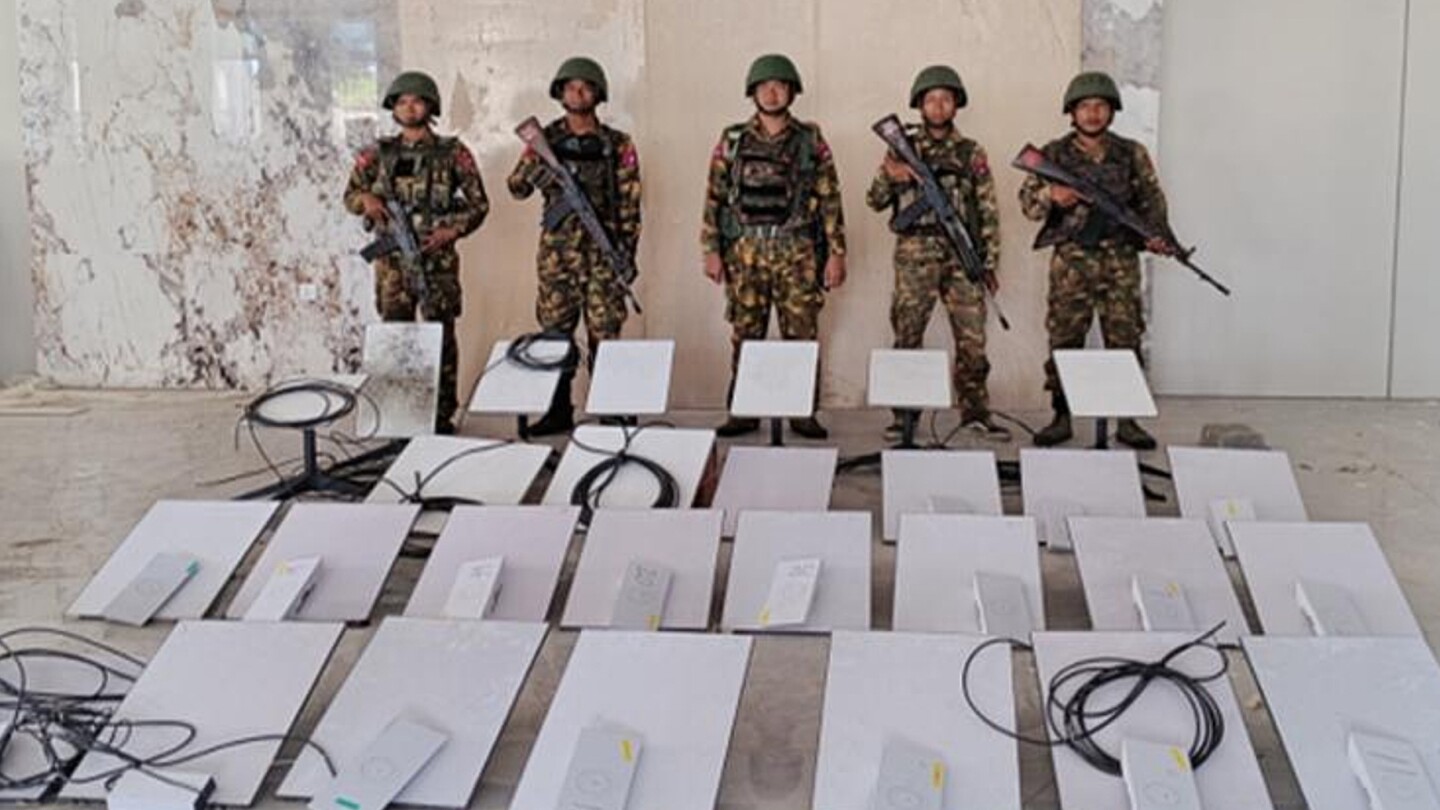
Adding another layer of complexity, questions have arisen regarding the continued use of Starlink internet services by scammers. State media outlets released images of seized Starlink units, and SpaceX announced it had cut access to over 2,500 units in Myanmar.
However, a source inside Hengsheng Park 4 claims that despite the cuts, Starlink remains operational. Three units reportedly stopped functioning after SpaceX’s intervention but a fourth remains active. Similarly, workers at Deko Park, located 35 miles south of KK Park, report continued Starlink access. SpaceX has not responded to requests for comment regarding these claims, further fueling suspicions about the extent of the disruption. Controlling the flow of information, including through satellite internet, is crucial to dismantling these online scam operations.
In conclusion, while the demolition of part of KK Park represents a symbolic gesture of intent from the Myanmar military government, it doesn’t signal the end of cyber fraud in Myanmar. The evidence suggests the problem is evolving, shifting locations, and adapting to countermeasures. The lack of comprehensive and sustained action, coupled with ongoing reports of human trafficking and continued connectivity through means like Starlink, paints a grim picture. Further investigation and international collaboration are essential to address this deeply rooted and multifaceted criminal enterprise.
To learn more about the collaborative reporting behind this investigation, visit the Associated Press website: https://www.ap.org/tips/ and stay tuned for the forthcoming FRONTLINE documentary.


