


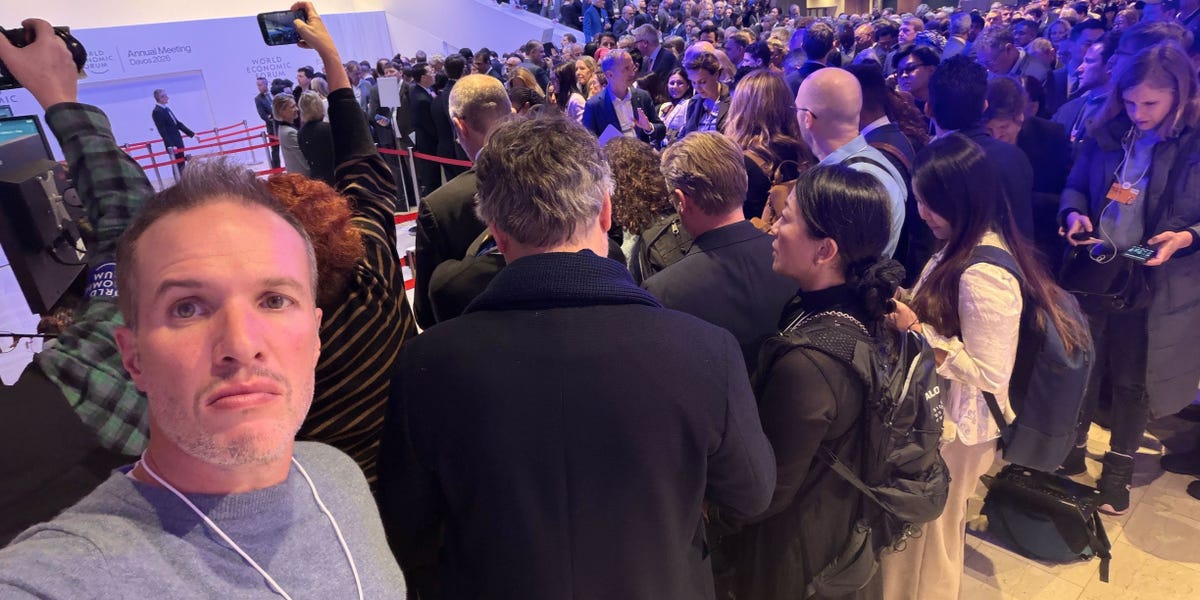
The atmosphere at the World Economic Forum in Davos this year was particularly charged, anticipating the address of former US President Donald Trump. While speculation ran high about a potentially confrontational speech, the reality inside the auditorium was surprisingly subdued. The anticipation surrounding Trump’s appearance was palpable, with attendees eager to witness his perspective on global issues. However, the reception to his actual speech was far from the enthusiastic applause he typically receives domestically, marked instead by a notable silence and, at times, nervous laughter. This article delves into the details of that address and the reactions it provoked amongst the global elite.
Trump’s Davos Speech: A Study in Contrasts
The lead-up to Trump’s speech was filled with predictions of a fiery showdown, particularly with European leaders. His advisors had intentionally fostered an air of mystery, hinting at a “special address” that would shake things up. What unfolded, however, was initially described as remarkably ordinary. It mirrored the style of countless rallies and speeches delivered during his presidency, focusing heavily on a recitation of accomplishments.
But the usual boisterous support was absent. The hall, packed with over a thousand attendees including CEOs and heads of state, remained largely silent. This wasn’t a hostile silence of boos or protests, but rather a stunned, almost bewildered quiet. It was a stark contrast to the energy Trump usually commands, and a clear indication that his message wasn’t resonating with the Davos crowd.
A List of Achievements Met with Restraint
Trump dedicated a significant portion of his speech to outlining what he considered his administration’s key achievements. He spoke of economic growth, job creation, and renegotiated trade deals. Yet, the expected wave of applause failed to materialize. Attendees, many of whom had secured their seats after a considerable wait, seemed to be listening with a detached curiosity, rather than enthusiastic agreement.
The lack of reaction wasn’t lost on observers. It raised questions about how his policies were perceived by the international community and the world’s business leaders. The silence spoke volumes, suggesting a disconnect between Trump’s self-assessment and the views of those present.
Unexpected Detours and Nervous Laughter
The speech took several unexpected turns, veering away from the anticipated themes of global cooperation and economic policy. A moment of particularly noticeable audience reaction came when Trump referenced French President Emmanuel Macron’s sunglasses. “Those beautiful sunglasses. What the hell happened?” he quipped, eliciting a wave of nervous laughter. It was unclear whether the audience was laughing with Trump or at him, but the prevailing sense was the latter.
The most significant shift in tone occurred when Trump brought up Greenland. His expressed interest in potentially acquiring the island nation, a topic he’s previously alluded to, was met with visible shock and discomfort. The idea of the US attempting to “buy” a country, even in a hypothetical context, seemed to unsettle the European leaders in attendance.
From Greenland to Grievances
Following the Greenland discussion, Trump abruptly transitioned to familiar grievances: “rigged elections” and the “crooked media.” This pivot further confused the audience, with some visibly checking their phones. The shift felt jarring, out of place within the context of the World Economic Forum.
He then circled back to Greenland, insisting he wouldn’t use force and framing the potential acquisition as a return to a previous arrangement involving US defense of the island during World War II. This explanation did little to quell the unease, and more nervous laughter rippled through the hall. His criticism of Canada’s Prime Minister Mark Carney’s previous address, claiming Canada only existed due to US defense, proved particularly provocative, prompting audible gasps and even some attendees to begin leaving.
A Prolonged Speech and a Lukewarm Response
Trump exceeded his scheduled speaking time by over thirty minutes, expanding on topics like domestic crime, Somali immigrants, and drug trafficking – subjects far removed from the typical Davos agenda. As the speech dragged on, more audience members departed or disengaged, turning to their mobile devices.
When he finally returned to more conventional remarks, praising the potential of the US and declaring “The United States is back, bigger and better than before,” a partial standing ovation emerged. However, it was estimated that only about a third of the audience participated, a clear indication of the lukewarm reception to his overall message.
Reactions from Outside the Hall
The muted applause didn’t go unnoticed by those observing from the sidelines. California Governor Gavin Newsom offered a scathing assessment, questioning why anyone would applaud a speaker who “talks down to you and past you, who belittles you, who mocks you, who thinks you’re weak and pathetic.” He even suggested that the presence of cellphones prevented a more widespread display of boredom.
Conversely, Senator Lindsey Graham, a staunch Trump ally, hailed the speech as a “home run,” suggesting that Russian President Vladimir Putin might be the biggest loser. He reiterated Trump’s interest in securing Greenland, emphasizing the need for the US to have “title” to the island, but not through force.
Other attendees, like Amelia Winter, acknowledged some positive aspects of Trump’s policies but expressed discomfort with his “arrogance” and “lack of shame.” The overall sentiment seemed to be that while Trump’s policies might be debated, his manner of presentation and his attacks on allies were deeply unsettling.
In conclusion, Donald Trump’s address at the World Economic Forum in Davos was a remarkable event, not for its content, but for the lack of reaction it elicited. The silence, the nervous laughter, and the eventual exodus of attendees painted a clear picture: his message failed to resonate with the global elite. The speech highlighted a significant disconnect between Trump’s worldview and the prevailing sentiments of the international community, leaving a lasting impression on those who witnessed it firsthand. The event serves as a potent reminder of the complexities of global diplomacy and the challenges of bridging ideological divides.


