






The United States Congress is on the verge of a significant debate regarding congressional stock trading, with a bill poised for a vote in the coming weeks. While proponents claim it’s a step towards preventing insider trading, critics, including prominent Democrats, are labeling it a “scam” that primarily benefits the wealthiest members of Congress. The core issue revolves around whether the proposed legislation genuinely restricts lawmakers’ ability to profit from non-public information, or if it merely offers a superficial solution.
The Proposed “Stop Insider Trading Act” – What Does It Do?
The bill, officially named the “Stop Insider Trading Act,” passed by the Committee on House Administration, aims to prohibit members of Congress, their spouses, and dependent children from purchasing new stocks in publicly traded companies. This would represent the most substantial change to stock trading rules for lawmakers in over a decade.
However, a crucial element of the bill has drawn intense scrutiny: it allows lawmakers to retain their existing stock holdings. Republicans have staunchly defended this provision, arguing that it’s essential to avoid discouraging financially successful individuals from seeking public office.
Republican Representative Bryan Steil of Wisconsin, chairman of the committee, emphasized that the bill’s focus is on preventing lawmakers from exploiting insider information, not on impoverishing them. “The focus of the bill is not to make elected officials poor,” he stated during the bill’s markup. “The focus is to prevent them from benefiting off their insider information.”
Democratic Opposition and the “Grandma Loophole”
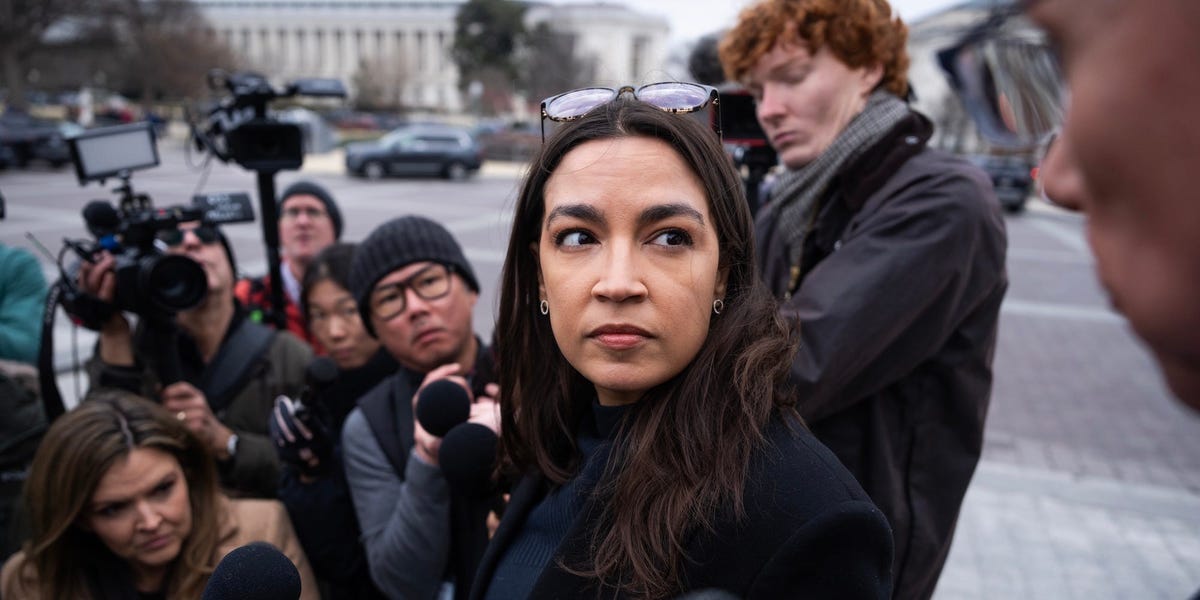
Despite the bill’s advancement, it faces strong opposition from Democrats who argue it falls far short of a genuine stock trading ban. Representative Alexandria Ocasio-Cortez of New York went so far as to call it “a scam,” asserting that it’s “written precisely for the wealthiest members of Congress.”
Several specific provisions have fueled Democratic discontent. One major concern is the allowance for family members to trade stocks on behalf of another person. Representative Joe Morelle of New York sarcastically dubbed this the “grandma loophole,” highlighting that family members could freely trade stocks on behalf of parents or grandparents who are in line to inherit from a member of Congress.
“This is a loophole so big, you could fly a Qatari jet right through it,” Morelle remarked, illustrating the perceived extent of the potential abuse. This provision, according to Representative Steil, is intended to allow family members with legitimate stock trading roles to continue their work.
Amendments and the “Goldilocks Argument”
During the committee markup, Democrats proposed numerous amendments to strengthen the bill, including broadening the scope of prohibited individuals, mandating divestiture of existing holdings, eliminating the allowance for reinvesting stock dividends, and even proposing a complete replacement with a more comprehensive Democratic-backed insider trading ban.
However, all these amendments were voted down, and the bill passed without any Democratic support. Representative Steil accused Democrats of employing a “Goldilocks argument,” seeking a perfect solution rather than accepting a viable compromise. He argued that the bill represents the best chance of achieving any new restrictions on congressional stock trading this session.
A Fracturing Bipartisan Effort and Future Prospects
The years-long bipartisan effort to enact a stock trading ban appears to be unraveling, with the issue now increasingly dividing along party lines. Representative Morelle announced plans to file a discharge petition, a legislative maneuver to force a vote on a stronger bill that would also apply to the President and Vice President.
Meanwhile, another bipartisan discharge petition, excluding the executive branch, remains stalled due to Democratic leadership opposition. Some Republicans, like Representative Chip Roy of Texas, have expressed satisfaction with Steil’s bill, even if it’s not as robust as their preferred version.
Interestingly, at least one Democrat, Representative Josh Riley of New York, has indicated support for the GOP-backed proposal, stating a willingness to accept incremental progress. He believes it’s a pragmatic step towards addressing the issue, even if it doesn’t achieve a complete “draining of the swamp.” The debate surrounding financial conflicts of interest in Congress is far from over.
Conclusion
The future of congressional stock trading reform remains uncertain. While the “Stop Insider Trading Act” is moving forward, its effectiveness is heavily contested. Democrats argue it’s a weak and easily circumvented measure, while Republicans defend it as a reasonable compromise. The ongoing debate highlights the complexities of balancing transparency, accountability, and the rights of lawmakers. The coming weeks will be crucial as the bill heads for a full House vote, and the possibility of further amendments or alternative proposals remains open. The public will be watching closely to see if Congress can deliver meaningful reform to address concerns about potential abuses of power and maintain public trust in the integrity of the legislative process.


