






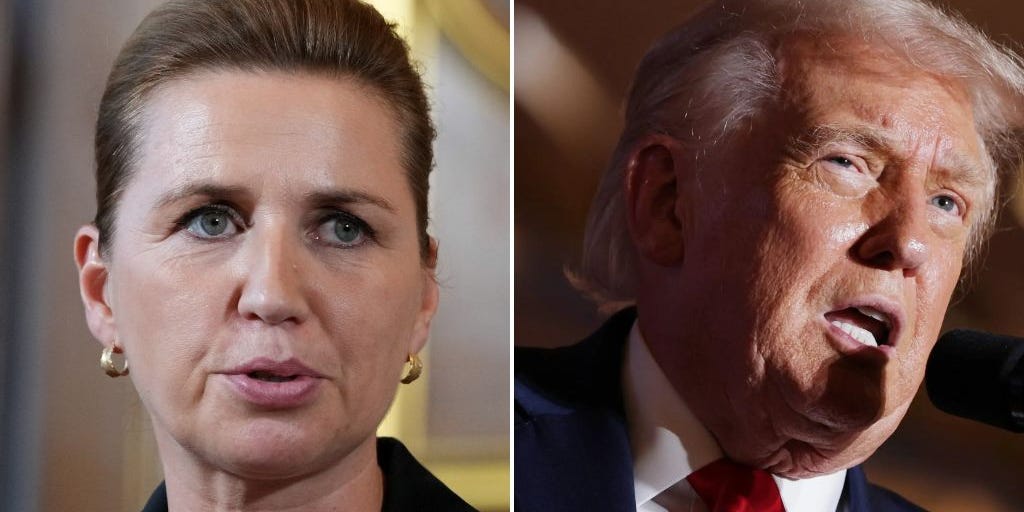
The specter of a potential US purchase of Greenland has resurfaced, prompting a strong and direct response from Denmark. Once again, Copenhagen is firmly rebuffing any suggestion that the world’s largest island is “for sale,” defending Greenland’s autonomy and its crucial role within the Kingdom of Denmark. This ongoing situation, rooted in former President Trump’s expressed interest and recently reignited by associated figures, highlights the complex geopolitical dynamics surrounding the Arctic region and the strong desire of the Greenlandic people to maintain self-determination.
Renewed US Interest in Greenland: A Source of Tension
Recent activity from individuals linked to former US President Donald Trump has brought the possibility of a sale – or, more accurately, acquisition – of Greenland back into the spotlight. Katie Miller, a former aide to Trump, posted an image of Greenland overlaid with the US flag, accompanied by the ambiguous word “SOON.” This post immediately drew criticism and prompted a firm reaction from both Danish and Greenlandic leaders.
While initially dismissed as a whimsical idea during Trump’s presidency in 2019, his repeated discussions about buying Greenland underscored a serious strategic interest in the island. This interest stemmed from a desire to bolster US security in the Arctic, gain access to Greenland’s vast, untapped natural resources, and potentially gain a stronger foothold in a rapidly changing global landscape. However, the overwhelming sentiment in Greenland is unequivocally against any transfer of sovereignty.
Denmark’s Firm Rejection and Defense of Sovereignty
Danish Prime Minister Mette Frederiksen delivered a powerful statement on Sunday, unequivocally rejecting the idea of the US acquiring Greenland. “I have to say this very directly to the United States,” she stated on the Danish government website. “It makes absolutely no sense to talk about the need for the United States to take over Greenland… The United States has no right to annex any of the three countries in the Commonwealth.”
Frederiksen reiterated Greenland’s integral position within the Kingdom of Denmark while emphasizing its role as a vital NATO ally. This connection provides significant security guarantees, rendering any unilateral “takeover” unnecessary and inappropriate. Additionally, she pointed out the existing defense agreement between Denmark and the United States, which already grants significant US access to Greenland, particularly through the Pituffik Space Base (formerly Thule Air Base).
She concluded with a strong appeal, “I would therefore strongly urge the United States to stop the threats against a historically close ally and against another country and another people who have said very clearly that they are not for sale.” This measured yet firm response underscores Denmark’s commitment to defending Greenland’s autonomy on the international stage and protecting its alliance with the US.
Greenland’s Position: “Enough is Enough”
The sentiment in Greenland is even more forceful. Greenland’s Prime Minister, Jens-Frederik Nielsen, took to Facebook to express his frustration, stating simply, “Enough is enough.” He firmly rejected any “fantasies of annexation” and labeled the recent messaging from the US as “completely and utterly unacceptable.”
This is not a new stance for Nielsen or the Greenlandic government. In 2019, following Trump’s initial inquiries, Greenland’s foreign affairs ministry famously tweeted, “We’re open for business, not for sale.” The Greenlandic people see their autonomy as hard-won and intrinsically valuable, and deeply resent the implication that their future can be decided by external powers. The issue touches upon historical colonial experiences and a strong contemporary desire for self-governance.
The Strategic Importance of Greenland & The Arctic
The ongoing debate about Greenland’s future is inextricably linked to the growing strategic significance of the Arctic region. Climate change is rapidly altering the Arctic landscape, making previously inaccessible areas open for exploration and resource extraction.
Key factors driving interest in the Arctic include:
- Shipping Lanes: A melting Arctic ice cap is opening up new, shorter shipping routes between Europe and Asia, reducing travel times and costs.
- Mineral Wealth: The Arctic is believed to be rich in valuable minerals and hydrocarbons, including oil, gas, and rare earth elements.
- Geopolitical Competition: Several nations, including the US, Russia, Canada, Denmark, and Norway, have competing interests in the Arctic and are seeking to establish their presence in the region.
The Pituffik Space Base, operated by the US in Greenland, is strategically important for missile defense and space surveillance. The base’s location allows for early detection of potential threats from over the Atlantic. The presence of this base is a key component of the existing security relationship, demonstrating the current level of US access without the need for ownership. Discussions around Arctic security are therefore central to comprehending the continued US interest.
Looking Ahead: Maintaining a Strong Partnership
The recent exchange of statements highlights the need for continued diplomatic engagement and a clear understanding of mutual respect between the United States and the Kingdom of Denmark. While the US has legitimate security concerns in the Arctic, pursuing a path that disregards the will of the Greenlandic people and challenges the sovereignty of Denmark is counterproductive.
A more constructive approach involves strengthening the existing defense cooperation, investing in scientific research in the Arctic, and addressing the shared challenges posed by climate change. Ultimately, maintaining a strong and collaborative partnership is the most effective way to ensure stability and security in the strategically vital Arctic region. A resolution that acknowledges Greenland’s agency and prioritizes a mutually beneficial relationship is paramount.


