






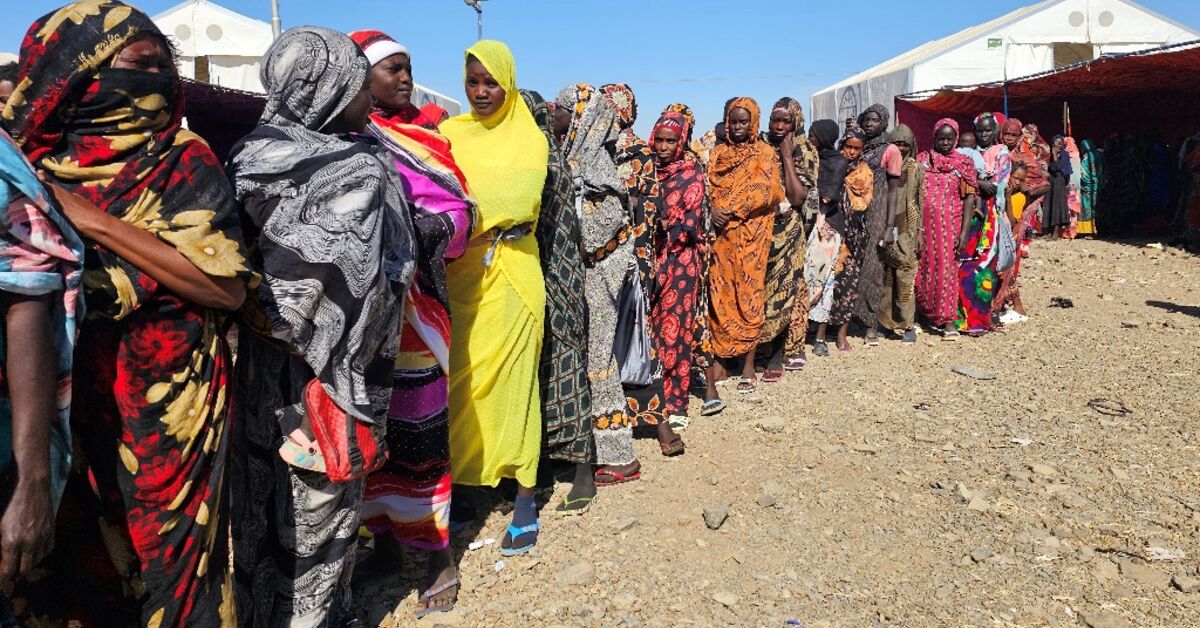
The escalating conflict in Sudan has unleashed a humanitarian crisis of immense proportions, forcing tens of thousands to flee their homes in search of safety. Among them are the most vulnerable, including families uprooted from the crucial oil-producing region of South Kordofan. The recent clashes surrounding the town of Heglig and its vital oil field have triggered a mass exodus, revealing harrowing stories of displacement and desperation. This article delves into the plight of Sudanese civilians caught in the crossfire, focusing on the experiences of those seeking refuge after being displaced from the fighting in and around Heglig.
معركة هيجليج وتداعياتها على المدنيين: قصص من النزوح واليأس
The capture of the army’s last stronghold in Darfur by the Rapid Support Forces (RSF) in October acted as a catalyst, expanding the conflict to include neighbouring Kordofan. Control over West Kordofan has now largely fallen to the RSF and allied groups, leading to the seizure of Heglig, a strategically important area due to its rich oil reserves. This, in turn, tightened the siege on Kadugli and Dilling in South Kordofan, plunging hundreds of thousands into a desperate struggle for survival and fueling a new wave of internally displaced persons (IDPs).
النزوح القسري ورحلة البحث عن الأمان
The story of Dowa Hamed, a 25-year-old paraplegic mother of five, encapsulates the unimaginable hardship facing these families. When paramilitary fighters advanced on Heglig and its oil field, Dowa could only cling to her husband’s back as they fled, describing herself as being carried “like a child,” as reported by AFP. Now residing in the Abu al-Naga displacement camp, near Gedaref, a staggering 800 kilometers from her home, Dowa is still reeling from the trauma.
However, the distance travelled belies the true extent of her family’s ordeal. They crossed the South Sudan border twice, navigating a treacherous landscape and repeatedly encountering various armed groups. “We fled with nothing,” Dowa poignantly recounts to AFP, “Only the clothes on our backs.” This heartbreaking narrative is echoed by countless others caught in the conflict’s grip.
شهادات من النازحين: معاناة لا توصف
Hiyam al-Haj, 29, a mother of ten, shared a similarly terrifying experience. Learning of an imminent attack on the night of December 7th, Hiyam and many others ran for their lives on foot, often barefoot, without proper provisions. “We ran on foot, barefoot, without proper clothes,” she stated, explaining that she was forced to leave her mother and six siblings behind in the chaotic escape. She fled approximately 30 kilometers to reach the border, pursued relentlessly by the RSF.
“The RSF chased us to the border,” Hiyam continued. “The South Sudan army told them we were in their country and they would not hand us over.” While offered temporary shelter in South Sudan’s Unity State, they received only minimal support. The reality was stark: survival depended on personal resources. “Those who had money could feed their children,” she explained, “Those who didn’t went hungry.”
The journey was a grueling four weeks of continuous movement, long treks on foot, and nights spent exposed to the elements. “We were hungry,” Hiyam admitted, “But we didn’t feel the hunger, all we cared about was our safety.” Eventually, South Sudanese authorities transported them back across the border to territory controlled by the army, allowing them to move eastward, away from the direct line of fire. Even this relative safety came at a physical cost, as Dowa shared, “During the truck rides, my body ached with every movement.”
أوضاع معسكرات النزوح: ضغوط متزايدة
The situation in displacement camps like Abu al-Naga is deteriorating rapidly. Sarah, a 14-year-old, is now responsible for caring for her younger brother, having become separated from her parents during the transport from South Sudan. Her parents put them on a truck with the promise of joining them on the next one, but weeks have passed with no news. This tragic separation highlights the breakdown of family structures caused by the war.
Currently, the Abu al-Naga camp hosts 240 families, approximately 1,200 individuals. According to camp director Ali Yehia Ahmed, the camp lacks sufficient space and resources. “The camp’s space is very small,” Ahmed told AFP, adding that food supplies are dwindling. Rations are distributed from a single point, leading to long delays and hardships for the already vulnerable families.
Water is scarce, requiring women to haul supplies from a single well. Access to healthcare is also limited, with a rudimentary clinic struggling to cope with the influx of patients. Sawsan Othman Moussa, 27, a mother of three who has been displaced three times from Dilling, poignantly describes her current reality: “Every tent is cramped, medicine is scarce, and during cold nights, we suffer.” The looming winter adds another layer of urgency to the desperate need for adequate shelter and provisions.
الوضع الإنساني في كردفان الجنوبية: الحاجة الملحة للمساعدات
The escalating violence around Heglig and South Kordofan is not merely a military conflict; it’s a humanitarian catastrophe unfolding in real-time. The combined factors of displacement, food insecurity, and limited access to essential services are creating a critical situation. The lack of shelter, coupled with the approaching winter, exposes the displaced population to increased risks of illness and death. Beyond that, widespread food insecurity is a grave concern, and requires immediate attention.
Addressing this crisis requires a concerted effort from the international community, humanitarian organizations, and the Sudanese government (where possible). Immediate needs include secure and adequate shelter, sufficient food supplies, clean water, sanitation, and access to healthcare, particularly for vulnerable groups like children, the elderly, and individuals with disabilities. Without rapid and substantial assistance, the situation in South Kordofan will likely deteriorate further, leaving countless lives at risk. The stories of families fleeing the fighting in Heglig serve as a stark reminder of the human cost of conflict and the urgent need for peace and stability in Sudan.


