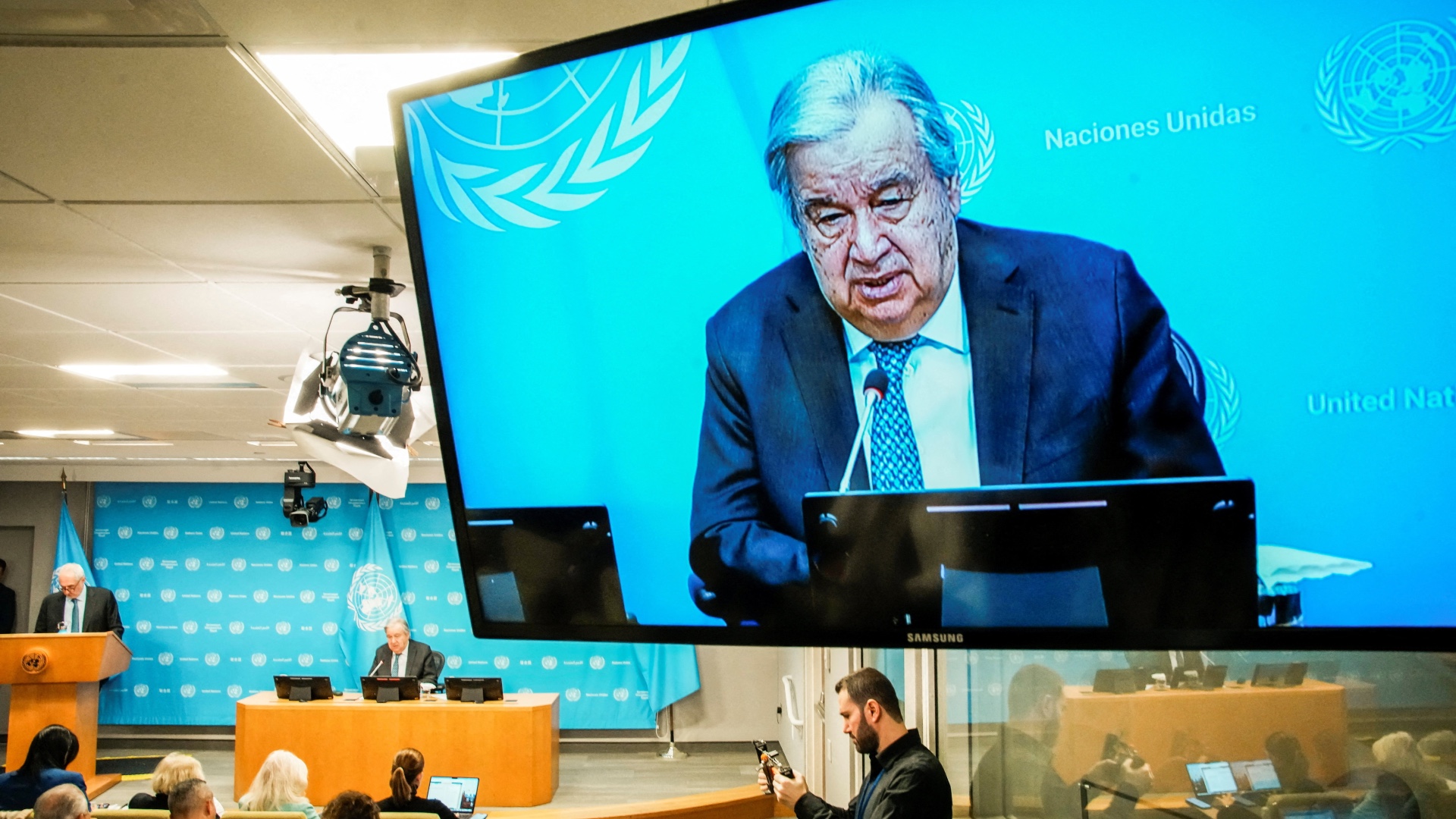
United Nations on the Brink: US Funding Cuts and the Erosion of Global Cooperation
In recent remarks at the Munich Security Conference, U.S. Secretary of State Marco Rubio highlighted a growing tension surrounding the United Nations’ effectiveness. He suggested that while the UN possesses “potential,” it has “no answers and has played virtually no role” in resolving conflicts, often overshadowed by American leadership, particularly under President Donald Trump’s claims of conflict resolution. Rubio’s critique comes at a time when the UN faces a significant financial crisis, largely due to the United States’ delayed payments, raising serious questions about the future of global cooperation and the very stability it aims to maintain.
The UN’s Diminished Role in Conflict Resolution
Rubio’s assessment sharply contrasts with the perceived contributions of the UN. He pointed to the Gaza conflict, stating, “It could not solve the war in Gaza. Instead, it was American leadership that freed captives from barbarians and brought about a fragile truce.” However, the reality on the ground, as reported by the Gaza health ministry, indicates a grim toll: 602 Palestinians killed by Israeli fire since the ceasefire announcement on October 10th. This paints a stark picture of the human cost of ongoing conflict, regardless of who claims credit for truces.
Prior to this fragile truce, the UN found itself sidelined. Six UN resolutions since October 2023, calling for a humanitarian pause in Gaza, were vetoed by the US ambassador. This action effectively relegated the international body to the periphery of a crisis that scholars and the UN itself have described with grave concern. The human toll in Gaza has been staggering, with over 72,000 Palestinians killed according to the Gaza health ministry.
Rubio also voiced concerns about other UN member nations, asserting they “openly threaten our citizens and endanger our global stability to shield themselves behind abstractions of international law,” though he did not specify which nations he was referring to.
Financial Strain Threatens UN Operations
The financial implications of the United States’ stance on the UN are profound. Washington stopped paying its dues to the organization when Donald Trump took office, accumulating arrears now close to $4 billion. While the Biden administration had made some payments, significant arrears accrued during its term as well. The UN secretary-general, Antonio Guterres, has warned of a potential “financial collapse,” a dire prediction stemming largely from the delayed payments by the US.
Mr. Guterres emphasized the urgency of the situation, noting that the UN hasn’t even paid its 2025 bills, despite the US being responsible for a substantial portion of the UN’s operating budget, calculated at 22 percent according to the Council on Foreign Relations. This fixed percentage means that as the UN budget increases, so does the US contribution. For 2026 alone, the UN requires $3.5 billion for its agencies and an additional $5.7 billion for peacekeeping operations globally.
The “Privilege” of US Financial Contributions
Senior UN officials have informed The New York Times that funds could run out by July, potentially leading to the cancellation of annual General Assembly meetings and even a shutdown of the UN headquarters in Manhattan. Daniel Forti, head of UN affairs at the International Crisis Group, described the US financial obligation to the UN not as a penalty, but as a reflection of its “privilege.” He explained that countries with veto power on the Security Council, and particularly the largest economies, bear the greatest financial responsibility.
“It’s actually a reflection of its institutional privilege… that a lot of other countries would want if they’re given the chance,” Forti stated. He echoed Guterres’ warnings, describing the situation as “dire.” The root cause of this financial crisis, Forti maintains, “is unmistakably at the feet of Washington.”
Exploring Alternatives Amidst Crisis
The prospect of the US significantly scaling back its financial commitment necessitates a complete restructuring of the UN, as Guterres has acknowledged. This idea resonates with calls from nations in the Global South for greater representation in the UN Security Council. Mandeep Tiwana, secretary general of Civicus, argues that current funding models are “unnecessarily opaque and lopsided” and proposes a shift towards each country contributing a small percentage of its gross national income to the core budget, fostering “equity and joint ownership.”
Meanwhile, the Trump administration is reportedly exploring alternative paths. The “Board of Peace,” initially conceived for Gaza, is emerging as a preferred tool for conflict resolution. Trump’s envoy, Massad Boulos, suggested this board could work alongside, or even as a complementary entity to, the UN. However, former State Department official Allison Lombardo cautions that the “Board of Peace has yet to be proven out” and cannot compete with the UN’s established mandate and international buy-in without demonstrating financial contributions and implementation capabilities.
Regardless of the chosen avenue, it appears the United States seeks cooperation on its own terms. While the UN’s funding structure is deeply embedded, the current financial strain underscores the fragile interdependence of global governance. As Lombardo points out, the first step for others to contribute is for the US to fulfill its own commitment, setting an example for collective responsibility and the vital role of international institutions like the United Nations.