






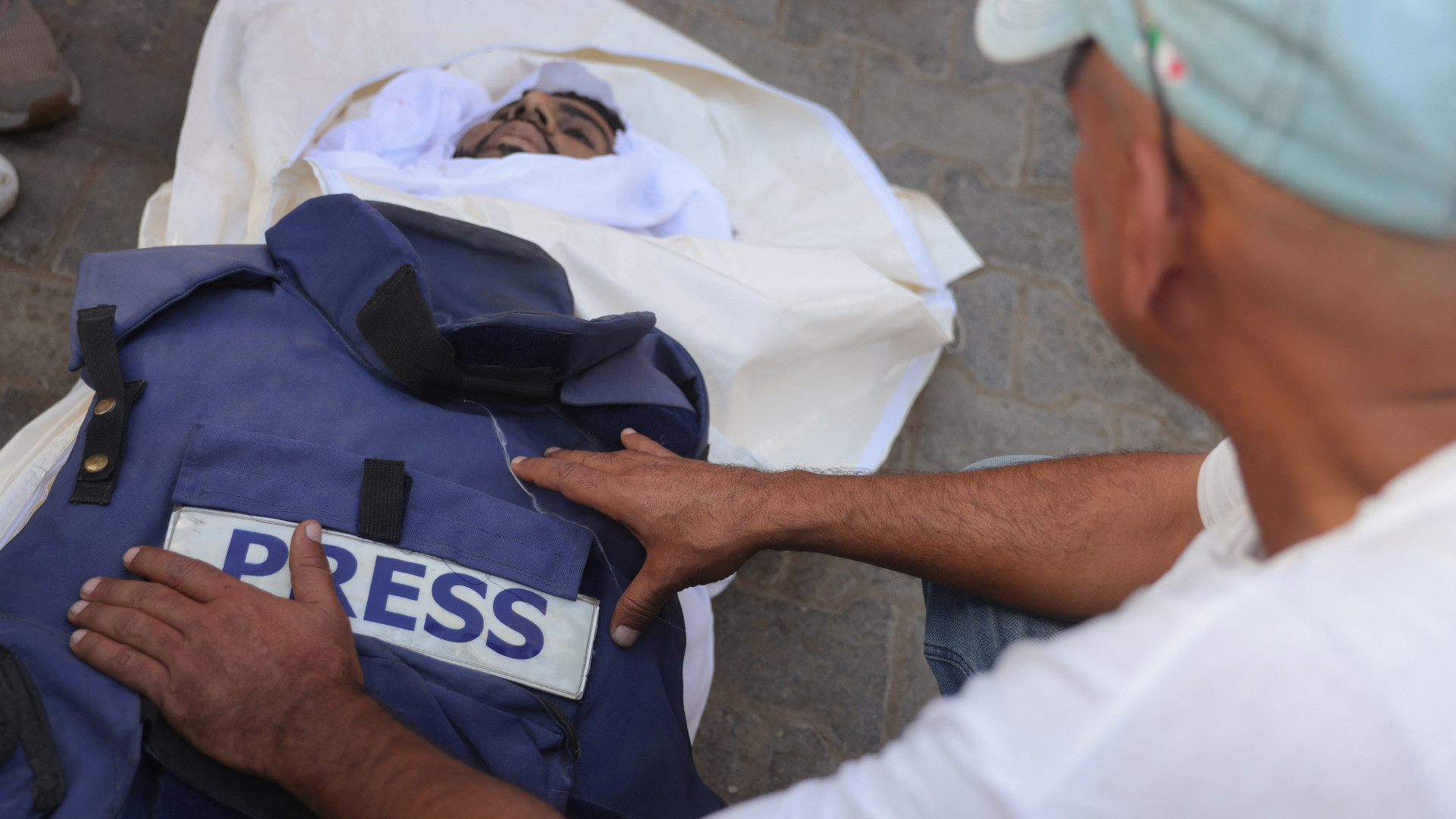
The recent report by Reporters Without Borders (RSF) paints a harrowing picture of press freedom globally, revealing that 67 journalists were killed worldwide in the past year. A deeply disturbing aspect of this grim statistic is that Gaza has become a focal point of this violence, accounting for nearly half of all journalist fatalities. This unprecedented level of danger faced by journalists, particularly press freedom, demands a critical examination of the international response, and more specifically, the selective outrage displayed by some Western media outlets.
The Unprecedented Toll on Journalists in Gaza
RSF’s report highlights a shocking reality: 43% of all journalists killed in 2023-2024 were Palestinians working in Gaza, victims of what the organization describes as “targeted attacks” by Israeli forces. This isn’t simply collateral damage; the scale and nature of these killings suggest a deliberate effort to silence reporting from the region. Since October 2023, the number of Palestinian journalists killed has risen to nearly 220, leading RSF to unequivocally label Israel as “the worst enemy of journalists.” The sheer volume of casualties represents a catastrophic blow to the ability to report truthfully from a conflict zone, hindering the world’s understanding of the unfolding events.
The loss of these journalists isn’t just a tragedy for their families and colleagues; it’s a loss for the entire world. Their voices, their investigations, and their eyewitness accounts are crucial for holding power accountable and informing public opinion. The deliberate targeting of media professionals constitutes a grave violation of international law and a direct assault on the principles of a free and informed society.
The Silence of Western Media: A Disturbing Pattern
Despite the severity of the findings, the response from many major Western news organizations has been muted. While the report details the deadliest year on record for journalists, and the overwhelming majority of those killed were Palestinian, coverage has been disproportionately limited. This silence is particularly jarring given these same outlets often vociferously champion media freedom and human rights in other contexts.
This isn’t a new phenomenon. The selective attention given to different conflicts and human rights abuses has long been a criticism leveled against Western media. However, in the context of the ongoing events in Gaza, this disparity feels particularly egregious and raises serious questions about bias and editorial priorities.
The New York Times and Selective Outrage
Few institutions exemplify this selective outrage more clearly than The New York Times. The paper recently published an editorial condemning former US President Donald Trump for his meeting with Saudi Arabia’s Mohammed bin Salman, citing the crown prince’s likely involvement in the murder of Saudi journalist Jamal Khashoggi. The headline, “No, Mr. President, We Cannot ‘Leave It at That’!”, underscored the paper’s indignation.
The irony is stark. One might expect similar condemnation, even stronger, given the scale of violence against journalists in Gaza. Yet, the Times often frames the conflict in a way that minimizes the targeting of Palestinian journalists, frequently attributing their deaths to “crossfire” or failing to adequately investigate the circumstances surrounding their killings. The paper’s justification for overlooking the actions of powerful allies – that “defeating foreign threats often requires the help of countries that fall far short of being liberal democracies” – feels like a convenient excuse to avoid holding Israel accountable. This demonstrates a clear double standard in their approach to journalism ethics.
Moral Depravity and the Erosion of Trust
The Times’ editorial board’s willingness to fiercely defend press freedom when it suits their narrative, while simultaneously downplaying the systematic killing of Palestinian journalists, is deeply troubling. It suggests a level of moral compromise that undermines the paper’s credibility and erodes public trust. As the author of the original article points out, the behavior is akin to “a clear clinical symptom of moral depravity.”
The contrast with openly pro-Israel voices, like Bari Weiss, is telling. Weiss, now heading CBS News, makes no pretense of impartiality. The Times, however, attempts to maintain a facade of objectivity while consistently prioritizing the Israeli narrative.
A Call for Accountability and Representation
The situation demands a fundamental shift in how Western media covers the Israeli-Palestinian conflict. The New York Times, and other outlets, must be held accountable for their biased reporting and their failure to adequately address the targeting of Palestinian journalists.
Specifically, the Times should:
- Significantly increase the representation of Arab, Muslim, and Palestinian journalists within its newsroom.
- Add Palestinian or other Arab/Muslim columnists to provide diverse perspectives.
- Conduct thorough investigations into the deaths of Palestinian journalists and report on the findings with the same rigor they apply to other cases.
The current imbalance not only perpetuates injustice but also fuels the rise of extremist ideologies on both sides. Until Western media outlets like the Times demonstrate a genuine commitment to unbiased reporting and the protection of all journalists, they will continue to be viewed with suspicion and distrust. The future of informed public discourse, and ultimately, the pursuit of peace, depends on it.


