






The United States began the new year with a bold and controversial move: the explicit articulation of what’s being termed the “Donroe Doctrine,” a reimagining of the 1823 Monroe Doctrine under President Donald Trump. This doctrine, revealed in the wake of military actions and alleged abductions, signals a potentially dramatic shift in US foreign policy, extending far beyond the Western Hemisphere and raising concerns about a renewed era of American interventionism and resource control. The implications of this doctrine, particularly regarding global US foreign policy, are far-reaching and demand careful examination.
The “Donroe Doctrine”: A New Imperial Framework?
The term “Donroe Doctrine” gained traction following the US bombing of Venezuela and reports of the detention of President Nicolás Maduro and his wife on January 3rd. While presented as a regional assertion of influence – mirroring the original Monroe Doctrine’s aim to prevent European powers from further colonizing the Americas – critics argue it’s a thinly veiled justification for a global power grab. The doctrine essentially asserts the right of the US to intervene in any country it deems necessary, particularly those possessing significant oil reserves. This echoes historical US imperial policy dating back to the post-World War II era, characterized by regime change and resource exploitation.
A Multi-Continental Onslaught: Targeting Oil-Producing Nations
The past month has witnessed a series of aggressive actions by the US targeting oil-producing nations across multiple continents. This isn’t simply a reactive response to isolated incidents; it appears to be a coordinated strategy driven by economic and geopolitical interests.
Syria: Occupation and Resource Extraction
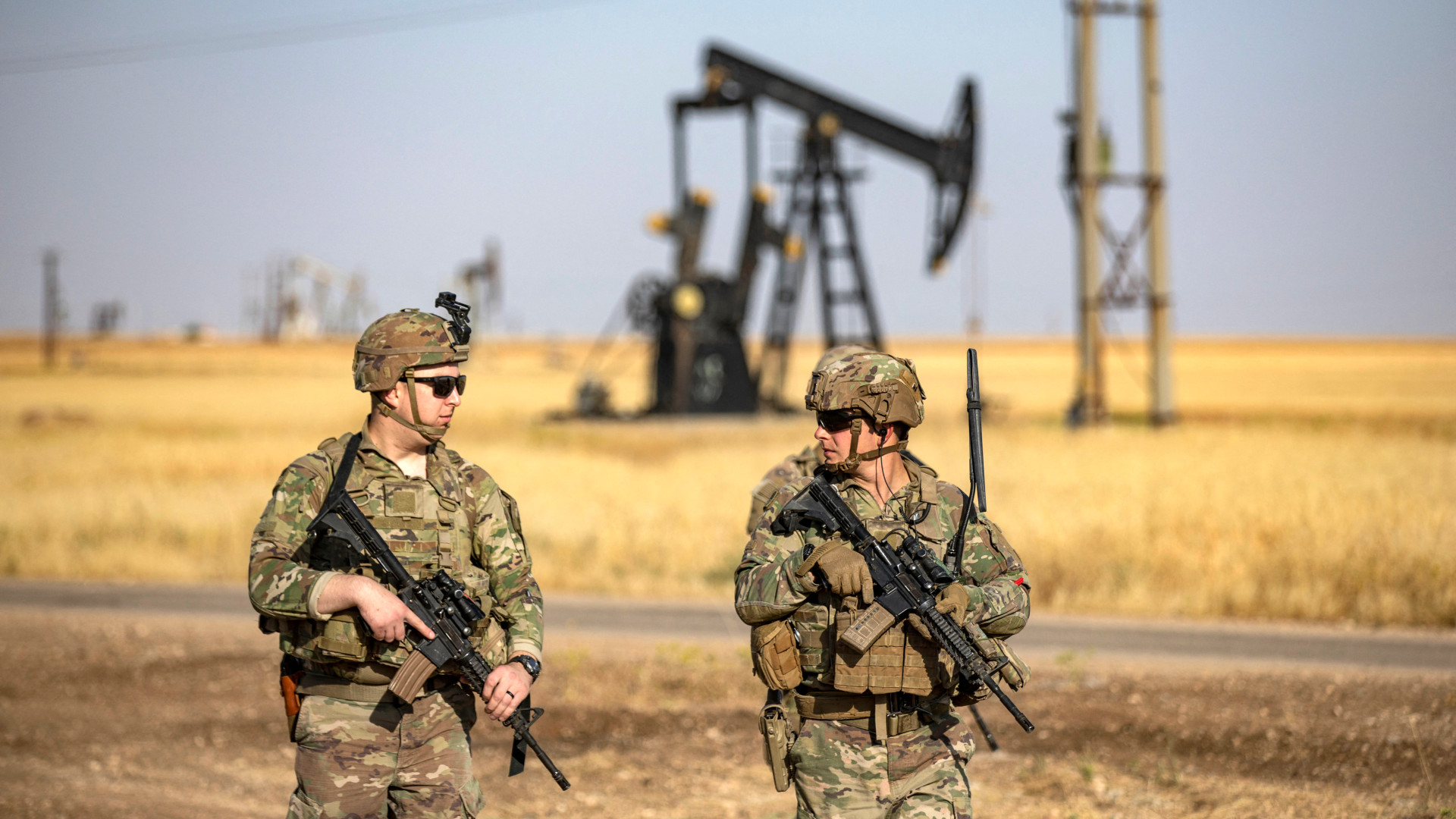
On December 19th and again on January 10th, the US launched airstrikes on Syria, citing retaliation for the deaths of US soldiers. However, these strikes occurred within the context of a long-standing US military presence in Syria’s oil-rich regions. Since 2014, American forces have been accused of extracting and selling Syrian oil, diverting the profits for their own use. This blatant exploitation of another nation’s resources fuels accusations of neo-colonialism.
Nigeria: A “Christmas Present” of Intervention
Perhaps the most alarming action was the bombing raid on Nigeria on December 25th, described by Trump as a “Christmas present.” The stated justification was to protect Nigerian Christians allegedly facing persecution. However, the raid resulted in the deaths of numerous individuals identified as “jihadists,” and Trump has since threatened further military intervention if attacks on Christians continue. This intervention, based on contested claims and executed with significant force, raises serious questions about the legitimacy of US actions and the potential for escalating conflict.
Expanding the Sphere of Influence: Iran and Greenland
The US’s assertive stance isn’t limited to direct military action. Trump has actively sought to destabilize governments and exert pressure on nations perceived as challenging US interests.
Iran: Fueling Protests and Issuing Threats
Following widespread anti-government protests in Iran, triggered by economic hardship, Trump urged Iranians to “keep protesting,” promising that “help is on the way.” Reports suggest the involvement of foreign actors, including Israeli intelligence (Mossad), in supporting the protests, a claim reinforced by former Secretary of State Mike Pompeo. Trump has since escalated the situation by cancelling talks with Tehran, imposing hefty tariffs on countries trading with Iran, and threatening “very strong” military action.
Greenland: A New Target for Resource Control
Even seemingly distant territories haven’t escaped Trump’s attention. Greenland, a Danish territory with substantial oil potential, has become a new focal point. Trump has reportedly threatened Denmark with force and is actively developing military plans to invade the island, regardless of Danish consent. This aggressive pursuit of Greenland’s resources underscores the central role of energy in the “Donroe Doctrine.”
The Centrality of Oil and Challenging China
The consistent targeting of oil-producing nations reveals a clear pattern. The US’s insistence on controlling global oil supplies is driven by two primary concerns: maintaining its leverage over oil prices and ensuring the continued dominance of the US dollar in energy transactions. Crucially, this control is also aimed at limiting the economic influence of China, a major competitor for global resources. The pursuit of these objectives harkens back to the post-World War II era, when Washington routinely intervened in the affairs of sovereign nations to secure access to oil.
The history of US intervention in the Middle East and Latin America is replete with examples of coups and regime change orchestrated to protect American oil interests. From the 1953 overthrow of Mohammad Mossadegh in Iran, who nationalized Iranian oil, to the numerous interventions in Venezuela following nationalization efforts, the pattern is undeniable. These actions, often justified under the guise of promoting democracy or fighting terrorism, ultimately serve to safeguard US economic and strategic dominance. The global energy market is clearly a key battleground in this new doctrine.
A Doctrine of Domination: What Lies Ahead?
The “Donroe Doctrine” represents a significant escalation in US foreign policy, potentially ushering in a new era of interventionism and resource control. The recent actions in Syria, Nigeria, Venezuela, Iran, and the pursuit of Greenland are not isolated incidents but rather components of a broader strategy. The US is actively working to secure its access to vital resources, particularly oil, and to counter the growing influence of its rivals.
The future will likely reveal the full extent of this agenda, and the coming months will be critical in determining whether the “Donroe Doctrine” will lead to increased global instability or a recalibration of international power dynamics. Understanding the historical context and the underlying motivations behind this doctrine is essential for navigating the complex geopolitical landscape ahead. Further analysis of international relations and the motivations behind US actions is crucial.


