






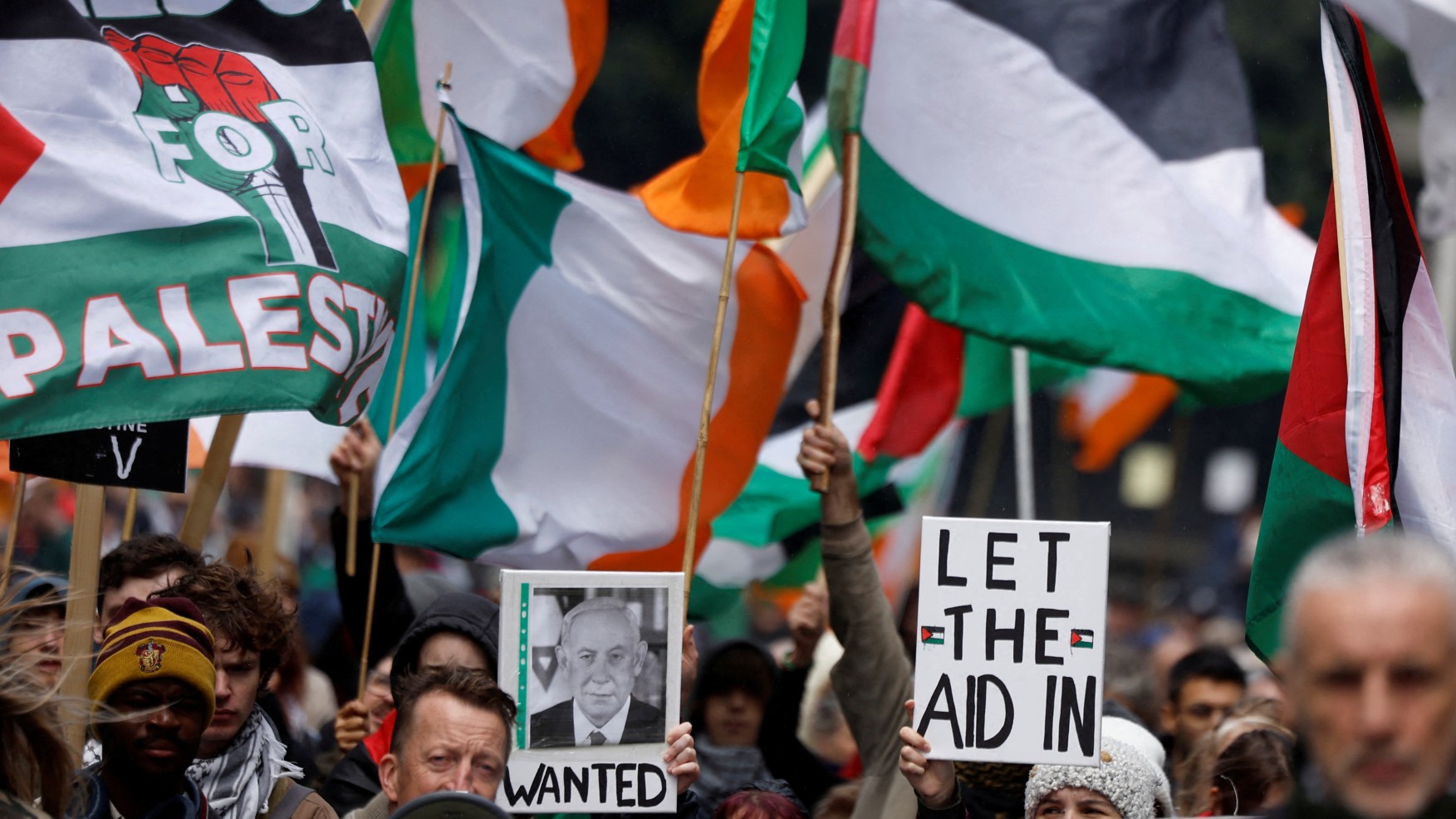
The chilling echoes of history reverberate across continents and centuries. In 1847, Ireland endured المجاعة الكبرى (An Gorta Mór – The Great Hunger), a catastrophe that claimed over a million lives and forced the exodus of millions more. This tragedy, interwoven with political indifference and systemic failures, finds a haunting parallel in the present-day starvation unfolding in Gaza, a stark reminder of how easily humanity can repeat its darkest chapters when fueled by dehumanization.
Ireland’s Great Hunger: A Famine Under Guard
The year is 1847. Ireland is ravaged by potato blight, the staple food of the majority of the population. Yet, amidst widespread starvation, a disturbing scene unfolds: dozens of carts laden with food and supplies, escorted not by relief workers, but by a formidable force of 25 British soldiers and armed police. An eyewitness journalist recounted how “bullets, bayonets and cavalry swords” were positioned to maintain order as the convoy passed through villages filled with the جوعى (the hungry).
These were not scenes of aid distribution, but of a system functioning while its people perished. Chroniclers described a landscape populated by “skeletal” figures, a terrifying testament to the scale of the suffering. It’s a deliberate mischaracterization to present the Irish as passively accepting their fate. In reality, desperation drove people to take drastic measures.
Resistance and the Charge of ‘Plundering Provisions’
As conditions worsened, “food riots” became increasingly common, erupting across the Irish countryside. Mills, bakeries, and shops selling meager rations were raided. Livestock was stolen, and food shipments heading for export – often passing the starving masses – were hijacked.
Those caught facing the absurd charge of “plundering provisions.” While many were harshly punished, some judges, recognizing the fundamental injustice, showed leniency, acknowledging the clear distinction between criminal activity and the primal need to survive. This resistance represented a legitimate form of protest, a desperate attempt to reclaim agency in the face of colonial oppression, and a matter of basic human necessity.
Gaza’s Slow Starvation: A Modern Parallel
Today, almost two centuries later, the cavalry swords and bayonets have been replaced by sniper rifles, drones, and a relentless blockade. Yet, the story is tragically familiar. In Gaza, food is deliberately withheld – not by natural disaster, but by purposeful restriction. The same patterns of control and indifference are starkly apparent.
The technology of oppression has evolved, but the core weapon remains agonizingly constant: إزالة الإنسانية (dehumanization). The atrocities witnessed in Ireland and Palestine are intrinsically linked to this dehumanization. When a people are not viewed as equal, when they are depicted as savage or lacking inherent worth, any justification becomes permissible for their suffering. This ongoing نزع الصفة الإنسانية facilitates Israel’s starvation of Gaza, despite purported commitments to increased aid delivery following a fragile ceasefire in October.
The Role of Enablers and Complicit Media
Decision-makers rarely act in a vacuum. They require enablers – those who rationalize, excuse, or simply ignore the consequences of their actions. In 19th-century Britain, this role was played by the political classes and sympathetic leader writers. Today, it’s embodied by Israel’s unwavering allies in the West.
Even after a formal famine designation was lifted last month, Israel continues to impede the entry of essential food supplies. Palestinians continue to endure hunger, and tragically, babies are dying – not from lack of food alone, but from the cold as well. Two-week-old Mohammed Khalil Abu al-Khair succumbed to hypothermia in December, followed by eight-month-old Rahaf Abu Jazar. Just weeks ago, Arkan Firas Musleh, two months old, froze to death.
Imagine the global outrage if these were Israeli, American, or British babies. Their names would be emblazoned across every headline, demanding accountability. Yet, the Western media, increasingly criticized for its biased coverage and minimizing of the الإبادة الجماعية (genocide) in Gaza, has largely remained silent.
Echoes of Racism and Colonial Mentality
The racist ideologies that devalue certain lives are meticulously constructed over time, then cynically exploited by those in power. The examples extend beyond Ireland and Palestine. Winston Churchill, in 1944, reportedly dismissed concerns about famine relief in India, stating the population “breed like rabbits.” This callous disregard for human suffering echoes the sentiments expressed during the Irish famine.
Charles Trevelyan, the British official overseeing famine relief in Ireland, openly expressed his contempt for the Irish people. He believed the famine was an act of divine providence, and any attempt to alleviate it would interfere with free market principles. He dismissed the Irish population as “sunk in indolence and almost barbarism,” questioning their ability to improve their conditions. The prevailing belief was that providing aid would hinder their self-reliance, conveniently ignoring the role of British policies in creating their dependency. A particularly insidious claim suggested that any funds provided would be used to finance rebellion, prioritizing resistance over the survival of their children.
A Complicit Silence: The Media’s Role
Just as in Ireland, the media has, in many instances, played a complicit role in shaping public perception in Gaza. The familiar tropes of blaming the victims and justifying the actions of the oppressor resonate powerfully in contemporary news narratives. We see it in the BBC and New York Times, among others.
The refrains of Zionists – “They should have thought about that before starting a war,” “Hamas is to blame,” “Palestinians use children as human shields” – are devastatingly similar to the accusations leveled against the Irish during An Gorta Mór.
Learning from History?
The المجاعة الكبرى taught the world the horrific consequences of allowing mass starvation to run its course. Today, Gaza is pleading: Have we learned nothing?
In 1997, Tony Blair, while stopping short of a full apology, acknowledged “those who governed in London” had failed the Irish people. A woefully belated admission for the million who died, the two million who fled, and a nation still grappling with the trauma.
Gaza’s genocide, slower and more insidious, continues. People are hungry, exposed to the elements, and their babies are perishing. The United Nations has already stockpiled aid, but Israel bars its entry. If major media outlets continue to downplay the suffering and amplify Israeli propaganda, and if Western governments continue to offer unwavering support, the death toll will escalate dramatically.
The Irish famine was a tragedy borne of inaction and indifference. Gaza asks whether, after nearly two centuries, some lives remain tragically cheap to save.


