






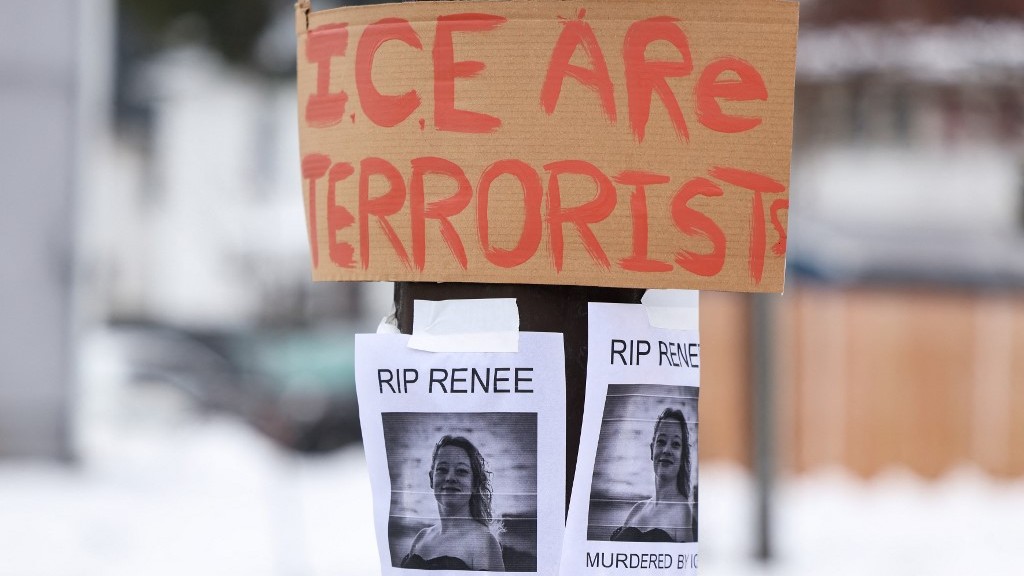
On Wednesday, a tragic incident unfolded in Minneapolis when an ICE (Immigration and Customs Enforcement) agent fatally shot Renee Nicole Good, a 37-year-old US citizen and mother of three. The shooting, occurring during a federal immigration raid, has ignited outrage and sparked renewed debate about the agency’s tactics and the escalating militarization of law enforcement within the United States. This event, captured in a widely circulated video, raises critical questions about accountability and the increasingly blurred lines between immigration enforcement and lethal force.
The Fatal Shooting of Renee Nicole Good: A Detailed Account
The incident began as Good, having just dropped off her youngest child at school, drove towards home. She inadvertently entered a street blocked off by ICE agents conducting an operation. Witnesses report conflicting commands from the agents – some instructing her to exit the vehicle, others to proceed. As agents surrounded her SUV, Good attempted to drive away. In a shocking turn of events, an agent discharged a handgun, firing three shots through the driver’s side window at close range.
Good’s vehicle then collided with a lamppost and subsequently a parked car. Despite immediate attempts by bystanders, including a doctor who identified himself, to provide aid, ICE agents initially blocked access, and Good tragically died at the scene. The entire sequence was documented in a video that quickly spread online, fueling public anger and demands for answers.
Minneapolis: A City Already on Edge
The location of this tragedy is particularly significant. Minneapolis remains a city deeply scarred by the 2020 killing of George Floyd and the subsequent protests against police brutality. Furthermore, the city’s Somali community has long faced heightened scrutiny and negative rhetoric, both locally and nationally. This pre-existing tension was exacerbated by recent inflammatory statements from former President Donald Trump, who repeatedly denigrated Somalis, and the spread of unsubstantiated claims of fraud within the Somali community. These factors created a volatile environment that arguably contributed to the aggressive nature of the ICE operation.
Gaslighting and Deflection: The Initial Response
Following the shooting, the response from US authorities mirrored a pattern often observed after instances of police violence against unarmed individuals. Instead of acknowledging the gravity of the situation, officials engaged in what many described as “gaslighting,” attempting to downplay the events depicted in the video. Kristi Noem, Secretary of Homeland Security, asserted that the agent “followed his training” and acted in self-defense, a claim contradicted by the visual evidence.
Mainstream media coverage initially echoed this narrative, citing “multiple accounts” despite the clear video footage and eyewitness testimony. The focus shifted to scrutinizing camera angles and questioning the interpretation of individual frames, rather than addressing the core issue of a fatal shooting by a federal agent. This attempt to deflect blame and minimize accountability further fueled public outrage.
The Rise of the “Occupier State” and ICE’s Expansion
The incident with Renee Nicole Good isn’t isolated. It represents a broader trend of escalating force and unchecked power within ICE. Created in the aftermath of 9/11, ICE was initially tasked with pursuing “national security threats.” However, its mandate has expanded significantly, granting agents broad discretion and leading to a reputation for abuse, impunity, and a lack of oversight.
ICE’s close ties to surveillance firms like Palantir, which has been accused of aiding in the creation of “kill lists” for Israel, further embed the agency within a complex network of military and intelligence operations. These connections highlight the ideological and practical links between ICE and the militarization of policing. Since Trump began his second term, immigration agents have been involved in at least a dozen shooting incidents, a stark indication of the agency’s increasingly aggressive tactics.
Counterinsurgency Tactics on US Soil
The tactics employed by ICE increasingly resemble counterinsurgency strategies used in conflict zones like Iraq and Afghanistan. Terms like “battlespace” and “urban warfare” are now being used in domestic law enforcement policies, blurring the lines between policing and military operations. This shift is deeply concerning, as it treats civilians as potential adversaries and justifies the use of force in situations that would traditionally be handled through de-escalation and community policing.
The US government, through agencies like ICE, is increasingly treating civilians as enemy combatants, their deaths rendered justifiable under the rubric of “self-defence.” This approach is reinforced by a constant stream of curated messaging designed to portray ICE agents as protectors of public safety, prioritizing the removal of “criminal aliens” and “immigration violators.”
A History of State-Sanctioned Violence
The tragedy of Renee Nicole Good is part of a long and painful history of state-sanctioned violence in the United States. From the experiences of Black communities facing systemic racism and police brutality to the surveillance and harassment of Muslim communities after 9/11, marginalized groups have long been subjected to disproportionate levels of scrutiny and force. The case of Mahmoud Khalil and Rumeysa Ozturk, abducted by ICE for their pro-Palestine activism, further illustrates this pattern.
The reclassification of ICE as a “security/sensitive” agency in 2020 has only reinforced perceptions that it operates outside the bounds of public accountability. The agency’s actions, driven by a vision of America that prioritizes control and compliance, have created a climate of fear and distrust.
Conclusion: A Call for Accountability and Reform
The death of Renee Nicole Good is a devastating tragedy that demands a thorough and transparent investigation. It is a stark reminder of the dangers of unchecked power and the urgent need for comprehensive immigration reform. The incident underscores the escalating militarization of law enforcement and the erosion of civil liberties within the United States. We must demand accountability from ICE and its agents, and work towards a system that prioritizes human rights, due process, and community safety. The future of federal law enforcement hinges on addressing these critical issues and ensuring that such tragedies are never repeated. Further discussion on police accountability is crucial to prevent similar incidents and build trust between law enforcement and the communities they serve.


