






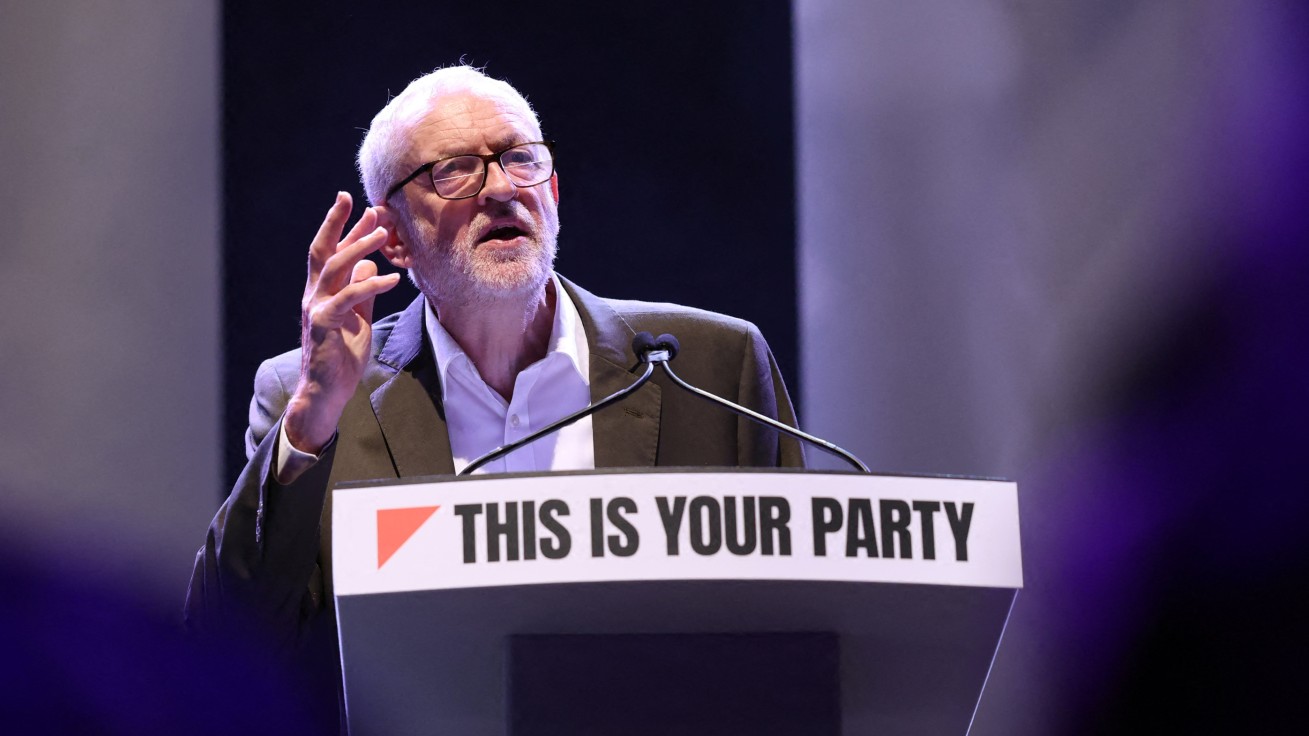
As thousands streamed into Liverpool’s Exhibition Centre this weekend, Zarah Sultana chose to stand outside in the biting wind and cold – a symbolic act that encapsulated the internal tensions brewing within the newly formed Your Party. The founding conference had begun, with Jeremy Corbyn delivering his opening speech, but Sultana, ostensibly co-leading the process with him, presented herself as a figure of principled dissent, a leader in exile dressed in a striking red suit. This initial scene set the tone for a weekend marked by ideological clashes, unexpected boycotts, and a fundamental debate over the party’s future direction.
A Party Divided: The Founding Conference Unfolds
The initial atmosphere was one of cautious optimism. Corbyn, whose team appeared to be steering the ship, struck a hopeful chord, recalling the party’s early polling numbers – exceeding ten percent – and the hundreds of thousands who initially signed up. He envisioned a transformation of British politics, a project he described as “a lot of fun.” However, that initial momentum has been significantly hampered by bitter factional disputes in recent months. The departures of two MPs, Adnan Hussain and Iqbal Mohamed, in the weeks leading up to the conference cast a shadow over proceedings. Corbyn, however, downplayed the significance of these losses, stating he’d received “very nice messages” from both, expressing continued support.
Sultana’s Stand and the SWP Boycott
Zarah Sultana’s decision to remain outside in the cold, despite the worsening weather, wasn’t merely a statement of defiance. She articulated a belief in the party’s potential, emphasizing the importance of grassroots organizing. “The second that we are able to go out into our communities, knock on doors and organise,” she stated, “we will see shifts in the polling… our job is to move the polls, not just accept them.” She expressed a conviction that the party could “win” and become “the start of the anger.”
However, this commitment was quickly followed by a dramatic announcement: Sultana would boycott the conference until her scheduled speech the next day, in solidarity with members of the Socialist Workers Party (SWP) who were denied entry due to Your Party rules prohibiting dual membership. This move further highlighted the deep ideological fissures within the nascent political force. The party spokesperson attempted to minimize the disruption, assuring journalists that Sultana was still welcome and scheduled to speak.
The Energy of the Conference: A Diverse Coalition
Inside the conference venue, a stark contrast emerged. While the surroundings were described as “drab” and sparsely decorated, the energy was palpable. Approximately 3,000 attendees, drawn from a membership of 55,000, filled the hall. This contrasted sharply with the more polished, yet less vibrant, atmospheres of other party conferences – Labour, Reform, the Liberal Democrats, and the Greens.
The conference was a microcosm of the broader left, attracting a remarkably diverse group: elderly activists, young women, Pakistani men, and women in hijabs. Attendees represented a spectrum of ideologies, from centre-left liberals to anarcho-communists and Trotskyites. Political pamphlets were ubiquitous, reflecting the intense ideological debate. This extraordinary coalition was largely forged in response to the Israeli genocide in Gaza and perceived British complicity, fueling outrage at the 2024 general election and contributing to the election of five independent MPs.
The Core Issues: Trans Rights and Party Identity
The conference wasn’t simply about establishing a party name (ultimately, members decided to retain “Your Party”). It was about defining its core identity. A central point of contention revolved around trans rights, a topic that had previously caused friction between Sultana and Hussain, who left the party citing intolerance. Hussain had expressed concerns about the impact on “women’s rights and safe spaces,” while Sultana had firmly asserted that there was “no room for socially conservative views” within a socialist party.
Sultana later softened her stance, acknowledging the presence of socially conservative views within broader society and emphasizing the need for inclusivity. She argued that the ruling class deliberately divides marginalized communities, and that solidarity is crucial. However, she maintained that a progressive position on trans rights – recognizing them as human rights – is fundamental to the party’s socialist principles.
A Collective Leadership and the Sultana Surge
The most crucial votes centered on the party’s leadership structure. Corbyn favored a single leader, while Sultana advocated for collective leadership. Ultimately, members narrowly voted in favor of the latter, a significant victory for Sultana and a blow to Corbyn’s influence. This decision, coupled with a vote to allow dual membership, signaled a clear shift in the party’s direction.
Sultana’s speech on the final day of the conference was electrifying. She received a hero’s welcome, and her rhetoric – denouncing “rentiers,” calling for Starmer to be held accountable at The Hague, and declaring herself “anti-Zionist” – resonated deeply with the assembled members. A new chant emerged: “Oh, Zarah Sultana,” echoing the earlier fervor surrounding Jeremy Corbyn.
The Road Ahead: Challenges and Opportunities
The conference revealed a party grappling with its identity, torn between a broad-church approach and a more radical, uncompromising vision. While the energy and enthusiasm were undeniable, the internal divisions pose a significant challenge. MPs like Adam and Khan, who achieved electoral success through localized strategies, may find themselves increasingly at odds with the party’s dominant ideological current.
The future of Your Party remains uncertain. However, the conference demonstrated its potential to mobilize a significant base of support, particularly among those disillusioned with the mainstream political parties. The key will be whether it can overcome its internal conflicts and forge a cohesive path forward, capitalizing on the momentum generated by the Gaza crisis and the growing discontent with the status quo.


