






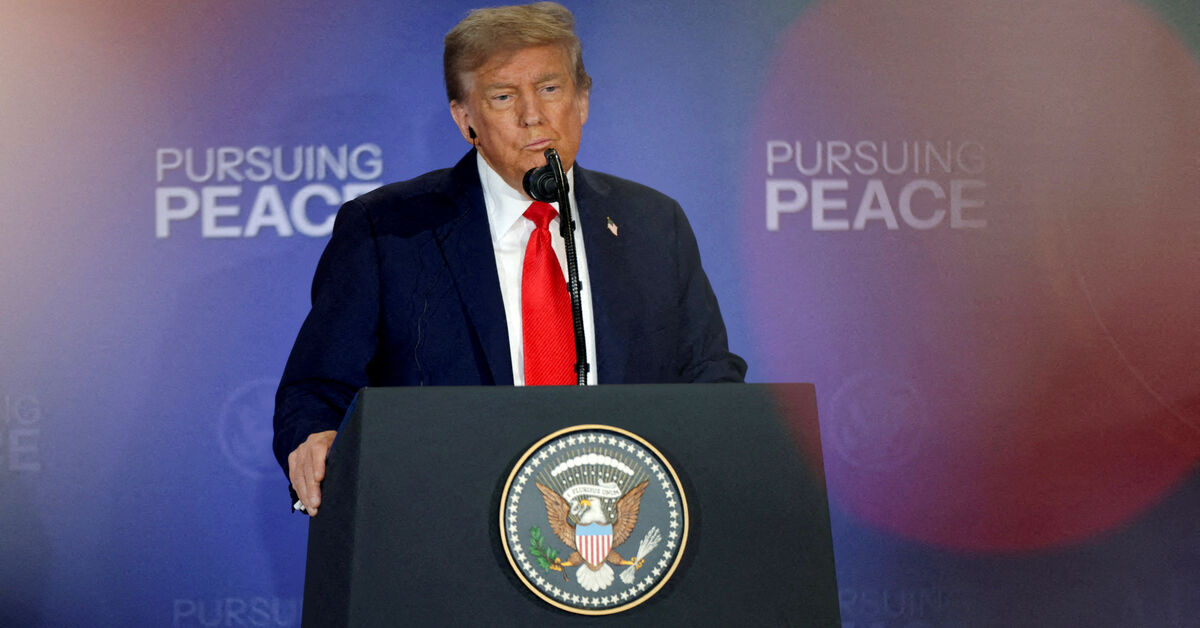
The international community is reacting with a mix of caution and concern to a new initiative proposed by former U.S. President Donald Trump, dubbed the “Board of Peace.” This plan, aiming to resolve global conflicts, has sparked debate over its potential impact on established diplomatic structures, particularly the United Nations. The initial response highlights a reluctance from many nations to fully embrace the proposal, raising questions about its feasibility and long-term effectiveness. The core of the issue revolves around the perceived bypassing of traditional international mechanisms and the potential for unilateral influence.
Trump’s “Board of Peace”: A New Approach to Global Conflict Resolution?
Former President Trump unveiled his “Board of Peace” initiative, inviting leaders from approximately 60 countries to participate. The stated goal is to address conflicts worldwide, beginning with the deeply complex situation in Gaza. The structure, as outlined in a letter and draft charter seen by Reuters, proposes a board chaired for life by Trump himself. This immediately raises eyebrows amongst seasoned diplomats who question the concentration of power and the departure from established norms of international cooperation.
The financial aspect of the board is also noteworthy. While membership is initially limited to three-year terms, countries can secure permanent seats by contributing a substantial $1 billion to fund the board’s activities. This condition has been interpreted by some as a way to prioritize nations with significant financial resources, potentially skewing the board’s priorities and influence.
Initial Reactions: Caution and Skepticism Dominate
The response from governments has been largely measured. Hungary, a close ally of Trump, was the only nation to offer an unequivocal acceptance of the invitation. Other countries have been more hesitant, with officials expressing concerns anonymously about the potential ramifications for the United Nations.
Italian Prime Minister Giorgia Meloni indicated her country was “ready to do our part,” but the scope of that commitment remains unclear. Similarly, Canadian Prime Minister Mark Carney signaled a preliminary agreement regarding Gaza, but emphasized that details are still under discussion. This cautious approach suggests a widespread unease about the initiative’s potential to disrupt existing diplomatic efforts.
Concerns Over Undermining the United Nations
A major source of concern stems from the belief that the “Board of Peace” could undermine the authority and effectiveness of the United Nations. Critics argue that the initiative duplicates the UN’s existing role in conflict resolution and potentially creates a parallel, competing structure.
One diplomat described the plan as a “Trump United Nations,” suggesting it disregards the fundamental principles of the UN Charter. Several other diplomats echoed this sentiment, fearing that the initiative could weaken the multilateral system and hinder collaborative efforts to address global challenges. The UN itself, through a senior official, subtly defended its unique position as the sole institution capable of uniting all nations, warning of “very, very dark times” if that foundation is eroded. This highlights the broader geopolitical implications of Trump’s proposal.
The Gaza Focus and Beyond
The initial focus of the “Board of Peace” is the Gaza conflict, with a proposed Palestinian technocratic administration overseen by an international board. However, sources indicate that Trump envisions a broader mandate for the board, extending its oversight to other conflicts he claims to have resolved. This ambition further fuels concerns about the initiative’s potential to overstep its boundaries and interfere in areas already addressed by the UN and other international bodies.
The composition of the board, as announced by the White House, includes figures like U.S. Secretary of State Marco Rubio, Trump’s special envoy Steve Witkoff, former British Prime Minister Tony Blair, and Trump’s son-in-law, Jared Kushner. Notably, the initial list lacks Palestinian representation, a glaring omission that has drawn criticism. A separate “Gaza Executive Board” has been established, including representatives from Turkey, the UAE, Qatar, and the UN, but its formation has also been met with reservations, particularly from Israel regarding the inclusion of Turkish officials.
Colonial Undertones and Historical Criticisms
The concept of a former leader overseeing the governance of a foreign territory has drawn comparisons to colonial structures, sparking accusations of neo-colonialism. Critics argue that the initiative replicates power dynamics reminiscent of past imperial interventions.
Furthermore, the inclusion of Tony Blair, given his controversial role in the Iraq War and the legacy of British imperialism in the Middle East, has reignited past criticisms and raised questions about the board’s impartiality. The lack of transparency regarding the responsibilities of each board member also contributes to the skepticism surrounding the initiative. The peace initiative is facing scrutiny on multiple fronts.
The Future of the “Board of Peace”
The success of Trump’s “Board of Peace” hinges on securing broader international support and addressing the concerns raised by governments and diplomatic observers. The current climate of caution suggests that widespread acceptance is unlikely without significant modifications to the plan. The international community is carefully evaluating the implications of this new approach to conflict resolution.
Whether the initiative will ultimately complement or compete with the United Nations remains to be seen. However, the initial reaction underscores the importance of multilateralism and the need for collaborative efforts to address the complex challenges facing the world. The global political landscape is watching closely to see how this unfolds.
Ultimately, the viability of this peace plan will depend on its ability to demonstrate tangible results and build trust among key stakeholders.


