






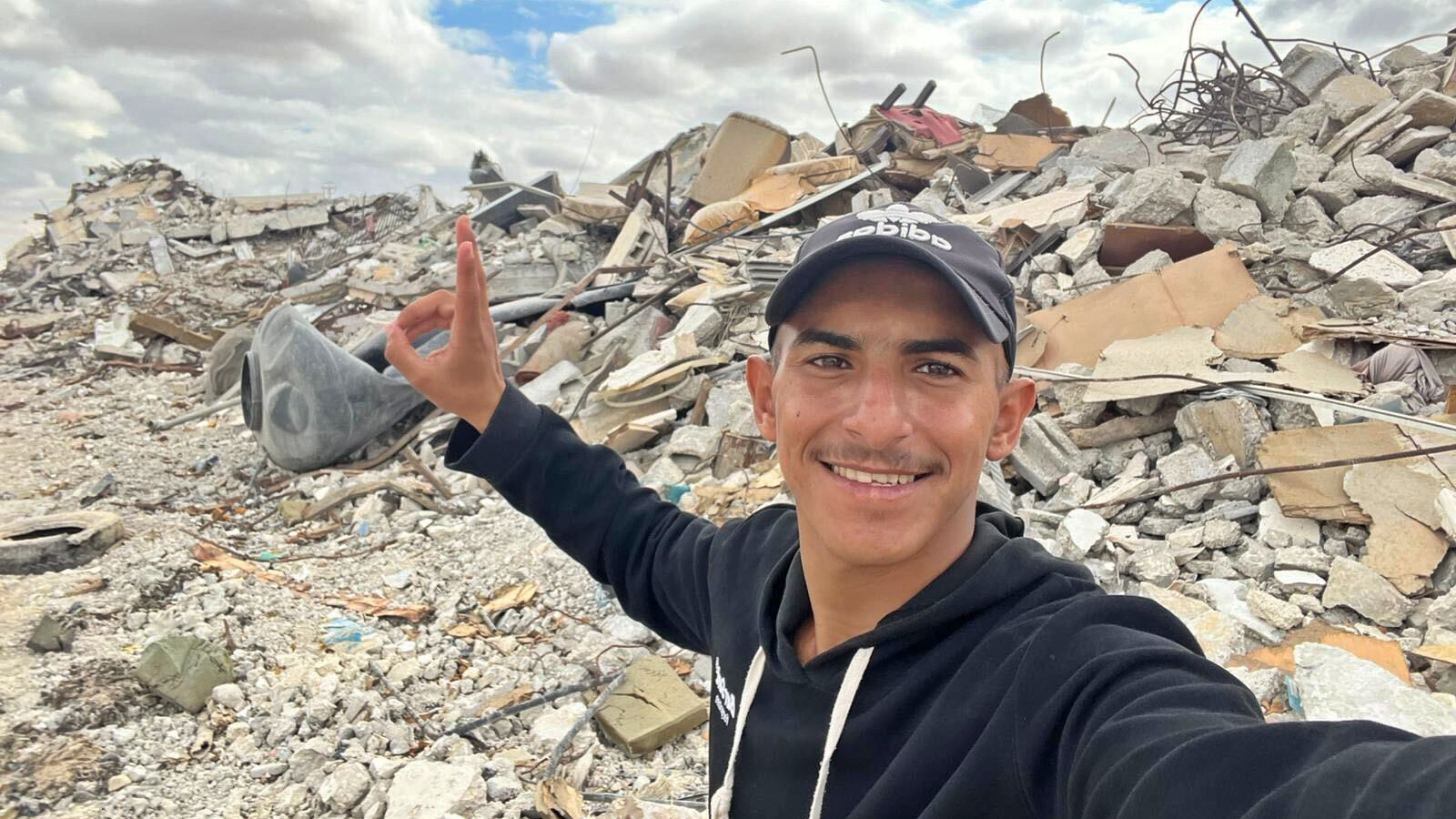
Today, I write to you from the heart of a shattered reality, a reality I once knew as home. I am from Khuzaa, a town east of Khan Younis in the southern Gaza Strip, nestled near the Israeli fence. This is the story of how life in Khuzaa – a life of farming, family, and future aspirations – was irrevocably altered in an instant, and how I, along with countless others, am striving to hold onto hope amidst unimaginable loss.
Life Before the Storm in Khuzaa
Before the war, Khuzaa was more than just a location on a map; it was the essence of my being. Each morning started with the gentle sway of wheat fields in the breeze and the cheerful crowing of a rooster, a natural alarm clock signaling the start of another day filled with work and the quiet promise of a good harvest. My family owned a 100-dunam (approximately 10-hectare) farm, a vibrant patch of land where we cultivated wheat, barley, juicy watermelons, spinach, tomatoes, and an abundance of other crops, generously gifted by the soil.
Our days were dictated by the rhythm of the land. My father, my brothers, and I worked side-by-side, tilling the soil with the help of our faithful donkey and transporting produce between the fields with our trusted motorbike. The colours of the earth, the feel of the crops in our hands, and the sweet scent of growing plants filled our lives, grounding us in a simple, yet deeply fulfilling existence. It was a life far removed from the complexities of the outside world, a life we cherished.
Dreams Interrupted by Displacement
My brothers were diligently pursuing their university degrees, while I was focused on my final year of secondary school. I harboured ambitions to either become an agricultural engineer, dedicating myself to enhancing the productivity of our farm, or to venture into the world of computer programming, seeking new opportunities to build a better future. I studied with dedication, allowing myself to dream big, entirely unprepared for the suddenness with which our world would collapse. The shadow of the ongoing conflict was always present, but we never imagined our relative calm could be erased so completely.
Then, without warning, the missiles rained down. The gates of destruction were thrown open upon Gaza. Everything changed. Escape became the immediate priority, a frantic dash to save our lives. We ran, carrying only what we could physically manage, abandoning everything else. The small bag I managed to grab, still carrying the familiar smell of home, became a poignant symbol of everything we’d lost – a connection to the house, the farm, and the memories deeply rooted within them. This was just the first of many forced movements, a staggering 23 displacements in total. With each departure, it felt as if we were leaving behind a piece of ourselves, carrying only the burden our shoulders could bear.
Witnessing the Unthinkable: Life Under Bombardment
The scenes etched into my memory will forever haunt me. Walking through the crowded, chaotic streets of the refugee camps, dodging tattered tents and the haunted faces of displaced families, I witnessed the brutal reality of war. A missile struck our neighbours’ tent during my walk, the explosion close enough to injure me, but tragically, claiming the lives of everyone inside.
It was then, surrounded by dust and despair, I understood that war wasn’t just explosions; it was the systematic annihilation of lives, leaving behind a deafening silence and a pain that would forever be engraved on my heart. Every step through the camp became a walk edged with fear, a constant reminder of our vulnerability. The struggle for survival in Gaza became a relentless battle for the most basic necessities.
The Scarcity of Life: Food, Water, and Medicine
Since losing our home in Khuzaa, even the most fundamental needs have become luxuries. The queues for bread stretched for hours, under the scorching sun and amidst the constant threat of bombardment. Often, we would leave empty-handed, forced to endure another day of hunger. Water, once readily available, became a precious dream. We were frequently compelled to chase after water trucks, desperately trying to secure a few litres for our family, each step fraught with danger. Even accessing a toilet required waiting in a long line, sacrificing any semblance of privacy. This constant deprivation stripped away our humanity, reducing us to mere survivors.
The lack of medical supplies was equally devastating. I remember standing for hours in medicine queues, clutching a piece of paper bearing my injured cousin’s name, as if the paper itself held the key to his life. The waiting was agonizing, and each small box of medication we managed to obtain felt like a victory against the relentless advance of death. The Gaza famine was a stark reality, lasting for months, where food became a distant memory and even tree leaves were consumed to quell the pangs of hunger.
A Glimmer of Hope Dimmed
Despite the overwhelming hardship, the dream of returning to Khuzaa and reclaiming our farmland persisted. I envisioned planting wheat, barley, and watermelons, witnessing the land bloom with life once more. I continued my studies, finding solace in learning amidst the chaos, using the glow of burning wreckage as my only source of light. I persevered, achieving a score of 84 percent, a triumph that should have been celebrated. However, the universities lay in ruins, and our meager resources were entirely consumed by the struggle for survival.
The most devastating moment, however, came upon my return to Khuzaa. Our home was gone, reduced to rubble. The farm, nurtured by generations, lay scorched and barren. And then, the news that the occupation regime had seized our land, our livelihood, our legacy. One hundred dunams, representing a lifetime of love and labour, were irrevocably lost. It was like having the roots of my being torn from the earth, leaving a gaping hole in my heart.
Today, I live amongst the tents, surrounded by hunger, bombardment, fear, and cold. But even in this darkness, I continue to write. I am not just a statistic in a news report. I am a human being who once had a home, a farm, dreams, and a future. The war may have taken everything, but it has not silenced my voice. This is my story, and it is the story of every young person in Gaza who is still fighting for the right to live, to hope, and to dream of a better tomorrow.


