







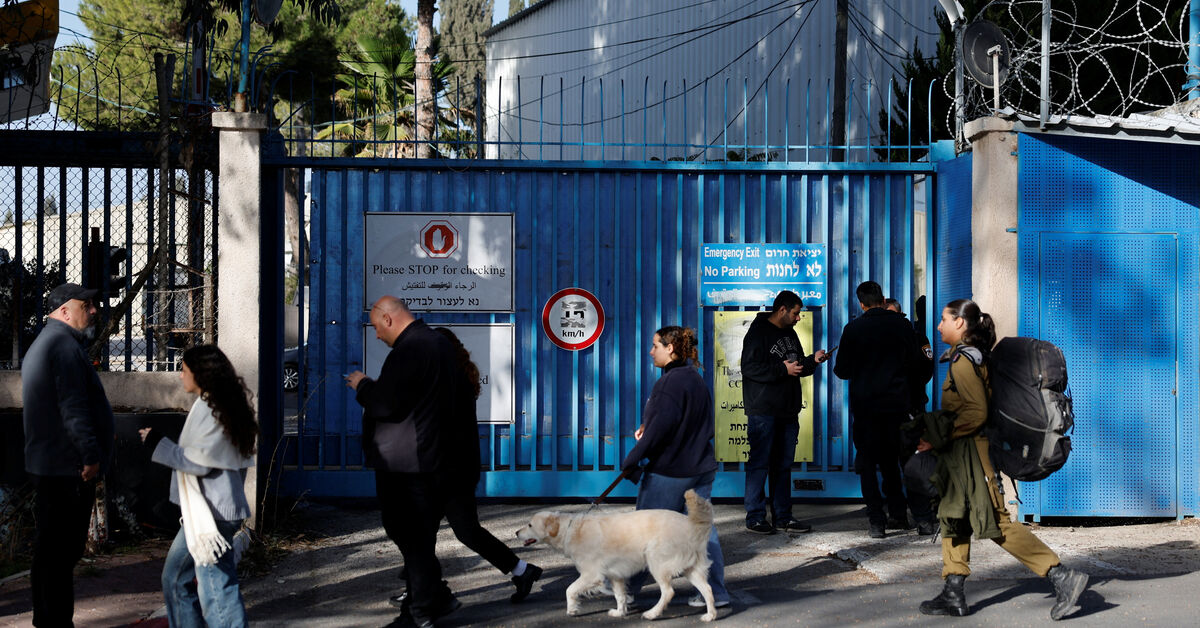
The recent actions taken by Israeli authorities against the United Nations Relief and Works Agency (UNRWA) have sparked international concern and ignited a fresh wave of debate surrounding the status of Palestinian refugees and the agency’s role in providing essential services. On Monday, Israeli officials entered UNRWA’s offices in East Jerusalem, raising the Israeli flag – a move framed as enforcement of unpaid taxes but widely condemned as a violation of international law and a direct challenge to the UN’s presence. This incident occurs against a backdrop of escalating criticism of UNRWA by Israel, alleging links to Hamas, and a recent parliamentary decision to ban the agency’s operations within the country. Understanding the complexities of this situation requires a deep dive into the history, accusations, and potential consequences of these actions.
Israel Raids UNRWA Offices in East Jerusalem: A Deepening Crisis
The raid on the UNRWA compound in East Jerusalem represents a significant escalation in tensions between Israel and the agency. According to reports, tax collectors entered the premises claiming a debt of 11 million shekels (approximately $3.4 million) in unpaid property taxes. The Jerusalem municipality stated that multiple warnings were issued and all legal procedures were followed before the action was taken. However, UNRWA chief Philippe Lazzarini vehemently refuted these claims, asserting that the agency has no outstanding debts and that the raid constitutes a “blatant disregard” for the inviolability of UN premises.
Lazzarini further emphasized the dangerous precedent this sets, stating it’s “a new challenge to international law” that could impact the UN’s operations globally. He detailed how police motorcycles, trucks, and forklifts were used during the operation, and that communications were deliberately cut off, leading to the seizure of IT equipment, furniture, and other property. This aggressive action has drawn criticism from various international bodies and raised questions about Israel’s commitment to upholding its obligations as a UN member state.
The Context of the Israeli Ban on UNRWA
The current crisis isn’t isolated. For months, Israel has been actively campaigning to dismantle UNRWA, fueled by allegations that some of its staff were involved in the October 7th Hamas attack. These accusations, which UNRWA is investigating, prompted several donor countries to suspend funding, threatening the agency’s ability to provide critical aid to millions of Palestinians.
In October 2024, the Israeli parliament went a step further, passing a law explicitly banning UNRWA from operating within the country and prohibiting contact between Israeli officials and the agency. This legislation effectively renders UNRWA’s presence in areas under Israeli control illegal, despite the UN’s consistent position that East Jerusalem is occupied territory. This ban directly impacts the services available to Palestinian refugees in these regions, exacerbating already dire humanitarian conditions.
UNRWA’s Role and the Palestinian Refugee Issue
UNRWA was established by the United Nations in 1949, following the Arab-Israeli war, to provide assistance and protection to Palestinian refugees in the Gaza Strip, West Bank, Jordan, Lebanon, and Syria. The agency’s mandate has been repeatedly renewed, becoming a lifeline for generations of Palestinians. It provides crucial services, including:
- Education: Operating hundreds of schools for Palestinian refugee children.
- Healthcare: Running primary healthcare clinics and hospitals.
- Social Services: Offering assistance to vulnerable families and individuals.
- Emergency Assistance: Providing aid during times of conflict and crisis.
For Palestinians, UNRWA represents more than just humanitarian aid; it is seen as a symbol of their ongoing struggle for self-determination and an acknowledgment of their right to return to their ancestral homes. The agency’s continued existence is inextricably linked to the preservation of these rights, a point of considerable contention with Israel.
Allegations Against UNRWA and the Hamas Connection
The core of Israel’s current criticism centers on claims that several UNRWA employees are members of Hamas and actively participated in the October 7th attacks. Israel alleges that these individuals exploited the agency’s resources to support the militant group. UNRWA has responded by immediately terminating the contracts of those implicated and launching an independent investigation.
However, the agency maintains that Israel has not provided comprehensive evidence for all the allegations. This lack of transparency has fueled skepticism and accusations of a politically motivated campaign to discredit and ultimately dismantle UNRWA. The timing of the raid, just days after the UN General Assembly reaffirmed the agency’s mandate for another three years, has further reinforced these suspicions. The UNRWA is also facing scrutiny regarding its neutrality and the way it operates within volatile regions. Many view this as a complex challenge for the agency, with some advocating for reformed governance structures.
The International Response and Potential Consequences
The international community has largely condemned Israel’s actions, with many countries expressing concern over the potential humanitarian fallout. Several UN officials have reiterated Israel’s obligation to respect the inviolability of UN premises and uphold international law. The raid on UNRWA’s offices and the ongoing campaign to curtail its operations raise serious questions about the future of Palestinian refugee assistance and the broader peace process. The situation risks further destabilizing the region and exacerbating the already dire humanitarian crisis in Gaza and the West Bank. Further hindering UNRWA’s ability to fulfill its mandate will undoubtedly lead to increased hardship and desperation among the Palestinian population it serves, potentially contributing to further cycles of violence and unrest. The long-term implications for regional stability are significant.
In conclusion, the raid on UNRWA’s East Jerusalem offices is not merely a dispute over unpaid taxes but a manifestation of deeper political and ideological tensions. While Israel maintains its actions are justified, the international community largely views them as a violation of international law and a threat to the agency’s vital work. The future of UNRWA remains uncertain, but its continued operation is critical for providing essential services to millions of Palestinians and upholding their fundamental rights. Further investigation and transparent dialogue are urgently needed to address the allegations against the agency and ensure its ability to operate independently and effectively. Readers are encouraged to learn more about UNRWA’s mission and the ongoing Palestinian refugee crisis by visiting the official UNRWA website and staying informed through reliable news sources.


