


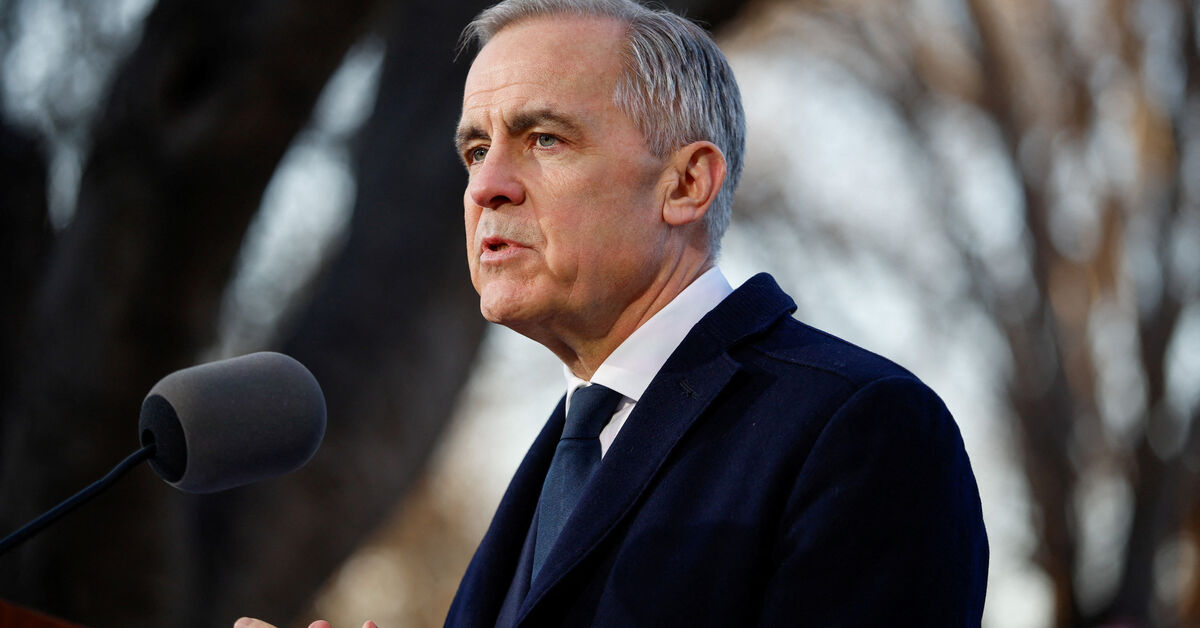
The global economic landscape is shifting, and Canada is actively positioning itself to navigate these changes. Prime Minister Mark Carney is spearheading a strategy focused on diversifying Canada’s trade relationships, particularly with China, while simultaneously pursuing smaller trade agreements with various nations. This move is largely driven by a desire to lessen Canada’s significant economic dependence on the United States, a reliance that has become increasingly precarious given recent geopolitical developments and trade policies. The core of this strategy revolves around trade diversification for Canada.
Canada’s Push for Trade Diversification: A Response to Global Uncertainty
For decades, Canada’s economic fortunes have been inextricably linked to those of the United States. However, the increasingly unpredictable nature of U.S. foreign policy under former President Donald Trump, including tariff impositions and even unconventional proposals like purchasing Greenland, has prompted a re-evaluation of this long-standing relationship. Carney, having previously led both the Bank of England and the Bank of Canada, understands the risks of over-reliance on a single market. His election victory last year was built, in part, on a promise to forge new economic alliances and shield Canada from potential U.S. economic pressures.
This isn’t a uniquely Canadian concern. The European Union is also actively seeking to broaden its trade horizons, recently finalizing deals with Mercosur, Indonesia, and updating agreements with Mexico. The EU is also exploring new agreements with Malaysia, the Philippines, the United Arab Emirates, and India. However, the scale of Canada’s dependence on the U.S. presents a more substantial challenge.
The Weight of U.S. Economic Dependency
While the EU derives just over 20% of its goods exports from the U.S., Canada sends nearly 70% of its exports south of the border. This stark difference highlights the magnitude of the task facing Carney’s government. Reducing reliance on the U.S. by even 10% would necessitate a significant doubling of exports to countries like China, Germany, France, Mexico, Italy, and India – or finding equivalent new markets.
Export Development Canada’s senior economist, Prince Owusu, emphasizes the difficulty. Carney has publicly committed to doubling Canada’s non-U.S. exports within the next decade, but experts caution that achieving this goal will require a concerted and strategic effort. A key component of this effort is strengthening ties with China, currently Canada’s second-largest trading partner.
Navigating the Complexities of Trade with China
Despite the potential benefits, increasing trade with China isn’t without its challenges. William Pellerin, a partner at the law firm McMillan specializing in international trade, warns of the risk of Chinese manufacturers flooding the Canadian market with competitively priced goods. “We have to be very cautious… Moving too quickly and integrating too quickly with China also creates some issues around long-term stability for the economy,” he stated.
However, the current situation presents an opportunity. China’s shipments to the U.S. have decreased, while its trade with the rest of the world has risen. This shift could allow Canada to fill some of the void and increase its market share. Interestingly, Carney himself has recently suggested that China has become a more predictable trade partner than the U.S.
New Partnerships and a Proactive Approach
Carney’s recent diplomatic tour underscores Canada’s commitment to international trade agreements. He became the first Canadian Prime Minister to visit Qatar and China since 2017, signaling a clear intent to build stronger relationships. Furthermore, Canada has recently concluded trade deals with Ecuador and Indonesia, and signed investment agreements with the United Arab Emirates.
The government is also actively working to restart stalled trade talks with India, following the restoration of diplomatic ties. Trade Minister Maninder Sidhu outlined a focused strategy, prioritizing the Philippines, Thailand, Mercosur, and Saudi Arabia alongside India. “Normally, the government of Canada signs one trade agreement a year,” Sidhu noted, “We want to make sure we get those done as soon as possible.” This accelerated pace demonstrates the urgency with which Canada is pursuing economic partnerships.
The Future of Canadian Trade: Balancing Act and Strategic Vision
Canada’s pursuit of trade diversification is a complex undertaking. While reducing dependence on the U.S. is a strategic imperative, it requires careful navigation of geopolitical realities and economic risks. The U.S. remains a crucial market, accounting for 67.3% of Canadian exports as of October, and 90% of Canadian crude oil exports.
Economists predict that the U.S. share of Canadian exports is unlikely to decline dramatically in the near future, particularly as companies await the outcome of ongoing negotiations regarding the U.S.-Mexico-Canada trade agreement (USMCA).
Ultimately, Canada’s success in achieving trade diversification will depend on its ability to forge strong, mutually beneficial relationships with a diverse range of trading partners. Carney’s administration is positioning Canada as a proactive leader in a changing global order, aiming to secure its economic future by embracing new opportunities and mitigating the risks associated with over-reliance on a single market. The coming years will be critical in determining whether this ambitious strategy can deliver on its promise and reshape Canada’s economic landscape for the long term.


