





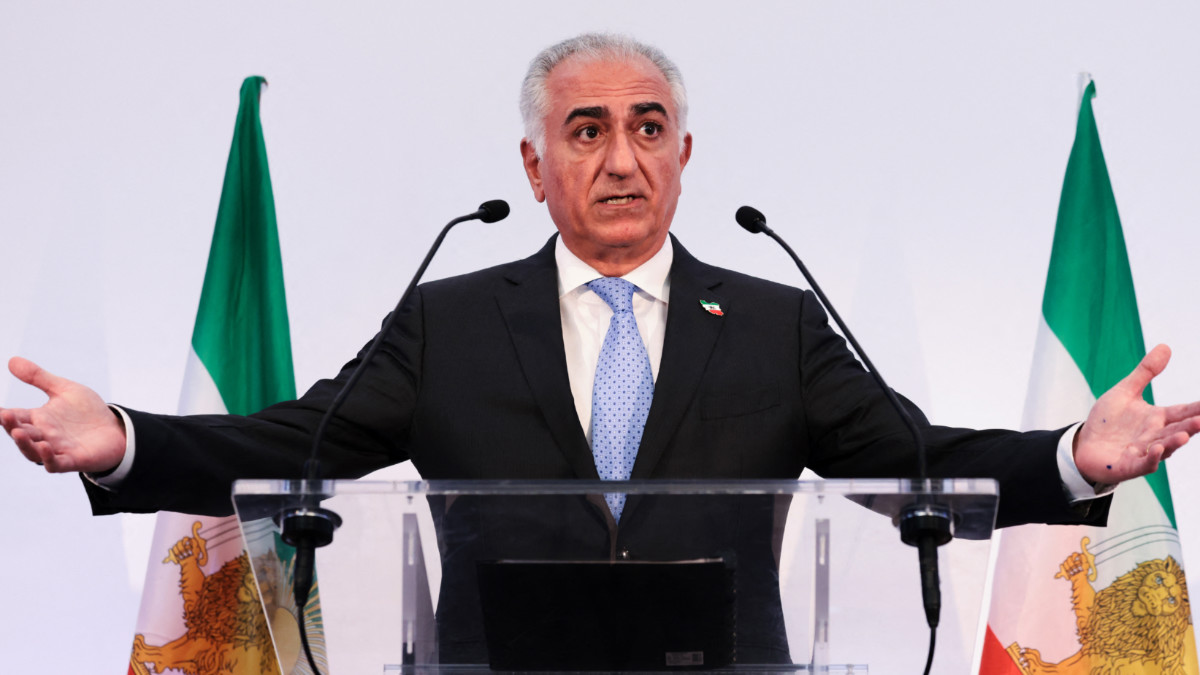
The recent wave of protests sweeping across Iran, sparked by economic hardship and escalating tensions, has drawn international attention. A particularly notable development is the perceived reluctance of US President Donald Trump to engage with Reza Pahlavi, the son of Iran’s last Shah, fueling speculation about a potential shift in US strategy towards the Islamic Republic. This hesitation, coupled with the recent US approach to Venezuela, suggests a willingness to negotiate directly with elements within the Iranian regime, even amidst widespread calls for regime change. The situation is complex, and the implications of Trump’s stance are being widely debated.
ترامب وغموض التعامل مع إيران: هل تتجه واشنطن نحو صفقة مع النخبة الحاكمة؟ (Trump and the Ambiguity of Dealing with Iran: Is Washington Heading Towards a Deal with the Ruling Elite?)
The question of whether the US is preparing to cut a deal with the Iranian elite, bypassing the protest movement and its figureheads like Reza Pahlavi, has become increasingly prominent. Trump’s response to a direct question about meeting with Pahlavi, during a podcast interview with Hugh Hewitt, was carefully worded. While acknowledging Pahlavi as a “nice person,” Trump expressed reservations about the appropriateness of a meeting “at this point,” preferring to “let everybody go out there, and we’ll see who emerges.” This ambiguity has been interpreted by many as a signal that the US is keeping its options open, potentially including dialogue with those currently in power.
تشابهات مع استراتيجية فنزويلا (Similarities to the Venezuela Strategy)
Analysts are drawing parallels between the current situation in Iran and the US approach to Venezuela. Randa Slim, Director of the Middle East Programme at the Stimson Center, highlighted this connection on X (formerly Twitter), stating, “Look at Venezuela. Get rid of Khamenei. I am ready for a deal.” This suggests a potential strategy of seeking to replace key figures within the Iranian leadership, specifically Supreme Leader Ayatollah Ali Khamenei, in order to facilitate negotiations.
The US reportedly encouraged engagement with Venezuelan Vice President Delcy Rodriguez, despite the opposition’s lack of widespread domestic support, prioritizing the restoration of oil flows. This pragmatic approach, prioritizing economic interests over ideological alignment, could be replicated in Iran. Ali Alfoneh, an Iran expert at the Arab Gulf States Institute, believes the Iranian “de facto collective leadership may pursue a ‘Venezuelan’ survival strategy,” involving removing Khamenei and seeking sanctions relief from the US.
دعوة البهلوي للتدخل الأمريكي (Pahlavi’s Call for US Intervention)
Reza Pahlavi himself has directly appealed to Trump for support. Following the release of Trump’s interview, Pahlavi urged the President to “intervene” in the Iranian protests, detailing the escalating violence and the complete communications blackout imposed by the government. He emphasized Trump’s past commitment to peace and keeping his word, pleading for action. However, Pahlavi’s previous calls for regime change, coinciding with attacks in June, largely went unheeded, raising questions about his influence and the US willingness to back the opposition directly.
تصاعد الاحتجاجات وتدهور الأوضاع (Escalating Protests and Deteriorating Conditions)
The protests in Iran, now entering their thirteenth day, are spreading rapidly, encompassing 111 cities across 31 provinces. Videos circulating on social media depict large-scale demonstrations and government buildings ablaze, representing the most significant challenge to the Iranian government in years. Security forces are responding with live fire, resulting in a growing number of casualties. Rights groups estimate the death toll to be between 25 and 42, including minors, with thousands reportedly detained.
This latest surge in unrest is primarily fueled by the crippling cost-of-living crisis and rampant inflation. The Iranian rial has been in freefall, exacerbated by the recent attacks, losing an additional 40% of its value against the dollar. These economic pressures are pushing Iranians to the brink, creating a volatile environment ripe for further escalation.
موقف ترامب القوي والغموض حول التدخل العسكري (Trump’s Strong Stance and Ambiguity Regarding Military Intervention)
Trump has taken a firm stance, warning that if Iran continues to violently suppress peaceful protesters, the US will “come to their rescue,” declaring the US is “locked and loaded and ready to go.” However, this rhetoric is coupled with a concerning disregard for international law. In a recent interview with The New York Times, Trump stated, “I don’t need international law,” asserting that his power to deploy force is limited only by his “own morality.” This raises fears of unilateral US action, potentially mirroring the recent intervention in Venezuela.
Reports from Israeli news outlets and some US politicians, like Senator Lindsey Graham, suggest Iran could be the next target of US intervention following Venezuela. This messaging, whether intentional or not, adds to the uncertainty and heightens tensions in the region. The situation is further complicated by the historical context of the Islamic Republic’s rise to power in 1979, following the removal of the US-backed Shah, and the subsequent decades of devastating US sanctions, including the “maximum pressure” campaign imposed by the Trump administration aimed at crippling Iran’s oil exports.
الخلاصة: مستقبل العلاقات الأمريكية الإيرانية في مهب الريح (Conclusion: The Future of US-Iran Relations Hangs in the Balance)
The US’s approach to Iran remains shrouded in ambiguity. Trump’s reluctance to fully embrace the opposition, coupled with the perceived parallels to the Venezuela strategy, suggests a willingness to engage with elements within the Iranian regime. While the protests continue to escalate, and the economic situation deteriorates, the question remains whether the US will prioritize regime change or seek a pragmatic deal with the current leadership. The coming weeks will be crucial in determining the future of US-Iran relations and the fate of the Iranian people. Further analysis and monitoring of the situation are essential to understand the evolving dynamics and potential consequences of this complex geopolitical landscape.
Keywords: Donald Trump, Iran Protests, Reza Pahlavi, US-Iran Relations, Venezuela Strategy.
Secondary Keywords: Ayatollah Ali Khamenei, Sanctions, Iranian Economy.


