






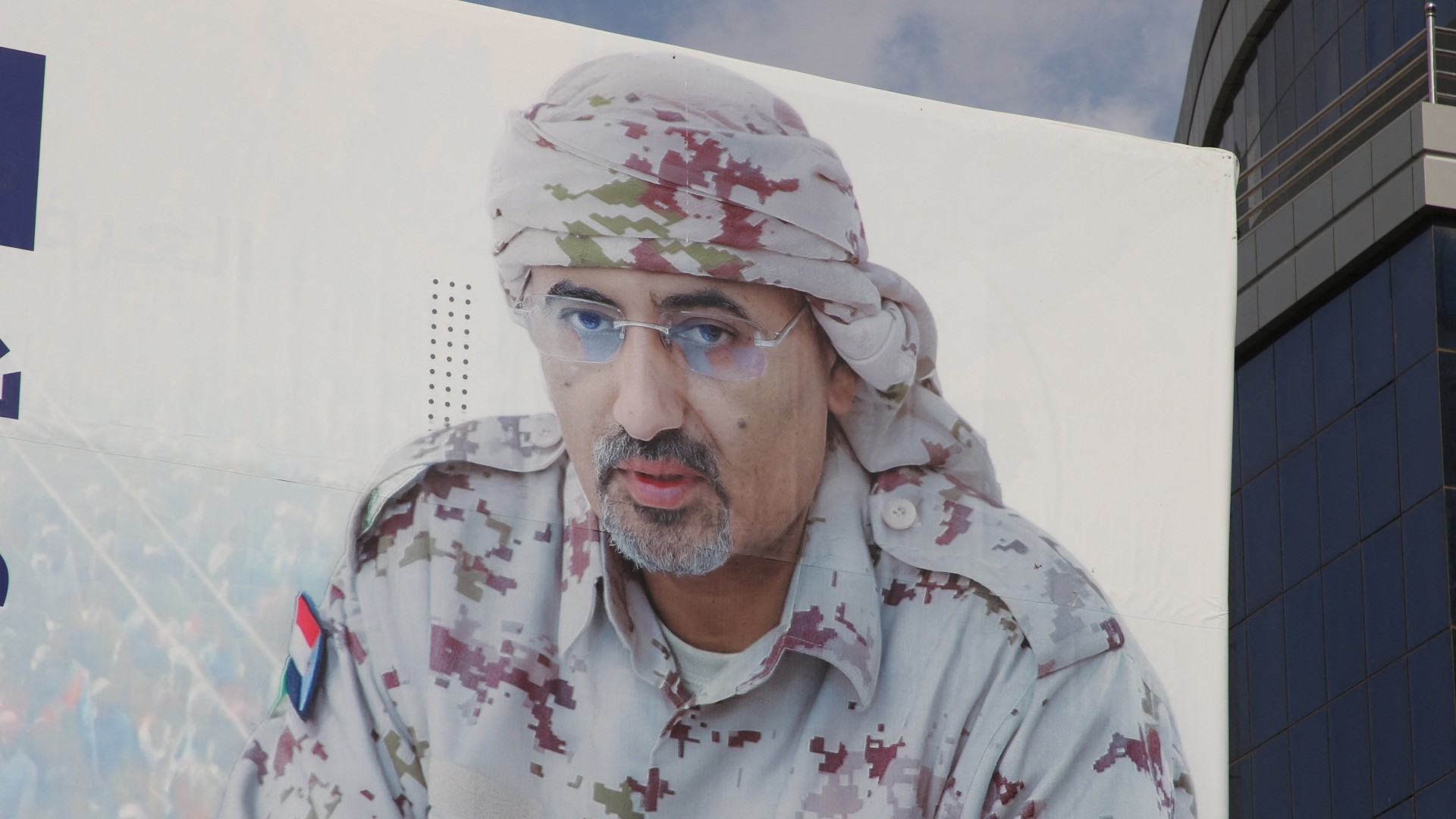
The recent escalation between Saudi Arabia and the United Arab Emirates regarding Yemen has taken a dramatic turn, with Saudi Arabia accusing the UAE of orchestrating a covert operation to help Aidarous al-Zubaidi, the leader of the Southern Transitional Council (STC), evade charges of high treason in Yemen. This accusation underscores the growing rift between the two Gulf powerhouses, despite their official alliance in the Yemeni conflict. The situation is further complicated by the disappearance of an STC delegation in Riyadh, raising concerns about the fate of separatist officials and the future of the fragile peace process.
Saudi Arabia Accuses UAE of Aiding Zubaidi’s Escape
Major General Turki al-Maliki, spokesperson for the Saudi-led coalition in Yemen, publicly revealed intelligence pointing to UAE involvement in Zubaidi’s clandestine departure from Aden on January 7th. According to the coalition, Zubaidi and his entourage boarded a vessel, the Bamedhaf, shortly after midnight. Critically, the ship deactivated its identification systems while navigating towards Somaliland, a clear indication of attempts to conceal the movement.
The Bamedhaf eventually docked in Berbera, Somaliland, where Zubaidi reportedly contacted Major General Awad Saeed bin Musleh al-Hababi, a commander within the UAE armed forces, confirming his arrival. This communication, highlighted in Maliki’s statement, is a central piece of evidence supporting the treason accusation levelled against the UAE.
Details of the Air Transport
Following his arrival in Somaliland, Zubaidi’s group continued their journey aboard an Ilyushin Il-76 aircraft. They departed without submitting a flight plan, raising further suspicions. The aircraft landed at Mogadishu International Airport for approximately an hour before proceeding towards the Gulf region.
Saudi authorities tracked the plane as it again disabled its identification systems over the Gulf of Oman, reactivating them only shortly before its final landing at al-Reef military airport in Abu Dhabi. Al-Maliki noted that this type of aircraft is frequently used in conflict zones, corresponding to routes connecting Libya, Ethiopia, and Somalia, suggesting a planned and sophisticated operation.
Suspicions of Emirati Support & Previous Incidents
The accusation builds on pre-existing tensions and a recent incident where Saudi Arabia intercepted and bombed a vessel allegedly carrying weaponry from the UAE to Yemen. According to the coalition, the Bamedhaf is registered under the flag of Saint Kitts and Nevis—the same flag used by a previously identified ship suspected of transporting combat vehicles and arms from Fujairah, UAE, to Mukalla, Yemen. This earlier shipment prompted the Saudi airstrike on December 30th, further straining relations. The Yemeni conflict is clearly taking on new and concerning dimensions, with accusations flying between key stakeholders.
Disappearance of STC Delegation in Riyadh
Adding to the already volatile situation is the reported disappearance of a large STC delegation in Riyadh. Amr al-Bidh, a senior STC foreign affairs official, revealed that over 50 delegates who arrived in the Saudi capital on Wednesday have been unreachable.
According to a source who accompanied the delegation but wasn’t a member, the group was transferred to a bus by Saudi authorities upon arrival and has not been seen since. Despite the delegation’s disappearance, Mohammed al-Gaithi, another STC official, initially announced his arrival in Riyadh “in a positive atmosphere.” However, this claim was quickly countered by Bidh, who confirmed that family members hadn’t received any communication from their relatives and that Saudi authorities were unresponsive to inquiries. This has raised serious concerns about their wellbeing and potentially their detention. The lack of clear information fuels speculation and deepens the existing mistrust.
Escalating Tensions and the Background to the Crisis
These events follow a period of rising friction between Saudi Arabia and the UAE over their competing interests in Yemen. Just days prior, Saudi Arabia condemned the UAE’s support for southern separatists, a group advocating for an independent South Yemen. The STC, backed by the UAE, had recently made significant gains in the provinces of Hadhramaut and al-Mahra, prompting a counteroffensive by Saudi-backed Yemeni forces.
The Southern Transitional Council’s actions led to the Presidential Leadership Council (PLC) charging Zubaidi with high treason in Yemen, alleging he undermined the country’s political and military standing through acts of sabotage, violence and forming an unauthorized armed group. Zubaidi had initially been asked to travel to Saudi Arabia for talks, but ultimately declined, leading to the unfolding crisis. The UAE responded to the Saudi airstrike with a statement expressing “surprise” and claiming inaccuracies in Riyadh’s account, further escalating the diplomatic dispute. The UAE subsequently announced its intention to withdraw all military personnel from Yemen, citing the “recent developments.”
The current situation represents a significant blow to the fragile coalition that has been fighting the Houthi rebels in Yemen. The accusations of covert operations and the detention of political opponents highlight a deep-seated divergence in strategic goals and a potential breakdown in cooperation. The future of Yemen remains uncertain, contingent on whether Saudi Arabia and the UAE can mend their relationship and agree on a unified approach. The international community is watching closely, urging de-escalation and a return to meaningful negotiations toward a lasting and inclusive peace agreement for Yemen. Further scrutiny and transparency will be crucial in understanding the full ramifications of this escalating conflict and preventing further instability in the region.


