






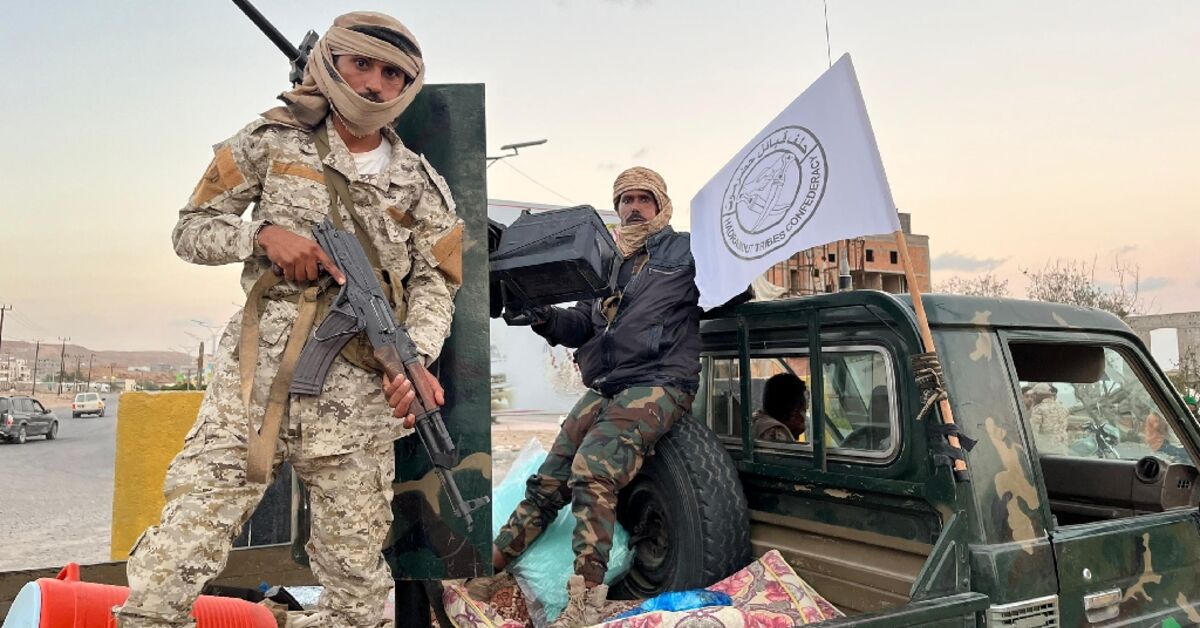
The situation in Yemen continues to be complex and volatile, marked by a recent escalation of tensions between Saudi Arabia and the United Arab Emirates as their respective proxies clash over control of key territories. The latest development saw الحضرموت (Hadramawt), a strategically and economically vital province, retaken by troops backed by Saudi Arabia on Saturday. This move, confirmed by Yemen’s Presidential Leadership Council, comes after a period of deepening fissures within the anti-Houthi coalition and raises concerns about the future of the already fragile peace efforts in the country. The struggle for control highlights the competing interests of regional powers in Yemen and the devastating impact on the Yemeni people.
استعادة الحضرموت وتصاعد الخلافات بين السعودية والإمارات (Restoring Hadramawt and Escalating Disputes Between Saudi Arabia and the UAE)
The Saudi-backed National Shield forces successfully “retook all military and security positions” in Hadramawt, according to Rashad al-Alimi, head of the Presidential Leadership Council. This follows a recent offensive launched by the Southern Transitional Council (STC), a UAE-backed secessionist group, to seize control of the province. That offensive sparked outrage from Riyadh, setting the stage for a direct confrontation between the forces supported by the two Gulf allies.
Reports indicate the transition was swift in some areas. Neighboring Mahra province, along with its armed forces which had aligned with the STC, reportedly switched allegiance without resistance. Witnesses even reported Mahra forces lowering the separatist flag and raising the Yemeni national flag, symbolizing a clear shift in loyalty towards the Saudi-aligned government.
التحذيرات والضربات الجوية للتحالف بقيادة السعودية (Warnings and Airstrikes by the Saudi-Led Coalition)
Over the past week, the Saudi-led coalition escalated its response with repeated warnings and a series of airstrikes. These strikes were notably directed at targets believed to be connected to the STC, including an alleged Emirati arms shipment intended for the separatist group. This action was a direct message to Abu Dhabi concerning its support for a faction challenging the internationally-recognized Yemeni government.
The most significant incident occurred on Friday with a strike on the Al-Khasha military camp in Hadramawt, resulting in the deaths of at least 20 people, according to the STC. Further airstrikes were then reported on Saturday, targeting another STC camp at Barshid, west of Mukalla. A military official affiliated with the STC confirmed the strikes were “intense” and caused casualties, though the exact number remained unknown. Footage circulating on social media showed a dramatic explosion at one of the targeted locations.
الوضع الأمني في المكلا وسقوط مراكز قيادية (Security Situation in Mukalla and Fall of Leadership Centers)
Eyewitness accounts from Mukalla, the capital of Hadramawt, describe a security breakdown accompanied by instances of looting. However, the advance of the Saudi-backed forces appears to have met with limited resistance. Residents reported seeing retreating forces transporting personal belongings, including furniture and appliances, in their military vehicles. This signifies a rapid unraveling of the STC’s control in the region. It is vital to note the continuing الأزمة اليمنية (Yemeni Crisis) stems from these complex power dynamics.
Alimi, in response to the developments, called for “strict measures to secure state institutions and public facilities, and to protect public and private property,” emphasizing the need to restore order and stability. Pro-Saudi forces also took control of Seiyun airport, northwest of Mukalla, and surrounding administrative buildings.
دعوة السعودية للحوار وتأييد إقليمي (Saudi Arabia’s Call for Dialogue and Regional Support)
Recognizing the escalating tensions, Saudi Arabia issued a statement on Saturday calling for dialogue between the various factions in southern Yemen. The Saudi foreign ministry proposed hosting a conference in Riyadh, specifically inviting all southern factions to discuss “just solutions to the southern cause”.
This invitation, according to Riyadh, was issued in coordination with the Yemeni government. Alimi also urged the STC to “commit to the path of dialogue and to roll back its unilateral measures in the various governorates”.
Importantly, the STC reportedly welcomed the call for dialogue, stating their willingness to engage in discussions addressing the concerns of the people of Southern Yemen. The UAE, for its part, urged all Yemeni parties to “halt escalation and resolve differences through dialogue,” reinforcing the need for a peaceful resolution.
Further bolstering the call for dialogue, other Gulf states – Qatar, Kuwait, and Bahrain – publicly voiced their support for the Riyadh conference. Even Egypt’s foreign ministry echoed this sentiment, reiterating its support for the “unity, sovereignty, and territorial integrity of the Republic of Yemen,” subtly cautioning against further fragmentation. The القة الجنوبية (Southern Question) remains central to any lasting peace in Yemen.
مستقبل الأزمة اليمنية (The Future of the Yemeni Crisis)
The STC has consistently pushed for the declaration of independence for southern Yemen, aiming to establish a separate state. On Friday, they even announced a two-year transitional period towards this goal, outlining plans for dialogue with the Houthi-controlled north and a referendum on independence. However, this declaration was accompanied by a warning that they would unilaterally declare independence if either attacks resumed from the north or if southern Yemen was attacked again.
The current situation underscores the deep-seated complexities of the Yemeni conflict. While the Saudi-led coalition initially intervened in 2015 to dislodge the Iran-backed Houthi rebels from the north, the war has devolved into a multi-faceted struggle, with both Saudi and Emirati-backed factions battling each other in the south despite their common enemy in the Houthis. The ongoing fight between these groups diverts resources from the essential goal of defeating the Houthis and ultimately prolongs the suffering of the Yemeni people. Addressing the root causes of the الصراع اليمني (Yemeni Conflict), including legitimate grievances in the south, is paramount to achieving a sustainable peace settlement.
This recent regaining of control in Hadramawt, therefore, represents not just a military victory for Saudi-backed forces, but a significant turning point in the internal dynamics of the anti-Houthi alliance. It remains to be seen whether the call for dialogue will be enough to bridge the widening gap between Riyadh and Abu Dhabi and pave the way for a unified front against the ongoing challenges in Yemen.


