




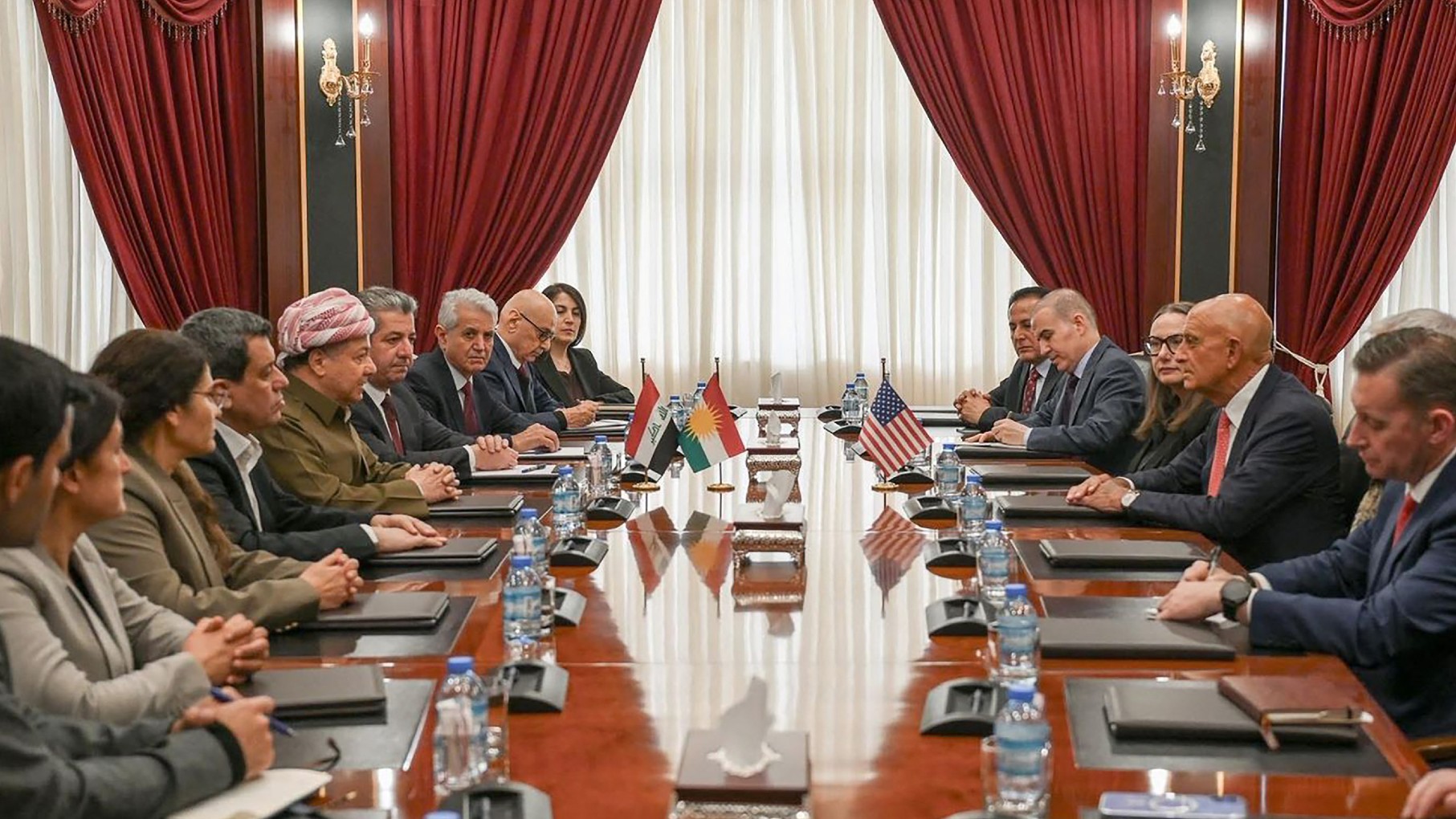
The situation in Syria remains volatile, with recent developments revealing tensions even amongst allies. Reports indicate that the US Special Envoy for Syria, Tom Barrack, strongly criticized the commander of the Syrian Democratic Forces (SDF), Mazloum Abdi, accusing him of seeking to involve Israel in the internal affairs of Syria. This accusation came during a closed-door meeting in Erbil, just before the announcement of a new ceasefire agreement aimed at integrating the SDF into the Syrian army. The core of the issue revolves around the future of the SDF and its relationship with both the Syrian government and regional powers.
Escalating Tensions: Barrack’s Accusations Against the SDF
According to diplomatic sources who spoke to Middle East Eye, the meeting on Saturday was attended by veteran Kurdish leader Massoud Barzani and took place amidst Syrian government advances into territory controlled by the SDF. Barrack reportedly delivered a sharp rebuke to Abdi, focusing on the delayed implementation of a March 2025 agreement intended to see the SDF merge with the Syrian armed forces.
The US envoy, a consistent advocate for a unified Syrian state, accused Abdi of “stalling, failing to implement the agreement with the Syrian government, and relying on foreign powers.” The most pointed accusation, however, was that the SDF leader was actively attempting to draw Israel into the Syrian conflict. Barrack warned that such a move would be detrimental, potentially sparking conflict between Washington’s key regional allies, Turkey and Israel, and ultimately leading to further instability and destruction in the region. This highlights the delicate balancing act the US is attempting in Syria, navigating the interests of multiple actors.
SDF’s Outreach and the Shifting Regional Landscape
The accusation against the SDF isn’t occurring in a vacuum. Senior figures within the group have openly acknowledged contact with Israeli officials, expressing a willingness to accept support from any external source that could safeguard Kurdish communities and their political achievements. Ilham Ahmed, a prominent SDF official, stated recently, “There are certain figures from the side of the Israeli state engaged in communications with our side… and if this conversation leads to support, we would be open to support… from any source.”
This openness to external support reflects the SDF’s increasingly precarious position. The recent ceasefire agreement, while ostensibly aimed at preventing further bloodshed, effectively weakens the SDF, stripping it of control over key territories and resources. The agreement necessitates the SDF’s withdrawal from Raqqa and Deir Ezzor provinces – areas with a predominantly Arab population – as well as relinquishing control of border crossings and vital oil and gas fields. This represents a significant loss of power and influence for the Kurdish-led forces. The Syrian ceasefire is a turning point, signaling a shift in power dynamics.
Barzani’s Role and the New Reality with Damascus
While Barrack adopted a critical stance, Massoud Barzani, present at the same meeting, offered a different perspective. He described a recent meeting with Syrian Vice President Farouk al-Sharaa as “positive.” However, Barzani also emphasized the need for protection for Kurdish civilians, presenting documented evidence of threats they face. He proposed acting as a “new guarantor” of any revised agreement between the SDF and the Syrian government, and requested a follow-up meeting between Abdi and al-Sharaa to revisit the March 2025 plan.
Barrack, meanwhile, underscored the changing relationship between the US and the Syrian government. He stated that the SDF needed to acknowledge the new political reality, asserting, “You still want to deal with the situation as if Bashar al-Assad is ruling Syria. There is a fundamental change; Damascus is our partner today in the fight against terrorism.” This statement signals a significant departure from the long-held US policy of isolating the Assad regime. The US is now framing the Syrian government as a partner in counter-terrorism efforts, a move likely driven by the desire to stabilize the region and prevent the resurgence of ISIS. This new approach to Syria’s political future is a key element of the current situation.
Implications of the Ceasefire and Future Outlook
The announced ceasefire, finalized on Sunday, grants the Syrian military almost complete control over the country and effectively dismantles the SDF’s decade-long control of the northeast. While the Syrian government accuses the SDF of harboring both Assad loyalists and members of the banned Kurdistan Workers Party (PKK), the underlying issue is the desire to reassert sovereignty over all Syrian territory.
Following the announcement, Barrack expressed optimism that the deal would foster renewed dialogue and cooperation towards a “unified Syria.” He highlighted al-Sharaa’s assurance that Kurds would be considered an integral part of Syria, and expressed hope for a smooth integration of the SDF into the global coalition fighting ISIS.
However, the lack of a clear timeline for implementation and the significant concessions demanded from the SDF raise concerns about the long-term stability of the agreement. The future of the SDF, the protection of Kurdish communities, and the potential for renewed conflict remain uncertain. The situation demands careful monitoring and continued diplomatic engagement to prevent further escalation and ensure a sustainable path towards peace in Syria. The success of this regional stability initiative hinges on the willingness of all parties to compromise and address the legitimate concerns of all communities within Syria.


