






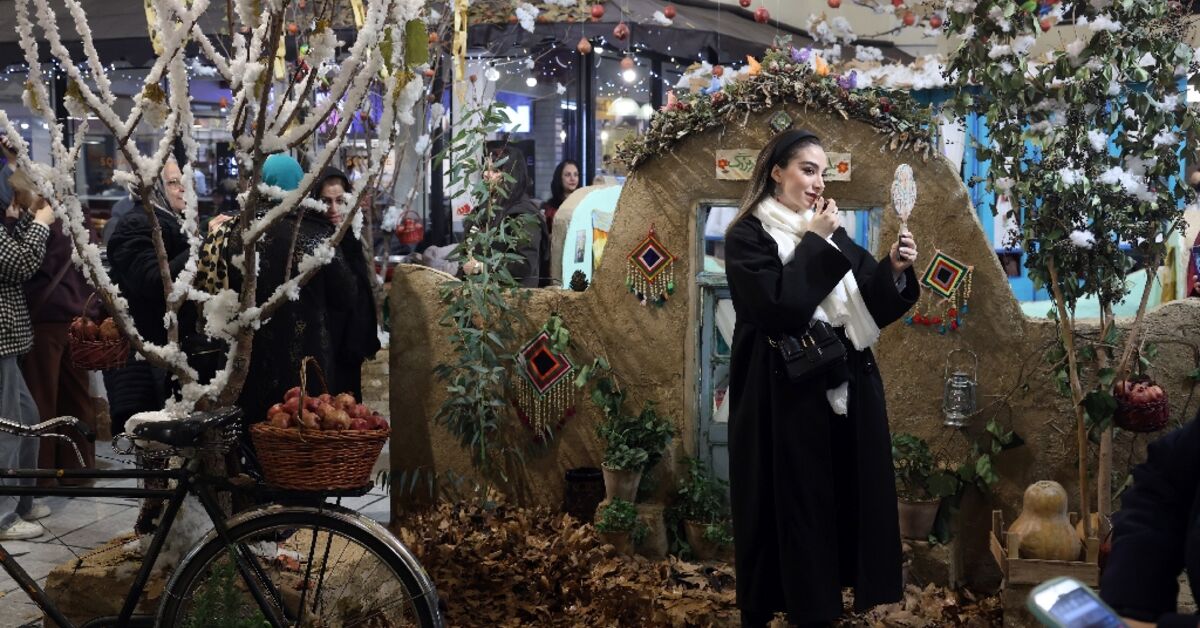
The ancient Persian festival of Yalda is a time for families and communities to come together, celebrating the longest night of the year and the promise of brighter days ahead. Despite the enduring cultural significance of this tradition, many Iranians are facing a difficult reality this year, as economic hardships exacerbated by international sanctions threaten to dampen the spirit of the celebrations. Iranians across all religions and backgrounds traditionally mark this occasion with specific rituals, food, and gatherings.
Yalda: A Night of Tradition and Family
Yalda, falling on the winter solstice, is deeply rooted in Persian history and pre-Islamic beliefs. It’s a night dedicated to illuminating the darkness and hoping for the return of the sun – a symbolic victory of light over darkness, and good over evil. The core of the celebration revolves around spending time with loved ones.
“We mostly spend time with our families, our grandparents, aunts, cousins,” shares Maral Bagherpour, a 16-year-old student from Tehran. “We take fal-e Hafez, we drink tea or coffee. My grandma sings for us sometimes.”
This tradition of fal-e Hafez – divination using the poetry of the renowned 14th-century Persian poet Hafez – is central to many Yalda celebrations. Families open the book at random, interpreting the resulting verse as a message for the coming year, seeking guidance and solace in Hafez’s timeless wisdom. Beyond poetry, the gathering typically includes sharing stories, reminiscing about the past, and enjoying a feast of seasonal fruits and nuts. Mary Goudarzi, 37, recounts, “On Yalda night, the whole family gets together in my grandparents’ house. We reminisce about the good old days and eat nuts and fruits that are in season.”
The Impact of Economic Hardship on Yalda Celebrations
However, this year’s Yalda festivities are cast under a cloud of economic difficulties. Rampant inflation and the devaluation of the Iranian Rial have significantly reduced purchasing power, impacting people’s ability to fully embrace the traditional abundance associated with the holiday. The central bank reported annual inflation at 41% in early December, and the US dollar exchange rate on the informal market reached approximately 1.32 million Rials on Saturday – almost double the rate from the previous year.
These financial constraints are directly affecting the scale of celebrations. “Unfortunately, because of recent events such as the war and the dollar price that’s rising sharply, people’s purchasing power has fallen a lot,” explains Goudarzi, an interior designer. “That’s why you can’t really see many of the items we used to see in previous years on every table.”
The rising costs aren’t just impacting household budgets; they’re visible in the marketplace as well. Fruit vendors have witnessed a decrease in sales, despite attempts to maintain the festive atmosphere with decorations. Aliakbar Mohammadi, a fruit vendor in Tehran, notes, “The price of pomegranates has doubled since last year, and sales are down markedly.” Pomegranates, with their ruby-red seeds, are a potent symbol of prosperity and fertility, traditionally a centerpiece of the Yalda table.
A Reflective Mood and Adapting Traditions
The economic pressure has led to a more cautious and reflective mood across the country. A cartoon in the Ham Mihan daily depicted a poor man reaching for a basket of fruit hanging from the moon, a stark illustration of the financial barriers facing many Iranians.
Rahimi, a 21-year-old nut and fruit shop owner, adds, “Inflation is high, the dollar price has gone up and subsequently all prices have increased including the commodities. It’s hard for people to buy what they want. The state of the market and the economy is in turmoil. Sales are down significantly this year.”
Despite the difficulties, the spirit of Yalda persists. People are finding ways to adapt their traditions, focusing more on the core values of family and community rather than lavish displays. “Conditions will be more difficult, but we’re trying to cope – we have no choice,” Rahimi says, echoing a sentiment shared by many Iranians.
Yalda’s Historical Roots and Regional Significance
The roots of Yalda extend far back into Zoroastrianism, the religion that flourished in Iran for centuries before the arrival of Islam. Both Yalda and the subsequent fire festival, celebrated at the end of the Iranian calendar year, are inherited from these ancient traditions, representing a continuity of cultural practices.
The celebration isn’t limited to Iran. Yalda is also recognized and celebrated in Persian-speaking communities in Afghanistan, Tajikistan, and other neighboring regions. The universal themes of overcoming darkness and anticipating the return of light resonate across cultures and generations. This underscores the enduring power of cultural tradition, even amid challenging circumstances.
While this year’s Yalda celebration may be more subdued for many, it remains a vital time for Iranians to connect with their heritage, reaffirm their bonds with family, and find hope for the future. It’s a testament to the resilience of the Iranian people and their determination to preserve their cultural identity, even in the face of adversity. This year, the simple act of gathering with loved ones and sharing a meal may hold even greater significance, representing a collective effort to find light amidst the darkness.


