






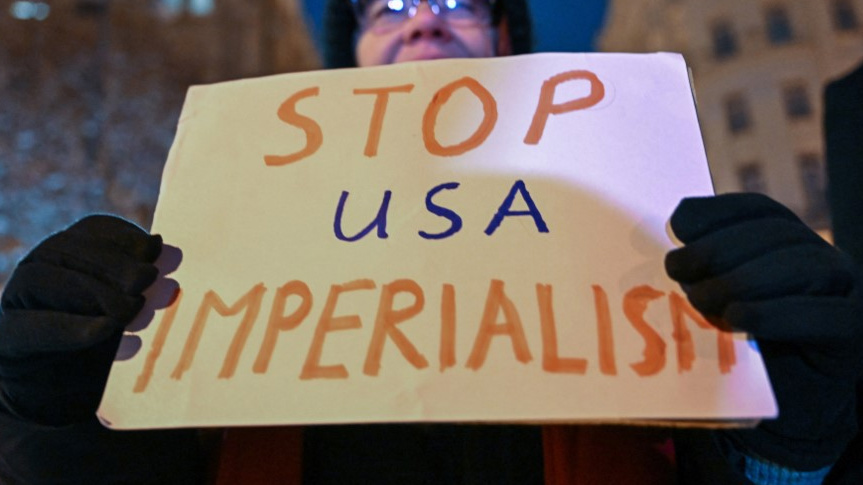
As the new year began, a significant shift in global power dynamics signaled the potential end of the “rules-based international order.” This decline, long predicted by some, manifested starkly with the escalating tensions surrounding Venezuela and the apparent lack of unified response from traditional Western allies. The events unfolding represent more than just a regional crisis; they epitomize a dismantling of a system built on perceived norms and a return to the more brutal realities of power politics. The US intervention, characterized by many as a blatant disregard for international sovereignty, and the subsequent silence from European capitals, have cast a long shadow over the future of global governance.
The Illusion of Rules: A System of Double Standards
For decades, Western nations have championed the “rules-based international order” as the cornerstone of global peace and stability. However, upon closer inspection, this concept appears less a set of universally applied principles and more a framework convenient for maintaining Western dominance. The core issue lies in its selective application. While presented as a system governing all, its “rules” demonstrably bend or break when it suits the interests of powerful nations, particularly the United States.
The term “rules” itself is arguably weaker than “law,” implying flexibility where true international law demands consistency. This inherent ambiguity allows for interpretation and, crucially, exception-making. The rules are binding for some, but conveniently ignored by others, creating a hierarchy of nations where laws apply differently based on power.
Recent Examples of Systemic Hypocrisy
The past few decades offer ample proof of this double standard. The contrasting responses to Russia’s actions and Israel’s military operations vividly illustrate this point. The ongoing conflict in Ukraine brought forth fervent declarations of upholding international law and defending sovereignty. However, the near-silence regarding similar actions, or arguably more aggressive ones, from key Western allies reveals a deeply fractured system.
The Venezuelan case mirrors this hypocrisy. We are unlikely to see the same urgent condemnation and invocation of international law that characterized the narrative around Ukraine, despite a clear violation of national sovereignty. This inconsistency undermines the very foundation of international cooperation and raises serious questions about the legitimacy of the prevailing order. International order is starting to feel like a hollow phrase.
A Return to Imperial Ambitions?
The current upheaval isn’t just about specific events; it represents a larger historical regression. The 21st century, barely a quarter of the way through, is witnessing an increasing instability and a resurgence of power struggles reminiscent of the 19th and early 20th centuries. Then, as now, foreign policy is largely driven by the pursuit of resources and the establishment of spheres of influence, echoing the era of colonial expansion.
The United States, specifically, has signaled a clear intention to reassert its dominance in its own hemisphere. The focus on Venezuela’s vast oil reserves raises concerns about a new scramble for resources, with potentially destabilizing consequences for the region. This isn’t limited to South America; the US is also demonstrating renewed interest in resources in Canada and even leveraging its position towards Greenland and Denmark.
The Donroe Doctrine: A Modern Monroe Doctrine
This shift in US policy has even been formalized with the reinterpretation of the Monroe Doctrine – a long-standing policy asserting American influence in the Americas. Now referred to, with a perhaps telling nod to the current president, as the “Donroe Doctrine”, it implicitly asserts the right to intervene and control events within its perceived sphere of influence.
The 19th and early 20th centuries were characterized by “gunboat diplomacy,” a blunt instrument for resolving disputes. Today, while the methods may be more sophisticated, the underlying principle – the use of power to secure economic and strategic advantage – remains the same. The world is effectively witnessing a rewind of two centuries of international development, trading principles of cooperation for those of domination.
The Future of Alliances and Emerging Power Dynamics
The implications of this crumbling international system extend far beyond the Americas. The US’s willingness to disregard the concerns of its allies, even within NATO, is deeply concerning. Attempts to pressure Canada or exert influence over Greenland jeopardizes the foundations of the alliance.
Meanwhile, other global powers are actively pursuing their own spheres of influence. Israel’s assertive actions in Syria, Lebanon, and the Gulf region, coupled with its growing ties with nations like the UAE and Azerbaijan, demonstrate a similar pattern. Turkey, through its involvement in Libya, Syria, Iraq, and potential ambitions in Gaza and Lebanon, is emerging as a regional competitor. All this while Russia and China are quietly building their own circles of influence in Eastern Europe and East Asia respectively.
A World on the Brink
Smaller nations, like Iran, are scrambling to maintain their positions amidst this shifting landscape, particularly as internal pressures mount. Europe, traditionally a significant global player, increasingly finds itself sidelined and vulnerable, its influence waning in regions like Africa. France’s diminishing role and the perceived failures of “Global Britain” are strong signals of this decline.
The current situation calls for a fundamental reassessment of global governance. A modern-day equivalent of the Yalta Conference, where major powers negotiated the post-World War II order, may be necessary. However, the question remains: who will be at the negotiating table, and who will be on the menu? Given the current trajectory, Europe’s position appears precariously close to the latter. Unless a concerted effort is made to rebuild trust and restore a genuinely rules-based system, the world risks descending further into chaos and conflict, marked by escalating tensions and a renewed scramble for power and resources.


