


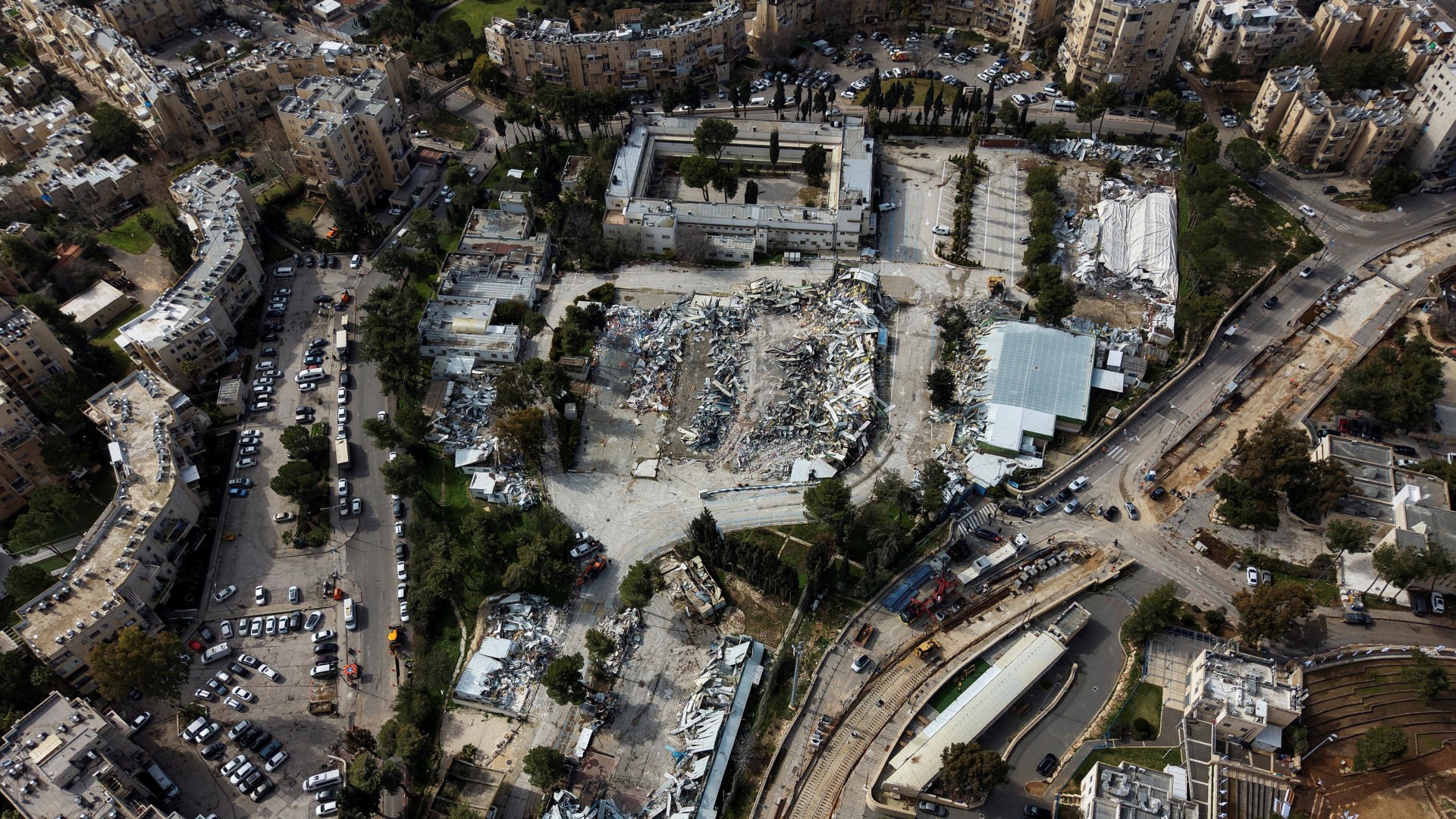
The demolition of a United Nations (UN) headquarters in occupied East Jerusalem by Israeli forces has sparked widespread condemnation from European governments and legal experts, escalating tensions surrounding the agency for Palestinian refugees, UNRWA. The move, carried out under the direction of National Security Minister Itamar Ben Gvir, is being described as a serious breach of international law and a direct attack on vital humanitarian aid for Palestinians. This article will delve into the details of the demolition, the reactions from international actors, and the potential consequences for the future of UNRWA and the Palestinian people.
Israeli Demolition of UNRWA Compound: A Condemnation from Europe
European governments have swiftly and strongly condemned Israel’s demolition of the UNRWA compound in Sheikh Jarrah. The UK’s Minister for the Middle East and North Africa, Hamish Falconer, expressed his “appal” at the act, labeling it “another attack on [the UN’s] vital work for Palestinians.” He underscored Israel’s obligation to protect and respect UN premises, a fundamental principle of international law.
Belgium’s Foreign Minister, Maxime Brevot, echoed these sentiments, characterizing the demolition as “a flagrant violation of international law and UN immunities.” The EU’s Commissioner for Equality, Hadja Lahbib, further reinforced the EU’s unwavering support for the UN and the rules-based international order, emphasizing UNRWA’s integral role within that system. These statements highlight a growing concern within the European community regarding Israel’s disregard for international legal norms and the protection of humanitarian organizations.
“Blatant Violation” of International Law, Says ICJ Lawyer
The demolition has also drawn sharp criticism from legal experts. Ardi Imseis, a lawyer who represented Palestine before the International Court of Justice (ICJ) in a case concerning the ban on UNRWA, described the act as “a blatant violation” of Israel’s binding international legal obligations.
ICJ Advisory Opinion and Israel’s Responsibilities
Imseis explained that the demolition directly contradicts the ICJ’s advisory opinion regarding Israel’s responsibilities towards the UN and its entities operating in occupied Palestine. The court explicitly stated that Israel is required to fully respect the inviolability of UN premises, facilitate relief schemes for Palestinians, and cooperate in good faith with the UN. He further asserted that this action is “but the latest” in a pattern of violations, forming part of a “continued and systematic policy of destruction of the Palestinian people” in the occupied territories. This perspective frames the demolition not as an isolated incident, but as a deliberate component of a broader, concerning strategy.
The Context: Raids, Flags, and a History of Hostility Towards UNRWA
The demolition occurred during a raid led by National Security Minister Itamar Ben Gvir, during which Israeli forces entered the UNRWA compound in Sheikh Jarrah and raised Israeli flags over the main building. Ben Gvir was accompanied by Jerusalem’s deputy mayor, Aryeh King, whose inflammatory rhetoric included a call to “expel, kill, eliminate and destroy all UNRWA personnel.”
This action follows Israel’s passing of a law last year banning UNRWA’s operations within the country, leading to the seizure of the compound. UNRWA is a crucial lifeline for approximately 5.9 million Palestinian refugees in occupied Palestine and neighboring countries, providing essential services like education, food, healthcare, and fuel. Its potential collapse would have devastating consequences for the Palestinian population. The agency’s very existence, as a constant reminder of Palestinian refugee status, has long been a source of friction with Israeli authorities. Tragically, over 380 UNRWA employees have been killed by Israel during the ongoing conflict in Gaza.
UNRWA’s Response and Fears for the Future
UNRWA spokesperson Jonathan Fowler characterized Tuesday’s operation as “the latest low” in an escalating campaign to dismantle the agency’s presence in East Jerusalem. He emphasized the “shocking” and “deliberate defiance of international law” inherent in the demolition. Fowler believes this is part of a calculated strategy based on “mis- and disinformation” aimed at delegitimizing UNRWA and creating the conditions for its removal.
While UNRWA had already been forced to relocate its operations from the Sheikh Jarrah compound to Ramallah and other locations a year prior, Fowler warned that the demolition sets a dangerous precedent. He highlighted the risk to the Qalandia Training Centre, which provides technical and vocational education to 350 students, and the potential for further restrictions, including cuts to electricity and water supply to vital facilities like the Shuafat camp clinic.
Fowler stressed that the ultimate victims of these actions are the Palestinian refugees who rely on UNRWA for their survival. He also pointed out that Israel has been preventing UNRWA from delivering aid to Gaza since March 2025, despite the agency continuing to operate with around 12,000 local staff providing essential services.
Potential Legal Action by the UN
The UN Secretary-General, Antonio Guterres, has repeatedly warned Israel about the illegality of its actions targeting UNRWA. In a letter to the President of the General Assembly, Guterres hinted at the possibility of bringing a case against Israel at the ICJ, citing a breach of the 1946 Convention on the Privileges and Immunities of the United Nations. He affirmed that the Sheikh Jarrah compound “is and remains premises of the United Nations” and is therefore “inviolable and immune from any form of interference.”
Israel’s hostility towards UNRWA stems, in part, from the agency’s upholding of the refugee status of Palestinians displaced during the 1948 Nakba and their descendants. While Israel has leveled accusations of UNRWA staff involvement in the October 7th attacks, UN reviews have found no evidence to support these claims. The ICJ has also found Israel’s accusations unsubstantiated, emphasizing UNRWA’s impartiality and its indispensable role in providing relief to Palestinians.
In conclusion, the demolition of the UNRWA compound in Jerusalem represents a significant escalation in Israel’s ongoing efforts to undermine the agency and its vital work. The condemnation from European governments and the strong legal arguments presented by experts like Ardi Imseis underscore the seriousness of this violation of international law. The future of UNRWA and the well-being of millions of Palestinian refugees hang in the balance, demanding a robust response from the international community to ensure the protection of humanitarian aid and the upholding of fundamental legal principles. Further investigation and reporting on this developing situation are crucial to maintaining accountability and advocating for a just resolution.


