





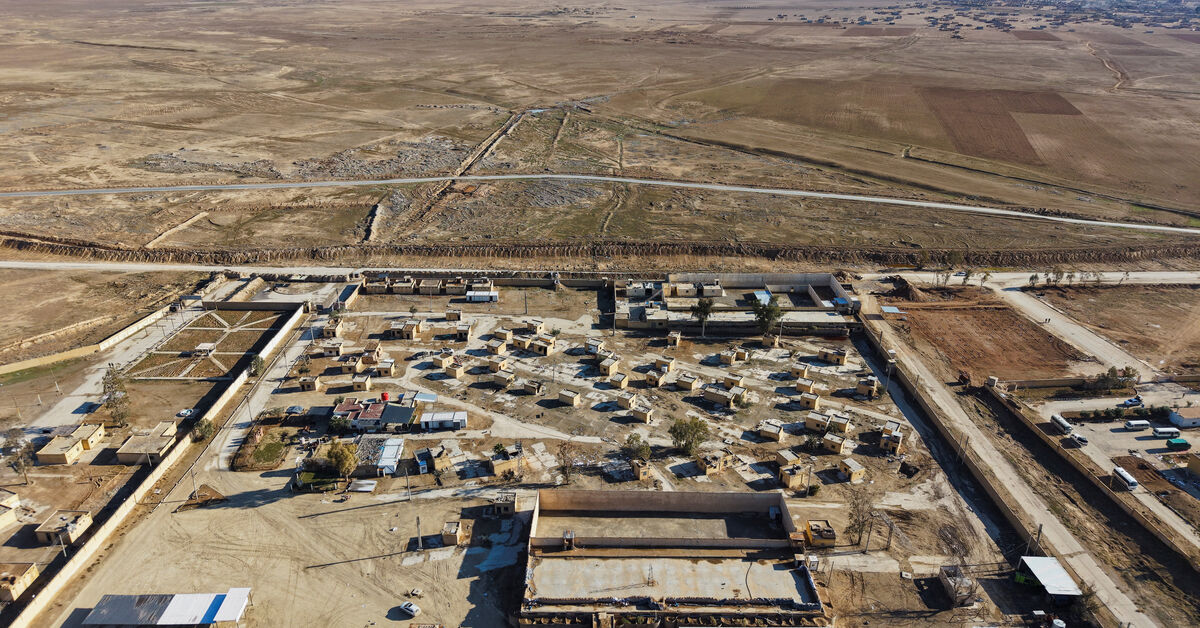
The recent developments in northeastern Syria have cast a long shadow over the fate of thousands of individuals affiliated with the Islamic State (IS), and the facilities holding them. The swift withdrawal of the Kurdish-led Syrian Democratic Forces (SDF) from key areas has created a volatile security situation, raising serious concerns about the potential for escapes and the re-emergence of extremist threats. This article will provide a comprehensive overview of the IS detainees in Syria, the prisons and camps where they are held, and the implications of the shifting control in the region.
The Unfolding Crisis: SDF Withdrawal and Rising Uncertainty
The rapid collapse of SDF control in parts of northeast Syria this week has triggered a scramble to understand the implications for the security of detention facilities. For years, the SDF, with support from the U.S.-led international coalition, have been responsible for guarding a large number of suspected IS members and their families. The withdrawal, prompted by escalating tensions and a perceived lack of support, has left these facilities vulnerable.
The primary fear is a mass breakout, potentially releasing battle-hardened fighters back into the region and beyond. This scenario is particularly alarming given the ongoing instability in Syria and the potential for IS to exploit the power vacuum. The situation is further complicated by the presence of numerous women and children with ties to the group, whose fate remains uncertain.
Key Prisons Holding IS Fighters Under SDF Control
The Hasakah province has been a central location for holding IS prisoners. Two main facilities, Ghwayran and Panorama prisons, house the majority of the most dangerous detainees.
Ghwayran and Panorama Prisons: Bastions of Containment
Ghwayran prison, originally a school, currently holds approximately 4,000 IS inmates. These are not simply individuals accused of minor offenses; they are largely experienced fighters who participated in the group’s brutal campaigns. Panorama prison also holds a significant number of fighters.
Security at these prisons is a collaborative effort. While the Kurdish forces maintain internal control, the outer perimeters are secured by military personnel from the U.S.-led coalition. This arrangement, however, has been thrown into question by the recent changes on the ground. Reports from 2025, including rare access granted to Reuters, revealed the presence of detainees from various countries, including Britain, Russia, and Germany, highlighting the international dimension of the issue.
Other SDF-Controlled Detention Centers
Beyond the two main prisons in Hasakah, smaller detention centers operate in cities like Qamishli and Malikiyah. These facilities often house adolescent and juvenile boys, some of whom were born in Syria to parents who joined IS. The challenge of dealing with this younger generation, radicalized through exposure to the group’s ideology, presents a long-term security concern.
Prisons Transitioning to Syrian Government Control
As the SDF withdrew, the Syrian government moved to fill the void, taking control of several prisons previously under Kurdish administration. This shift in control has already led to incidents of escapes and raises questions about the treatment of detainees.
Shaddadi Prison: A Case of Abandonment and Escape
The prison in Shaddadi, located in the Hasakah countryside, was one of the first to fall under Syrian government control. The SDF reported losing control as Syrian troops approached, leading to an inmate escape. The Syrian government, however, claims the SDF abandoned their posts and released around 200 IS members, subsequently recapturing most of them. A U.S. official confirmed the recapture of many escapees, characterizing them as low-level IS members. This conflicting narrative underscores the lack of transparency and the potential for manipulation of information.
Al-Aqtan Facility: Another Shift in Authority
The Al-Aqtan facility, situated in the neighboring province of Raqqa, also came under Syrian government control. Details surrounding the transfer and the status of detainees at Al-Aqtan remain scarce, adding to the overall uncertainty. The transfer of these facilities to the Syrian government is a significant development, potentially altering the long-term strategy for dealing with foreign fighters in Syria.
The Humanitarian Crisis in Detention Camps
Alongside the prisons, vast detention camps house tens of thousands of civilians who fled IS-held territories. These camps, particularly al-Hol and Roj, represent a complex humanitarian and security challenge.
Al-Hol and Roj Camps: A Sea of Vulnerability
As of 2024, al-Hol camp held approximately 44,000 people, overwhelmingly women and children. The majority are Syrians and Iraqis, but a separate annex houses individuals from Western countries. The conditions within al-Hol are dire, with limited access to basic necessities and a pervasive sense of hopelessness.
Roj camp also houses a significant population, including Westerners like Shamima Begum. Reports from within the camp indicate the presence of women from countries like Tanzania and Trinidad, highlighting the global reach of IS recruitment. The SDF were forced to pull out of al-Hol as government troops approached, and recent reports show women and children pressing against the camp fence as Syrian forces look on, raising concerns about their safety and future. The situation in these camps is a critical aspect of the broader Syria IS situation.
Conclusion: A Precarious Future
The evolving security landscape in northeastern Syria presents a grave threat to the containment of IS members and their families. The SDF withdrawal and the subsequent transfer of control to the Syrian government have created a volatile situation with the potential for mass escapes and the resurgence of extremist activity. Addressing this crisis requires a coordinated international effort, focusing on enhanced security measures, humanitarian assistance, and a long-term strategy for the rehabilitation and reintegration of those associated with IS. The international community must prioritize finding solutions to prevent a further destabilization of the region and mitigate the risks posed by the release of these individuals. Further investigation and reporting on the conditions and security within these facilities are crucial to understanding the full scope of the challenge.


