






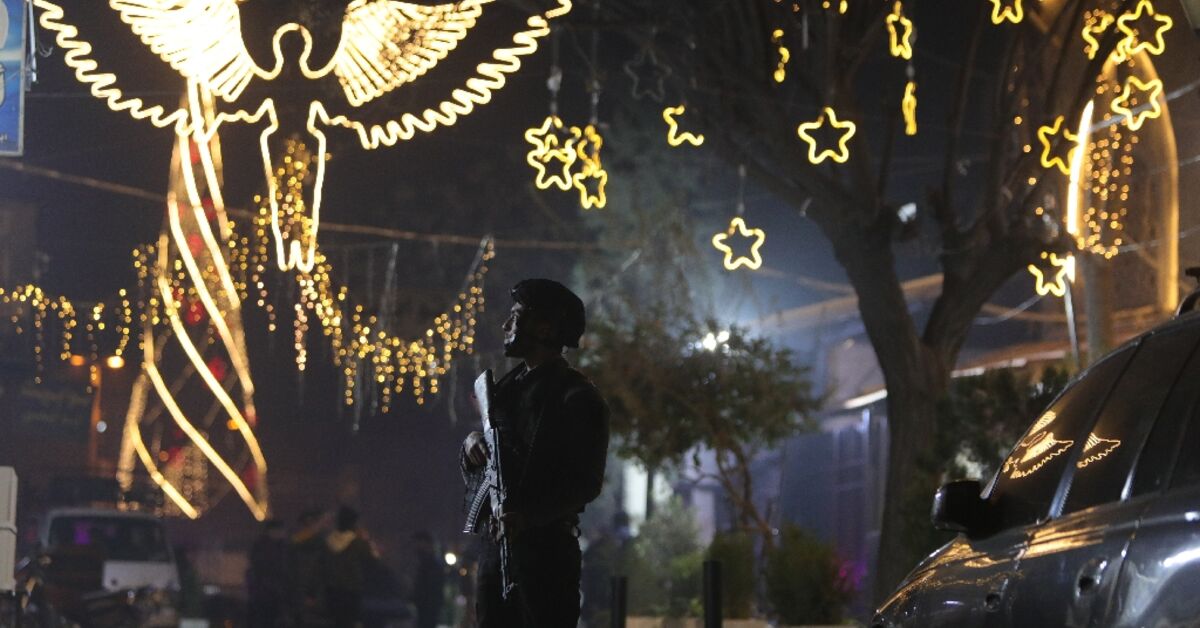
The scent of pine and cinnamon hangs in the air of Damascus’s Old City, a fragile attempt to usher in the festive spirit of Christmas. However, this year, the twinkling Christmas lights are juxtaposed with a palpable sense of fear and heightened security, a stark reminder of the challenges facing Syria’s dwindling Christian community. The joy of the season is shadowed by memories of a recent attack and ongoing anxieties about safety in a country still grappling with the aftermath of war and instability.
أجواء عيد الميلاد في ظل الخوف: دمشق القديمة تتألق والأمن مشدود
(Atmosphere of Christmas Amidst Fear: Old Damascus Shines with Tightened Security)
Despite the hardships, efforts are underway to celebrate Christmas in Damascus, particularly within the historic Old City. Shopkeepers have adorned their storefronts with decorations, street vendors offer traditional treats like roasted chestnuts, and churches prepare for services. This visible attempt at normalcy is particularly poignant given the recent tragedy that struck the Saint Elias church in June, a brutal attack that left 25 people dead and many more wounded. The incident has deeply impacted the community, leaving a lingering sense of vulnerability.
“People are going home early, and are afraid,” says Tala Shamoun, a 26-year-old university student visiting a Christmas market with family. While Damascus has experienced crime, including robberies and kidnappings, the church attack was a turning point. “It was the biggest tragedy,” she told AFP, highlighting the unique fear it instilled within the Christian population.
تعزيز الإجراءات الأمنية في الأحياء المسيحية
(Strengthening Security Measures in Christian Neighborhoods)
Syrian authorities have responded to these concerns by implementing a comprehensive “security plan” across the capital, with a particularly strong presence in and around Christian neighborhoods. Interior ministry forces are conducting increased patrols, searching pedestrians, and stopping vehicles, especially motorcycles, for inspection.
At one of the main entrances to the Old City, a government security officer, speaking on condition of anonymity, explained the rationale behind the increased measures. “We’ve put a security plan in place that includes several districts and areas in the capital, in order to ensure the safety of all citizens,” he stated. “It is the state’s duty to protect all its people, Christian and Muslim, and today we are doing our duty to protect the churches and secure people’s celebrations.”
This heightened security isn’t solely reliant on official forces. Local “neighbourhood committees,” comprised largely of Christian volunteers, are actively participating in safeguarding churches. Fuad Farhat, 55, from the Bab Touma district, is overseeing the deployment of unarmed Christian men equipped with walkie-talkies. “We have been taking steps to protect those celebrating in the Christian neighbourhoods” to avoid any problems, in coordination with the security forces,” he explained. He believes the increased presence, despite the underlying fear, is helping people feel more comfortable venturing out to enjoy the Christmas spirit.
تداعيات الحرب وتناقص أعداد المسيحيين في سوريا
(The Aftermath of the War and the Decline in the Number of Christians in Syria)
The current atmosphere is a direct consequence of the devastating Syrian civil war. While the conflict has impacted all religious groups, the Christian community has been disproportionately affected. Many have fled the country, seeking refuge from the violence and instability. Estimates suggest the Christian population has plummeted from approximately one million in 2011, when the war began, to around 300,000 today. This demographic shift represents a significant loss for Syria’s rich cultural tapestry.
The war also saw periods of sectarian violence, with attacks targeting minority groups. Although the government, led by Bashar al-Assad (himself an Alawite), has historically presented itself as a protector of minorities, earlier this year, the Alawite heartland and Druze-majority areas experienced significant clashes and massacres. The recent attack on the Saint Elias church, blamed on the Islamic State group, further eroded trust and fueled anxieties. The claim of responsibility by a lesser-known extremist group adds another layer of complexity to the security situation.
أمل في مستقبل أفضل: عيد الميلاد كرمز للمصالحة
(Hope for a Better Future: Christmas as a Symbol of Reconciliation)
Despite the fear and uncertainty, many Syrians remain determined to celebrate Christmas and hold onto hope for a brighter future. Loris Aasaf, a 20-year-old university student, expressed this sentiment while enjoying the Christmas decorations with her friends. “Syria deserves joy and for us to be happy, and to hope for a new future,” she said. “All sects used to celebrate with us, and we hope to see this in the coming years, in order to rebuild Syria.”
Near the Saint Elias church, a tree has been decorated with stars bearing the images of those killed in the June attack, a poignant tribute to the victims. Abeer Hanna, 44, a housewife, acknowledged the exceptional nature of this year’s Christmas. “Christmas this year is exceptional because of the pain and sorrow we went through,” she said. “The security measures are necessary because we are still afraid.”
Hanaa Masoud, standing nearby, lit a candle for her husband and relatives who perished in the attack. Her heartbreaking question – “If we go to church and get blown up, where can we find safety?” – encapsulates the profound sense of vulnerability felt by many within the community.
The presence of security forces and the efforts of local volunteers are a testament to the determination to protect the remaining Christian population and allow them to celebrate their faith. However, the underlying anxieties remain, serving as a constant reminder of the long road ahead for Syria and its quest for lasting peace and security. The hope is that the spirit of Christmas, with its message of peace and goodwill, can contribute to a future where all Syrians, regardless of their religious affiliation, can live and celebrate without fear.


